Jean Valjean’s Yellow Passport
Les MisérablesJean Valjean’s Yellow Passport is both a legal document and a visible instrument of exclusion: it identifies its bearer as a former convict and makes ordinary movement a source of scrutiny. Through Jean Valjean’s first days of freedom, the passport turns the completion of a sentence into a continuing social penalty, shaping where he can go and whether others will receive him.
Status and Function
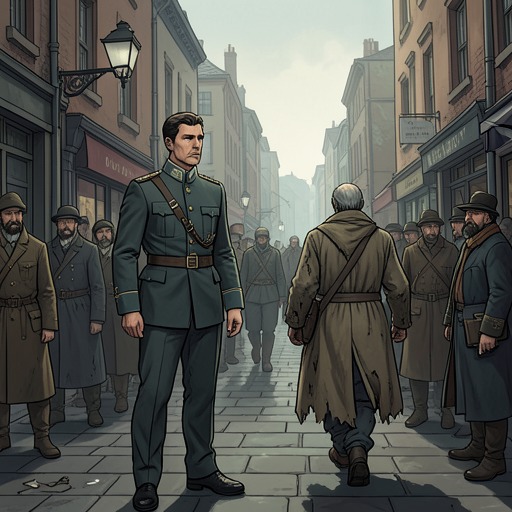
By the period described, former convicts were no longer branded, but their passports still bore the letter F. They were assigned to reside in a specified place and, when travelling, had to report to the gendarmerie in each village they passed through. Failure to comply could make them fugitives from the law and prompt a police search. The passport therefore did more than record a past conviction: it made that past legible to officials and the public as the bearer moved through society.
Jean Valjean’s First Days of Freedom
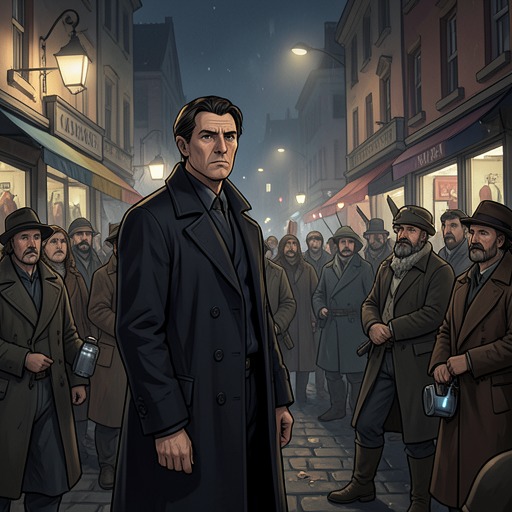
After serving nineteen years in the galleys, Jean Valjean is released and travels from Toulon toward Pontarlier. Four days after his release, he has walked twelve leagues in a day and reaches a town where he shows his yellow passport at the town hall. The document’s disclosure of his status is followed by rejection: one inn turns him away because of it, another also refuses him, and he cannot obtain entry to the prison. Even a dog drives him from its shelter. The sequence makes the passport’s consequences concrete: although Jean Valjean is free and has money, the mark it carries prevents him from finding a place to rest.
At the Bishop’s house, Jean Valjean explains that he has earned 109 francs and 15 sous through nineteen years of work in the galleys and asks whether he may stay, offering to pay. The Bishop responds by ordering an extra place set at the table. The contrast is decisive: the passport has enabled a succession of refusals, while the Bishop’s hospitality does not treat the former convict’s legal identity as a reason to deny him shelter.
Punishment Beyond the Sentence
The passport’s force belongs to a wider system of punishment described in the novel. Jean Valjean had been condemned to five years in the galleys for stealing bread during a winter when his family had no food; after four failed escape attempts, his term was extended to nineteen years. His release ends confinement in the galleys, but the travel and residence controls attached to former convicts carry the consequences of that sentence into civilian life. The passport thus embodies the gap between formal release and social freedom, making the convict’s identity a continuing barrier to acceptance.