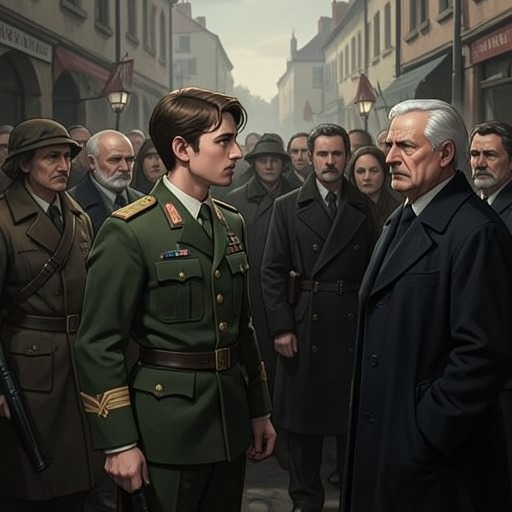
L’épée du colonel Pontmercy
Les MisérablesL’épée du colonel Pontmercy is both a family relic and a moral emblem. In Marius’s imagination, the weapon carries the memory of his father’s campaigns, but its absence at the barricade also prevents that inherited martial glory from being enlisted in a fight between Frenchmen.
Identity and History
The sword belonged to George Pontmercy, Marius’s father, and had been sold by Marius’s grandfather to a secondhand dealer. Marius had deeply regretted losing it. Its history therefore joins an intimate family inheritance to the public history of military service: Marius remembers it as a valiant weapon that had come from the campaigns of Marengo and Friedland.
The sword does not appear in Marius’s hands during the crisis at the barricade. He imagines instead that, had he recovered it at his father’s deathbed and brought it to the night’s fighting, it would have burned his hands and blazed before him like an angel’s sword. The imagined refusal gives the absent object a moral force that its physical presence might have obscured.
The Sword and the Barricade
As Marius looks toward the civil war opening before him, he thinks through what the sword’s absence means. He pictures it as intelligent enough to foresee street fighting, gunfire, and violence between countrymen. Having served his father in earlier wars, it would not, in Marius’s view, consent to be used by the son in the Rue de la Chanvrerie against other Frenchmen. The contrast is between the father’s military campaigns and a domestic conflict in which the nation would wound itself.
Marius concludes that it is fortunate the sword disappeared. His grandfather, by selling it, has unwittingly preserved the father’s honor: the weapon was better sold and discarded than made to shed the blood of the country. The object’s lost status thus reverses its apparent meaning. What Marius once mourned as a deprivation now seems a protection from betraying the values he associates with his father.
Inheritance and Moral Conflict
The sword gives material form to Marius’s divided inheritance. It represents his father’s courage and military past, but it also confronts the son with the difference between honoring that past and repeating its violence in altered circumstances. In Marius’s vision, loyalty to his father does not require taking up the weapon; it requires understanding why this particular fight would make its use intolerable.
That recognition comes amid Marius’s despair over Cosette and his belief that he cannot live without her. Yet his thoughts about the sword reveal a separate conflict: even at the edge of the barricade, he considers the consequences of joining a civil war and abandoning the people waiting there. The absent heirloom becomes a measure of the moral weight attached to both action and refusal. It cannot settle Marius’s crisis, but it makes clear why the weapon’s disappearance feels just rather than merely regrettable.