Montfermeil
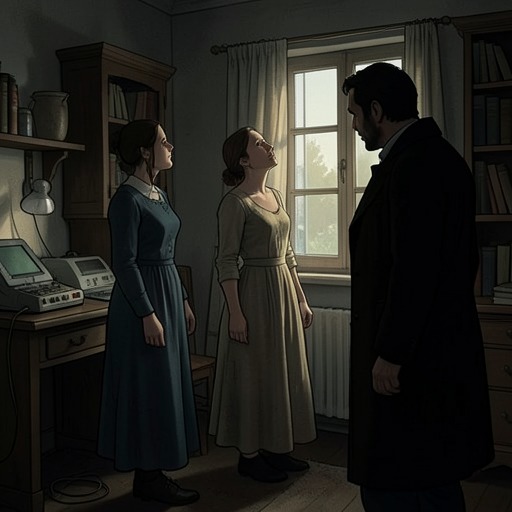
Les MisérablesMontfermeil is a town near Paris whose most consequential setting in the novel is the Thénardiers’ inn. It is where Cosette’s mother encounters the innkeepers’ children, where Cosette is left in their care and mistreated, and where Jean Valjean’s rescue of her begins. The place returns years later through the clothes and memories that preserve the child’s passage from neglect into a new life.
Setting and the inn
In the early nineteenth century, the Thénardiers kept a modest inn in Montfermeil, in Rue du Boulanger. Above its entrance hung a painted board showing what appeared to be one man carrying another, whose broad epaulettes and stars marked him as a general; red blotches suggested blood, while smoke filled out the image of a battle. The sign identified the establishment as the Sergeant of Waterloo. Its grand martial name stood over an ordinary roadside business, run by an innkeeper couple whose later actions make the contrast between the sign’s heroic suggestion and the inn’s treatment of a child especially sharp.
The inn’s entrance and street were not merely a backdrop. One spring evening in 1818, a large, damaged cart crowded the road outside. A chain hanging beneath its axle formed a low curve, and two little girls sat together on it as if on a swing: the older was about two and a half, the younger eighteen months, held in her sister’s arms. A handkerchief tied around them kept them from falling. Their precarious play made the chain look, for a moment, like a toy—and caught the attention of a passing mother.
Cosette’s arrival and departure
That passerby was Cosette’s mother, a young, impoverished and exhausted woman travelling with her daughter. She had decided to return to her native town to seek work, but needed to conceal that she had a child. The sight of the two girls playing outside the inn stopped her: their apparent delight became an image of childhood happiness for a mother whose own circumstances were strained and whose daughter was with her.
The innkeepers’ household would soon become the place where Cosette was lodged. The next morning, a poorly dressed man offered to take her away, and M. Thénardier agreed in exchange for money. At daybreak, Montfermeil’s residents saw the man leading the little girl out of town; she wore mourning clothes and carried a pink doll. That departure was the turning point in the location’s role: the inn had been the destination of a mother’s desperate arrangement, but it became the point from which Jean Valjean took Cosette away.
The arrangement did not mean that Cosette was treated as one of the innkeepers’ own children. Mme Thénardier received her for payment, then treated her as a servant and beat her. The ordinary domestic space of the inn thus concealed a sharp division between the Thénardiers’ daughters and the child entrusted to them. Montfermeil’s place in Cosette’s story is consequently not just that of a village where she lived; it is the setting of an exploitation made possible by her mother’s poverty and separation from her.
The place in Jean Valjean’s memory
Years after Cosette left Montfermeil, the town survived in Jean Valjean’s recollection through the small clothes she had worn there. He kept the black dress, fichu, thick shoes, woollen stockings, petticoat, apron and other garments in a small valise. When he laid them out beside his bed, each item recalled the winter journey on which he had brought them to her. Before that, she had been shivering in rags, with reddened feet in wooden clogs; the clothes were his concrete answer to the cold and deprivation he had seen.
His memory joined the garments to the forest near Montfermeil. He recalled crossing it with Cosette in December, among leafless trees, without birds or sun. The bleakness of the remembered setting did not diminish the journey’s importance to him: it was the beginning of their life together. He remembered her holding her large doll, Catherine, and the gold coin he had placed in the pocket of her apron. The child who had left the inn in mourning clothes had become, in his memory, the small companion whose hand he held and whose well-being gave meaning to his own.
Narrative significance
Montfermeil holds together two sharply different childhood scenes. Outside the inn, the Thénardier girls’ swing briefly appears as a scene of play to Cosette’s mother; within the innkeeper household, Cosette herself is denied the care that the image seems to promise. The contrast makes the location’s apparent domestic security uncertain: a child can be housed there without being protected.
The town also marks the beginning of Jean Valjean’s relationship with Cosette as her rescuer and adoptive father. At the end of his life, he remembers the cold forest, the small clothes, the doll and the child’s hand, not as incidental details but as the substance of the happiness they shared. Montfermeil therefore remains present long after the departure itself: first as the place of abandonment and mistreatment, then as the origin point of a bond that Jean Valjean carries into his final memories.