Paris
Les MisérablesParis in Les Misérables is more than a backdrop: its streets and hidden spaces shape the characters’ exposure to danger, their attempts to find shelter, and the novel’s account of political and social life. The city can offer anonymity or refuge, but its poverty and unrest also make it a place where private vulnerability becomes a public question.
The City as a Narrative Setting
After escaping the galleys and rescuing Cosette from the Thénardiers, Jean Valjean settles in Paris at number 52 Boulevard de l’Hôpital, in the Gorbeau House. This address marks a new stage in their lives: the city becomes the setting for their shared existence, but not a guarantee of security. Years later, Valjean sits alone on the Champ de Mars, weighing the dangers around him and considering leaving Paris and France for England.
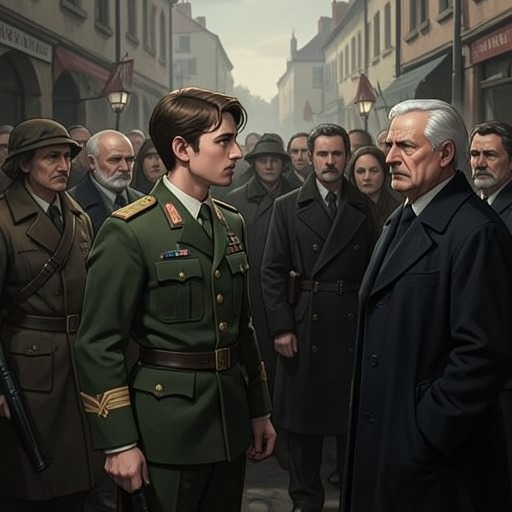
The city’s geography also gives the narrative a sequence of distinct thresholds. Marius Pontmercy reaches Les Halles and follows the red glow cast by a torch at the barricade near the Corinthe Tavern. He passes through the market area toward the Rue des Prêcheurs and the narrow Mondétour passage, where an insurgent sentry is keeping watch. Paris is thus rendered not as a single, continuous panorama but through particular routes: streets that lead toward a barricade, a neighborhood where a pursuer may be seen, and a public garden where Valjean considers flight.
Streets, Vulnerability, and Refuge
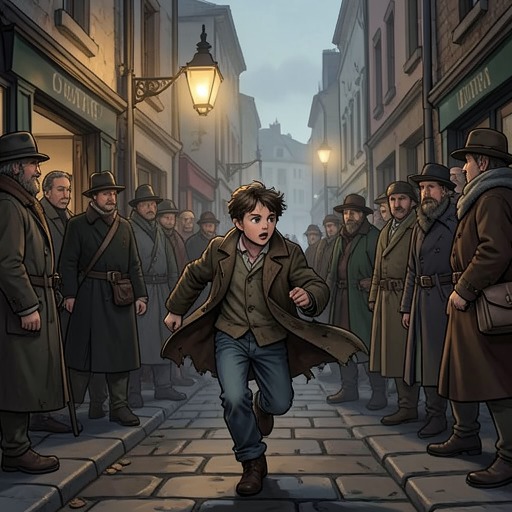
Paris’s streets are a formative environment for Gavroche. At about eleven or twelve years old, he is seen around the Boulevard du Temple and the Château-d’Eau district, dressed in mismatched clothes given to him by strangers. He has both parents, yet his father gives him no attention and his mother does not love him. The street, for all its hardness, feels less harsh to him than his mother’s heart; the account presents his abandonment as a force that has thrust him into life without care.
For Valjean, the city’s dangers gather around the possibility of being recognized or discovered. After seeing Jondrette in the neighborhood more than once, Valjean becomes certain that he is lurking nearby. Political unrest compounds the threat: the police, already alert while seeking political suspects, might uncover a man with Valjean’s concealed past. He decides to leave Paris, and even France, and has told Cosette of his plan to depart for England within eight days. The immediate practical difficulty is obtaining a passport. His position on the Champ de Mars places this decision within the city he is preparing to abandon, as he turns over the pursuer, the police, and the journey in his mind.
Paris also offers an abrupt form of refuge beneath its visible streets. Carrying a wounded man, Valjean enters the Paris Sewers by lifting and closing a manhole cover. In an instant, he passes from the city’s daylight, noise, and danger into darkness and silence. The narration describes the change as a passage from being within the city to having, in effect, left it, and from extreme peril to comparative safety. The refuge is not uncomplicated: Valjean does not know whether the wounded man he carries is alive. The sewers transform the city into a place that can conceal a person from danger, while leaving the fate of the person he is trying to save uncertain.
Political Paris
The city’s public spaces are also associated with political conflict. In the episode at Les Halles, Marius Pontmercy approaches the barricade after following its reflected light through quieter streets. His route brings him toward the insurgents’ position and the narrow passage connecting it with the outside. Paris’s streets therefore provide the approach to a confrontation, while their turns and guarded entrances shape how that confrontation can be reached.
Paris is also the setting of Victor Hugo’s own political resistance, as described in the accompanying account of his life. Hugo initially supported Prince Louis-Napoléon, whom he regarded as a continuator of Napoleonic greatness. As the prince-president moved toward authoritarian government, Hugo turned against him, denouncing the future Napoleon III as “Napoléon le Petit.” During the coup d’état of December 2, Hugo attempted to rouse the people of Paris; the effort led to his exile. The city consequently belongs both to the novel’s fictional political unrest and to the account of the author’s direct political confrontation and departure.
Poverty and Social Conscience
The novel’s modern relevance is connected to the social conditions it depicts, including exclusion, poverty, and the mistreatment of children. An accompanying discussion relates these concerns to the continuing questions of reintegrating former prisoners and supporting people pushed to society’s margins. It also emphasizes that precarious work and living conditions remain realities for children in many countries. Paris serves as a concrete focus for this wider argument, rather than poverty being treated only as an abstract theme.
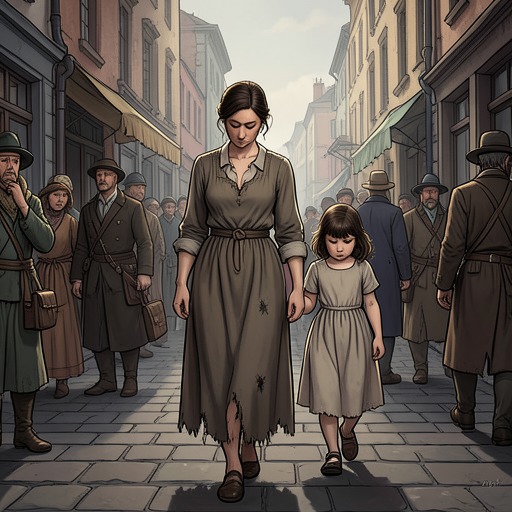
In his speech on poverty, Hugo describes families in the city’s suburbs living crowded together, with inadequate bedding and clothing. He cites the death of a writer who had gone six days without food and recounts that, during a resurgence of cholera the previous month, a mother and her four children searched for food among the remains at Montfaucon. These examples make deprivation visible in particular places and circumstances. Hugo insists that such conditions implicate society as a whole, not only the people who endure them.
He further argues that restoring material order is not enough while people remain hungry, despairing, without bread, or without shelter. The speech makes Paris a measure of the distance between public claims of social stability and the lives of those who are suffering. Across the novel and its accompanying materials, the city gathers together the contrasts that give it significance: a shelter at Gorbeau House and exposure on the street, the guarded barricade and the hidden sewer, political action and unresolved poverty. Its significance lies in how those contrasts connect individual journeys to the responsibilities of society.