Rue Plumet Residence
Les MisérablesRue Plumet Residence is a secluded Paris house whose concealed passage and near-absence of neighbors make privacy part of its architecture. Rented by Jean Valjean under an assumed name as a home for himself, Cosette, and Toussaint, it provides a quiet setting for Cosette and Marius’s courtship—and, when the household leaves, a place whose sudden emptiness marks a decisive separation.
Origins and Setting
The house began as a discreet retreat. In the middle of the previous century, a president of the Parlement of Paris had it built in the Faubourg Saint-Germain for a mistress whose existence he wished to keep private. The narrator sets this arrangement against a social distinction of the period: great lords displayed their mistresses, while bourgeois men concealed theirs. The location was then called rue Blomet; by the time of the events, it was rue Plumet. The house stood on a deserted street near a place once known as the Combat des Animaux.
Its original purpose helps explain the unusual features retained by the residence. The property included a rear building and a passage connecting it to rue de Babylone. The passage had secret openings in the doors, features that a later tenant deliberately had restored. In this house, privacy is not merely a matter of keeping to oneself: the building offers a concealed route beyond the ordinary entrance, making discreet movement possible.
Jean Valjean’s Household
In October 1829, an older man rented the house as it stood, including the rear building and passage. He ordered repairs to a property that still held much of its former furniture: paving stones were replaced in the courtyard, bricks in the tiled floors, steps on the staircase, floorboards, and windowpanes. These practical repairs made the old residence usable again without erasing its earlier character.
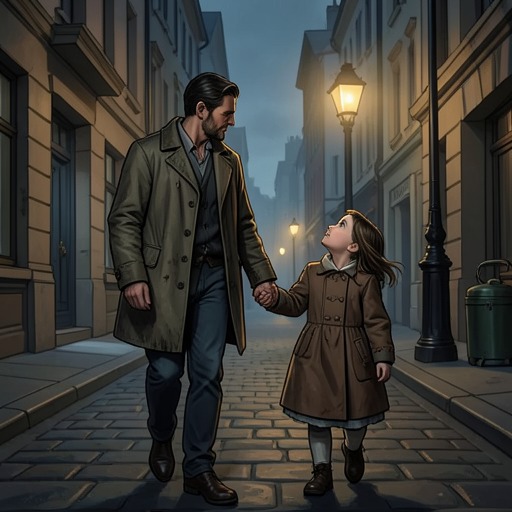
The tenant was Jean Valjean. He moved in quietly with Cosette and Toussaint, a servant he had rescued from the hospital and poverty. Toussaint was old, provincial, and stammering; the narrator identifies these three qualities as the reasons Jean Valjean chose to take her into his household. He rented the property under the name M. Fauchelevent, describing himself as a rentier. The house’s deserted street and lack of neighbors helped the household pass without attracting attention. Its secrecy therefore suited both the physical discretion of the property and Jean Valjean’s assumed identity.
The narrative raises the question of why Jean Valjean left the convent, then answers that nothing had happened. That blunt answer matters: the move is not presented as the result of a new crisis or a specific confrontation. Instead, the residence marks a change of setting for Jean Valjean and Cosette, from the convent to a private household whose hidden passage and anonymity preserve a degree of seclusion.
Garden and Courtship
The residence’s garden becomes a meeting place for Cosette and Marius. After Éponine gives him information, Marius enters the garden and leaves a notebook beneath a stone on a bench. Cosette discovers it and reads an anonymous declaration of love, in which its writer expresses the feelings she has inspired. The message turns the garden into a space where their relationship can advance indirectly: Marius communicates without appearing before her, and Cosette encounters his words in his absence.
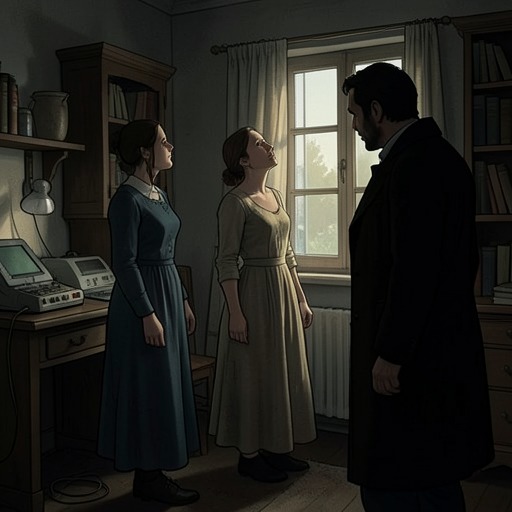
The house also frames Cosette’s growing, though not yet consciously explained, anticipation. One evening, while Jean Valjean is out, she dresses and arranges her hair in the way she thinks suits her best. Her dress has a cut in its bodice, but the narrator clarifies that it is not indecent, only more attractive than it would otherwise have been. Cosette does not know why she has taken such care. She neither intends to go out nor expects a visitor. The detail makes the residence a setting for feelings that are already changing before Cosette can name them.
Departure and Narrative Significance
The privacy of Rue Plumet Residence is eventually reversed into absence. After visiting his grandfather, Marius goes to meet Cosette as agreed, but finds the house deserted. The expected encounter cannot take place; the residence that had sheltered their hidden courtship offers no explanation within this scene, only the fact of departure. Its empty rooms and garden contrast with the earlier signs of anticipation and secret communication.
Across these episodes, the house gathers several kinds of concealment without reducing them to one purpose. It was built for a discreet liaison, its secret passage was restored by Jean Valjean, and it becomes the secluded setting for a young couple’s tentative exchange. Yet the refuge is not permanent: the deserted house makes private space vulnerable to change. Rue Plumet Residence thus joins architectural secrecy to the shifting fortunes of its inhabitants, moving from an old concealed retreat to a temporary home and finally to the site of an abrupt separation.