Azolan
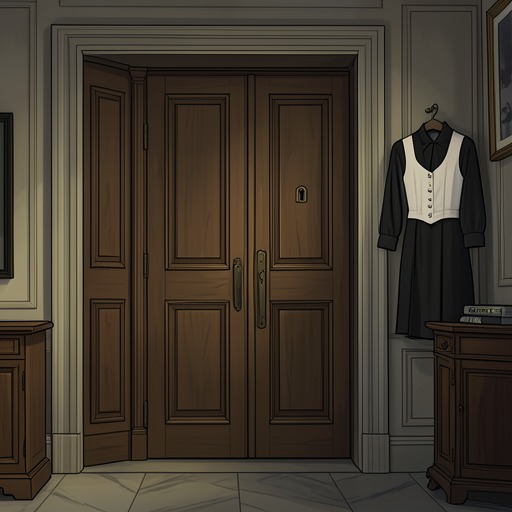
Les liaisons dangereusesAzolan, also identified as Roux Azolan, is Vicomte de Valmont’s huntsman and a servant whose position makes him useful to Valmont’s schemes. After Présidente de Tourvel leaves the estate, Valmont treats Azolan’s access to servants and household routines as a means of continuing his pursuit at a distance. Azolan’s letters show both the reach of that surveillance and its limits: he gathers private information and interferes with Tourvel’s correspondence, yet asserts a boundary when Valmont proposes transferring him into her service.
Identity and Service
Azolan’s formal role is that of Valmont’s chasseur, or huntsman. His service is not confined to hunting or ordinary household tasks: Valmont expects him to keep informed about events around Tourvel, to cultivate useful contacts among her attendants, and to report what he learns. The relationship is plainly hierarchical. Valmont reprimands him for missing Tourvel’s departure and threatens that another failure in the affair will end his employment.
Azolan answers that he missed the departure because Valmont himself had sent him away at three in the morning. He explains that the errand kept him from seeing Julie the previous evening, as he usually did. His defense connects service to dependence: he says that he likes to keep himself properly dressed and must uphold the honor of the livery he wears, while trusting in Valmont’s generosity rather than saving for the future. He also reports collecting twenty-five louis from Valmont’s man of business; when he had to give Philippe two additional louis to set off immediately, he supplied the money himself and asks Valmont to reimburse him.
Surveillance of Tourvel
Valmont’s instructions make the scope of the spying explicit. He wants Azolan to report on Tourvel’s health and sleep, whether she is cheerful or sad, how often she goes out and where, who visits her, and how she spends her time alone. Even her private habits of reading and writing are to be watched: Valmont asks whether she reads continuously or pauses to dream, and likewise what she does while writing. He also directs Azolan to befriend the person who carries Tourvel’s letters to the post, offer to take over that errand, send on letters that seem unimportant, and forward the rest to him, especially any addressed to Madame de Volanges.
Azolan’s ensuing report shows the plan beginning to work. He says Tourvel took only tea at supper, rose early, requested her horses, and went to the Feuillants before nine to hear Mass. She wanted to confess, but her confessor was absent and would not return for eight to ten days. After coming home and breakfasting, she wrote until nearly one o’clock. Azolan then had the opportunity Valmont wanted: he was the person who carried the letters to the post.
Letters and Household Alliances
In that delivery, Azolan intercepted a letter addressed to Tourvel’s husband and sent it to Valmont, judging it the most interesting. He did not intercept a letter for Madame de Volanges, because there was none; he let a letter to Madame de Rosemonde go on, reasoning that Valmont could see her whenever he wished. The selection shows him exercising discretion within the assignment, not merely carrying out a blanket seizure of every letter. His report also says that Tourvel herself writes to Valmont, a further channel through which Valmont expects to learn what is happening.
Azolan secures this access through Julie, who usually hands the letters to the servants. He says she has assured him that, out of friendship for him and for Valmont, she will do what he asks. Although Azolan offered her money, she refused it; he assumes Valmont may wish to give her a small present and offers to discover what would please her. The episode brings personal attachment, payment, and household access into the same information network. Valmont had already instructed Azolan to remain Julie’s lover, tolerate a possible rival if necessary, and not leave the house, because regular presence was how a person saw what was happening. He even advised Azolan to seek a place in Tourvel’s household if a servant were dismissed, while continuing to serve Valmont in secret.
Limits and Narrative Role
Azolan does not accept that last proposal. He tells Valmont that entering Tourvel’s service while remaining Valmont’s man is one thing, but wearing another household’s livery—especially the livery of a lady’s household—after having the honor of being Valmont’s huntsman is another. His refusal marks a limit to his compliance: he will assist with information and letters, but objects to a change in status that would make him visibly serve Tourvel.
As a correspondent, Azolan gives the reader a practical view of Valmont’s power at work. Valmont’s commands translate jealousy and suspicion into precise surveillance: observe a woman’s routines, enlist her attendants, exploit the post, and distinguish which letters should be diverted. Azolan’s report, in turn, reveals the uncertain, negotiated character of that control. He explains his missed opportunity, reports both what he intercepted and what he allowed through, and protects his own standing even as he serves his master’s designs. His importance lies not in independent command of the intrigue but in the access he provides—and in the everyday loyalties and self-interest that make that access possible.