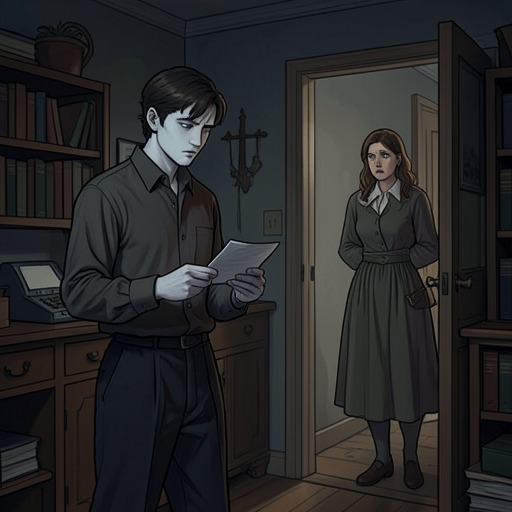
Présidente de Tourvel
Les liaisons dangereusesThe Présidente de Tourvel is a married woman whose reputation for virtue and reserve makes her an apparent counterpoint to the Vicomte de Valmont’s libertine reputation. At first, she interprets his courteous conduct as proof that he has put aside his former behavior. Their correspondence exposes the limits of that confidence: she understands his pursuit as an offense to her principles, while he recasts her distress as an obstacle to be overcome. Through this contrast, her story brings the novel’s concern with virtue, reputation, and manipulation into intimate focus.
Identity and Social Position
The title Présidente marks Tourvel’s connection to her husband, though the supplied passages do not give his name or describe their domestic life. She presents herself as a woman accustomed to honorable feeling and respectful speech, and says that this has allowed her to live with a sense of security. Her moral standing is not merely a public reputation: it shapes what she believes she can safely hear and how she interprets attention from men.
Her marriage is associated with Madame de Volanges, whom she thanks for having helped bring it about. When Madame de Volanges tells her that Cécile Volanges is to marry the Comte de Gercourt, Tourvel wishes the young woman the same happiness she says her own marriage has brought her. She trusts her friend’s judgment and imagines herself becoming a sisterly friend to Cécile, a hope that places her within the women’s network of confidences and counsel.
Trust in Valmont
In an early letter to Madame de Volanges, Tourvel answers a warning about Valmont by describing the man she has encountered at the country château. Although he spends much of his time with her, she says he has made no declaration of love and has not used the familiar phrases that would force a respectable woman to keep him at a distance. She finds his compliments delicate, his conduct restrained, and his company agreeable; she even says that, if she had a brother, she would wish him to resemble the Valmont she sees there.
Tourvel recognizes the discrepancy between this portrait and Madame de Volanges’s severe account of Valmont. She allows that his past conduct may justify the warning, but also suspects that some accusations may have been exaggerated. His respectful talk about women of virtue and his praise of the Marquise de Merteuil further persuade her that his apparent friendship with the Marquise may be genuine love. The reader sees how much her assessment depends on what Valmont chooses to show her: she interprets apparent restraint as evidence of a reformed character.
Her judgment is reinforced by a report of his charity. A servant who followed Valmont to a nearby village witnesses him pay the taxes owed by a poor family whose furniture was being sold and give them a substantial additional sum. Tourvel tells Madame de Volanges that this action gives reason to reconsider an overly harsh opinion of him. The episode makes her confidence seem reasoned rather than merely romantic: she relies on testimony from someone who observed the act, and treats visible generosity as evidence of moral character.
Avowal and Resistance
When Valmont declares his feelings, Tourvel cries, and he makes those tears and her subsequent distance the subject of an aggrieved letter. He alleges that she denied him consolation, avoided his presence, and left him anxious by allowing word to reach him that she was ill. His account turns her withdrawal into cruelty and his own confession into an injury for which she owes him care.
Tourvel replies to explain the tears rather than accept his interpretation. She says that his conduct astonished and embarrassed her, and that she feared being confused with women whom he despised and treated lightly. Her distress, she insists, arose from disapproval and from finding herself in a situation that ought never to have been imposed upon her—not from fear that she might return his feelings. The exchange establishes the difference between her account of her own response and Valmont’s attempt to narrate it for her.
That difference becomes sharper in Valmont’s later account to the Marquise de Merteuil. He describes deliberately heightening the scene with threats of separation and death, watching for signs of fear, then pretending to leave so that Tourvel would stop him. In his version, she faints and he treats the episode as a successful conquest. His language presents a designed performance as a triumph; read beside Tourvel’s stated boundaries, the scene instead shows how emotional pressure and feigned crisis are used to secure submission. His account does not establish that she freely consents to what follows.
Marriage, Virtue, and the Epistolary View
Tourvel’s concern for Cécile’s marriage reveals the principles by which she understands duty. In a letter to Madame de Volanges, she supports her friend’s authority to guide her daughter, but argues that it would be wrong to force Cécile to marry the Comte de Gercourt while she loves the Chevalier Danceny. Madame de Volanges should not, Tourvel reasons, arrange a marriage that leaves her daughter loving another man; she also owes the prospective husband honesty rather than allowing him to proceed in ignorance. Her appeal weighs a mother’s authority, a daughter’s feelings, and fairness to the intended bridegroom rather than treating a socially advantageous match as sufficient.
The novel’s letter form gives Tourvel a voice with which to distinguish her own motives from the meanings Valmont assigns to her behavior. Yet that voice is set against his letters, which report and interpret her reactions for the Marquise de Merteuil. The contrast matters: Tourvel explains what her tears mean, while Valmont turns tears, fear, and hesitation into stages in a strategy. Her correspondence therefore records both her moral reasoning and the difficulty of retaining authority over the account of her own feelings.
Ending and Significance
The prefatory fiction challenges the plausibility of the collected letters by claiming that such events could not belong to the supposedly enlightened present. As its pointed example, it asks readers to believe that a young, beautiful president could die of grief. The remark treats Tourvel’s fate as a test of the book’s credibility, while its irony exposes the complacency of a society that assumes its own virtue merely because it calls itself philosophical.
Tourvel’s significance lies in the tension between the ethical standards she articulates and the manipulative account imposed upon her. Her initial trust is supported by apparent restraint and a witnessed act of charity; her rejection of Valmont’s advances is then recast by him as cruelty and finally confronted with calculated emotional pressure. The letters preserve these competing versions without making them equivalent: Tourvel states her boundaries and reasons, while Valmont’s own account reveals the methods by which he seeks to overcome them.