
A Public Voice for Women
Lessons in ChemistryThis thread traces how Elizabeth’s broadcasts challenge the assumption that women should accept diminished ambition, pay, and authority.
increasing Bearing strength in each event
 decreasing
Bearing strength in each eventdecreasingThe Housewife as Audience

The Housewife as Audience
A Supposedly Passive Viewer
Walter describes afternoon television as a way to revive tired homemakers before dinner. Elizabeth objects to the assumption that an audience of women needs only light entertainment.
A Different Form of Respect
She treats viewers as intelligent people with demanding work. The show’s purpose shifts from filling time to giving its audience useful knowledge and recognition.
Work Hidden in the Home
Work Hidden in the Home
Making Supper Visible
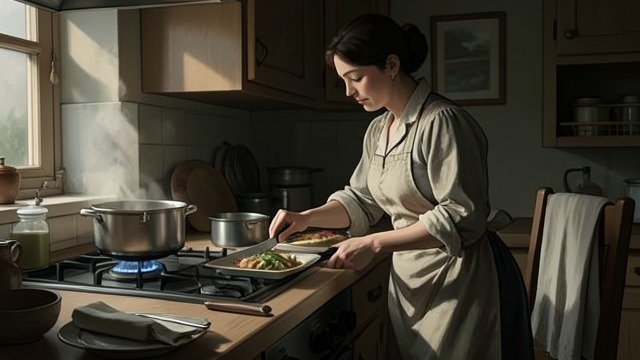
Elizabeth speaks about the effort and sacrifice involved in preparing food and caring for a household. She refuses to describe the work as trivial simply because it is unpaid.
Recognition Without Patronizing
Her teaching dignifies ordinary labor without reducing women to domestic roles. Viewers are invited to take their work seriously and themselves seriously as well.
A Surgeon’s Deferred Dream

A Surgeon’s Deferred Dream
A Confession in Public
Mrs. George Fillis describes herself as a housewife but reveals that she once wanted to become a heart surgeon. Elizabeth asks about her knowledge instead of accepting her self-dismissal.
An Ambition Reopened
The audience applauds, and Elizabeth lays out a route through study and medical training. Mrs. Fillis’s dream becomes more than a private regret.
Equal Minds on Air
Equal Minds on Air
Teaching without Condescension
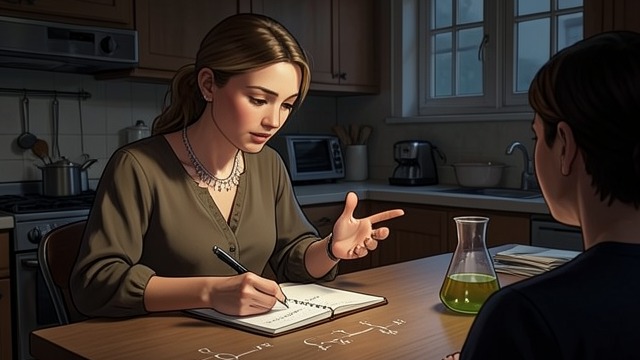
Elizabeth uses technical vocabulary and explains it rather than simplifying the material into empty slogans. Viewers take notes and begin to discuss chemistry among themselves.
A Challenge to Stereotypes
The audience’s engagement contradicts the claim that women are uninterested or incapable of scientific thought. The show makes intellectual seriousness visible in domestic spaces.
Choosing Her Next Work
Choosing Her Next Work
Leaving the Camera
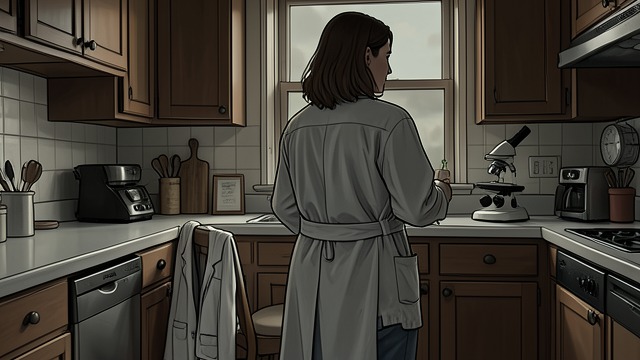
Elizabeth quits the show to return to scientific research, even though the program has become popular and financially valuable. She chooses the work she wants rather than staying in the role that made her famous.
A Lesson Passed On
She tells viewers to stop accepting other people’s limits and to design their own futures. Her exit is not a rejection of the audience but a demonstration of the choice she advocates.
When Walter explains the afternoon time slot
During the program’s early broadcasts
During the chicken pot pie broadcast
During the program’s chemistry lessons
On Elizabeth’s final broadcast
