
Cooking as Chemistry
Lessons in ChemistryThis thread follows Elizabeth’s effort to use food as a practical demonstration that chemistry is present in ordinary work and everyday life.
increasing Bearing strength in each event
 decreasing
Bearing strength in each eventdecreasingA Laboratory in the Kitchen
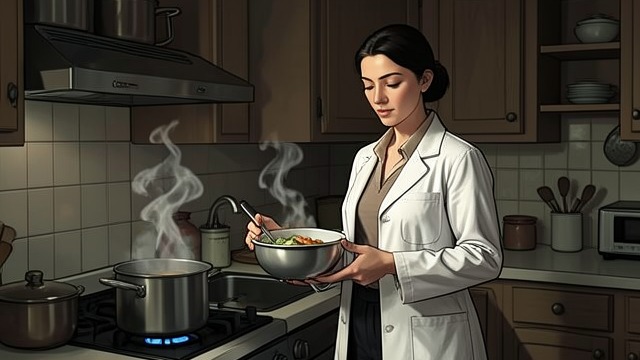
A Laboratory in the Kitchen
Ordinary Materials, Real Science
Elizabeth approaches food as a set of ingredients that react under heat, pressure, and time. Her cooking demonstrations draw on the same scientific habits she uses in research.
Refusing a False Divide
She rejects the idea that a cooking program cannot teach chemistry. The distinction between domestic knowledge and professional science is itself part of what she wants to challenge.
Learning the Bonds
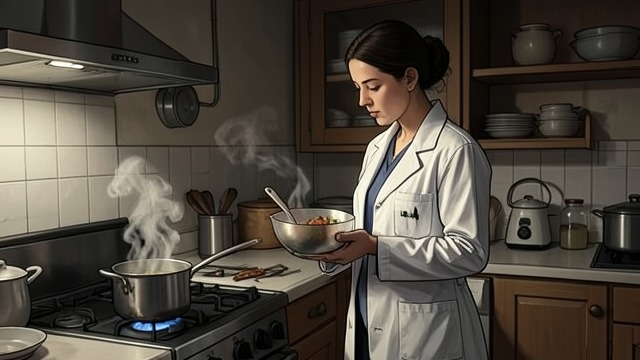
Learning the Bonds
An Accessible Lesson
Elizabeth explains ionic, covalent, and hydrogen bonds through familiar social examples. She connects molecular behavior with the ways people relate, cooperate, and sometimes separate.
A Metaphor with Limits
The comparison is not a claim that chemistry determines human choices. Instead, it gives viewers a concrete vocabulary for thinking about connection and change.
Mixtures and Society
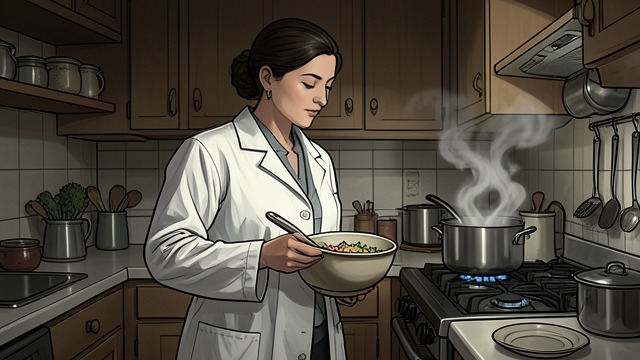
Mixtures and Society
Ingredients Retain Their Qualities
Elizabeth describes a mixture in which each substance keeps its properties while contributing to the whole. The chicken pot pie becomes a demonstration of difference within combination.
A Social Analogy
She imagines a society in which every vegetable has a place and no single ingredient dominates. The lesson makes scientific explanation a way to question inequality.
A Meal That Matters
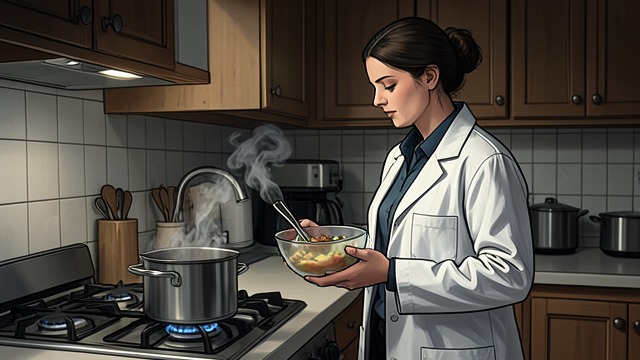
A Meal That Matters
Labor Made Visible
Elizabeth tells viewers that preparing supper takes work and deserves respect. Food sustains bodies, so domestic labor is materially important even when society undervalues it.
Dignity in Practice
Her show does not pretend cooking is effortless or always joyful. It treats the person doing the work as intelligent and capable.
Chemistry Is Life
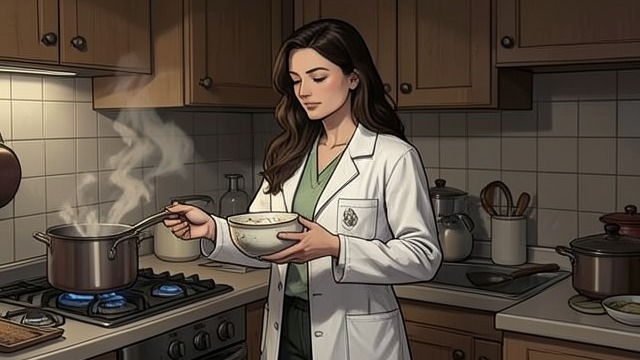
Chemistry Is Life
A Closing Principle
Elizabeth writes that chemistry is change and urges women not to accept limits imposed by others. Her lessons in food have become lessons in making decisions about one’s future.
The Class Dismissed
When the audience refuses to leave after her farewell, Elizabeth calls the program an introduction to chemistry and dismisses the class. The metaphor unites scientific learning with the courage to act.
When Elizabeth first begins planning her program
During a broadcast about chemical bonds
During a chicken pot pie episode
During the show’s growing popularity
On Elizabeth’s final broadcast
