
Mistakes, Failure, and Discovery
Lessons in ChemistryThis thread follows the novel’s view of failure as a source of information, while contrasting honest scientific revision with institutional evasion and human grief.
increasing Bearing strength in each event
 decreasing
Bearing strength in each eventdecreasingThe Researcher’s Attitude
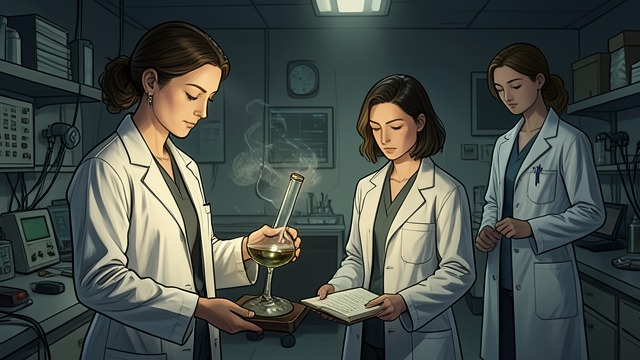
The Researcher’s Attitude
Failure as Evidence
Elizabeth works in a field where experiments do not always produce the expected result. A failed attempt can show what conditions do not support the hypothesis.
A Threat to Management
Hastings prefers confident results that impress funders. The scientific willingness to admit uncertainty clashes with institutions that want quick success and predictable returns.
A Pencil That Erases
A Pencil That Erases
A Tool for Revision
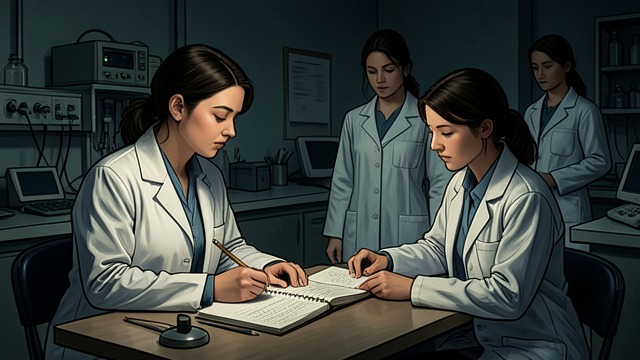
Elizabeth explains that her number-two pencil can erase mistakes, unlike ink. She sees the possibility of correction as a practical part of scientific work.
Mistakes Without Shame
Scientists expect to revise their understanding as evidence changes. Her pencil becomes an emblem of a method that values learning over the appearance of certainty.
A False Result at Hastings
A False Result at Hastings
Science Used as Cover
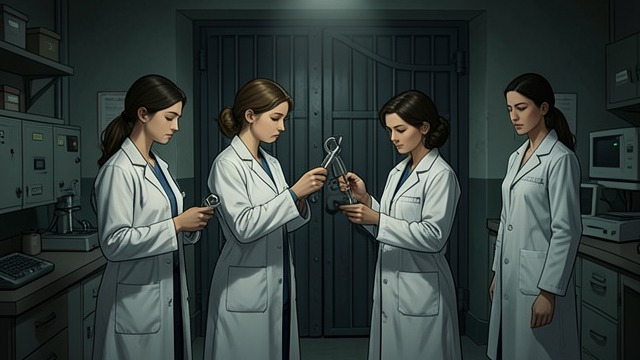
Donatti steals Elizabeth’s work and misrepresents its authorship, while Hastings management has already diverted research money. The institution’s failures are not honest experimental dead ends but deliberate misconduct.
Accountability Matters
The distinction between scientific error and fraud is essential. Mistakes can lead to knowledge; concealment protects power and prevents correction.
A Damaged Tombstone
A Damaged Tombstone
An Accident Leaves a Fragment
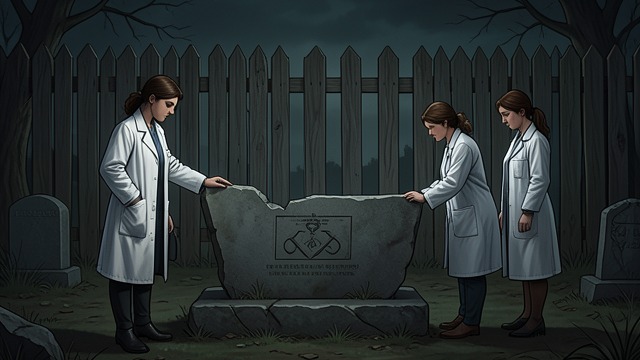
The caretaker’s bullet chips Calvin’s tombstone and destroys part of its inscription. Elizabeth first sees the damage as another injury to the memory of Calvin.
Reinterpretation Through Evidence
The remaining letters make her reconsider the inscription and recall Calvin’s phrase about each day being new. A broken object yields an unexpected clue.
Learning to Begin Again
Learning to Begin Again
No Perfect Repair
Elizabeth cannot undo Calvin’s death, her dismissal, or the publication that misrepresented her. Recovery is not a return to an untouched version of her life.
Work Resumed
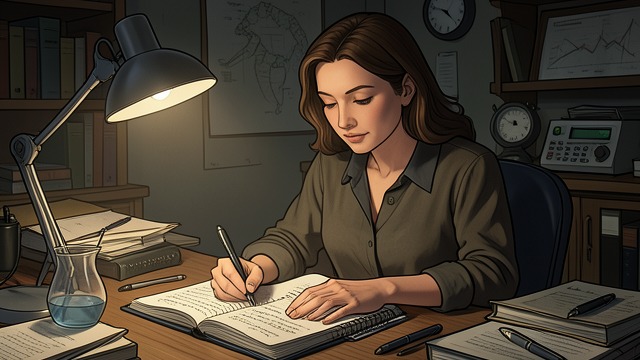
She opens a notebook and returns to abiogenesis. The new beginning accepts past failure as part of the record without allowing it to dictate the next experiment.
During Elizabeth’s early scientific work
During Roth’s interview
During the investigation of Donatti’s management
After the cemetery shooting
At the close of the novel
