
The Dignity of Care Work
Lessons in ChemistryThis thread traces how the story makes unpaid and undervalued care visible, from Elizabeth’s motherhood to Harriet’s work and the labor behind every meal.
increasing Bearing strength in each event
 decreasing
Bearing strength in each eventdecreasingMotherhood Without Myth
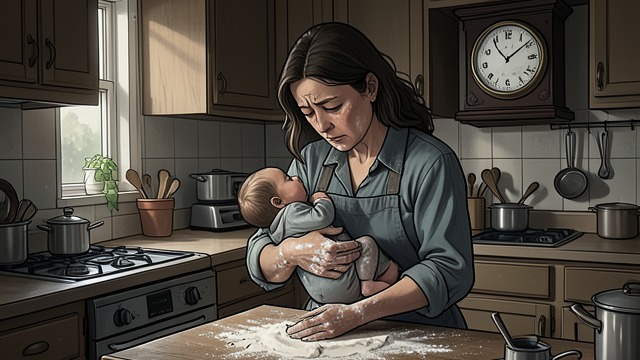
Motherhood Without Myth
The Reality of Care
Elizabeth experiences exhaustion, fear, and repetitive work rather than instant domestic bliss. She struggles to feed, soothe, and protect Madeline while maintaining her scientific work.
An Honest Standard
Harriet helps her understand that difficult feelings do not make her a bad mother. The novel refuses to use idealized motherhood as a measure of women’s worth.
A Neighbor’s Labor

A Neighbor’s Labor
Care Made Dependable
Harriet takes Madeline to school, watches her, and supports Elizabeth’s work schedule. Her care is a sustained contribution rather than an occasional favor.
Work Given Value
When Elizabeth pays Harriet, the relationship recognizes labor that had previously gone unpaid. The paycheck gives Harriet a new form of independence and purpose.
Dinner as Skilled Work
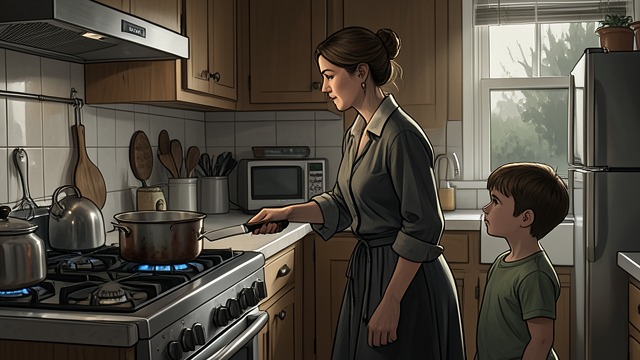
Dinner as Skilled Work
Effort Behind the Meal
Elizabeth tells viewers that cooking involves planning, judgment, timing, and knowledge. A meal is not a trivial product merely because it is made at home.
Respect for the Cook
Her demonstrations teach chemistry while honoring the person doing the work. She does not ask women to feel cheerful about burdens that society has placed on them.
A Moment for the Mother

A Moment for the Mother
A Repeated Instruction
Elizabeth ends episodes by telling children to set the table so their mothers can take a moment for themselves. The line gives domestic responsibility a place in the public conversation.
Advice Returned to Its Source
The instruction echoes Harriet’s earlier counsel to Elizabeth. It turns a private act of friendship into a small practice viewers can repeat at home.
Care Beyond the Home

Care Beyond the Home
A Wider View of Labor
Elizabeth credits farmers, pickers, truckers, and shop workers who make food available. Her attention extends beyond the person preparing dinner to the chain of people sustaining others.
Shared Responsibility
The program presents care as skilled and collective work, not a natural duty that women alone should perform. Its everyday subject becomes a critique of who is expected to serve and who is allowed to be served.
After Madeline’s birth
As Harriet begins helping with Madeline
During Supper at Six’s early broadcasts
As the show develops its signature ending
During the program’s later broadcasts
