“Why Their Minds Matter” Feature
Lessons in Chemistry“Why Their Minds Matter” Feature is a piece of science journalism that moves from an unpublished mock-up, rejected by scientific publications, to a title displayed on a Vogue cover. Its central subject is not only Elizabeth Zott’s research but the wider community of women scientists whose work is often overlooked. The article’s return in print gives material form to the contrast between Elizabeth’s belief in women’s capacity to understand science and the institutions’ repeated refusal to make room for that belief.
The mock-up and its subject
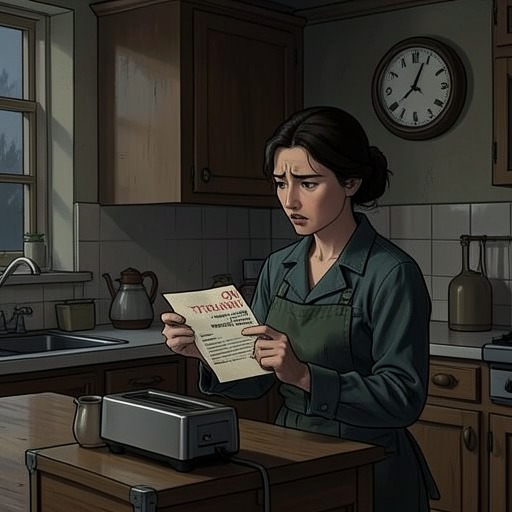
Elizabeth encounters the article at home after objecting to the disclosure of private details. She stops when she sees the headline, “Why Their Minds Matter,” on a mock-up that has not yet been published. Beneath it is a photograph of Elizabeth in her home laboratory, with a goggled Six-Thirty beside her. A photographic border surrounds them with images of women scientists from around the world in their laboratories. The composition makes Elizabeth one member of a larger scientific community rather than an isolated exception.
The subhead, “The Bias of Science,” and What These Women Are Doing About It, identifies both the obstacle and the response as the article’s organizing idea. Its frame extends beyond a profile of one television presenter: the women’s laboratory work is presented as a collective answer to bias. For Elizabeth, the account includes her goals and experiments, while the surrounding portraits place those efforts alongside the work of women elsewhere. She reads the piece holding her breath, then feels fortified by the other scientists’ battles and inspired by their progress. The article’s arrangement thus changes the scale of her story, connecting an individual career to a wider struggle over who is recognized as a producer of scientific knowledge.
Science as a route to understanding
The article’s subject connects with the purpose Elizabeth gives her television program. She explains to Roth that she wanted Supper at Six to teach chemistry because understanding chemistry helps women understand how things work. In her account, atoms and molecules are more than technical material: learning the physical rules of the world can help women recognize that many limits imposed on them are false. The article’s pairing of Elizabeth’s laboratory with other women’s laboratories gives this educational argument a broader field of examples. Women appear not simply as an audience for scientific explanation but as researchers with experiments, aims, and work of their own.
That distinction matters in a story where women’s knowledge is regularly diminished. When Elizabeth challenges Dr. Donatti over her dismissal, she asks whether he would have fired Calvin Evans in the same circumstances; his answer exposes a gendered double standard rather than a difference in scientific competence. On her program, Mrs. George Fillis of Kernville uses Elizabeth’s explanation of osmosis to think through her own leg edema, despite describing herself as merely a housewife. Elizabeth rejects that dismissal of women’s capacities. The article’s worldwide border of laboratory portraits gives visual scope to the same challenge: authority in science cannot be treated as an exclusively male possession, and women’s understanding is not limited to domestic or supposedly lesser subjects.
Rejection and readership
A note clipped to the mock-up explains its uncertain route toward publication. Roth apologizes to Elizabeth, says that he has left Life, and reports that he is still trying to get the truth out, although ten scientific publications have rejected the piece. He is leaving to cover a developing story in Vietnam. The note records a specific institutional barrier: an article about women in science has struggled to find a scientific publisher. Its unpublished status contrasts with the confidence of its design, which already gathers Elizabeth’s work and the other scientists’ efforts into a coherent public argument.
Harriet Sloane later tells Elizabeth that she has read Roth’s science-focused piece twice and found it riveting. She had not known of other women scientists besides Elizabeth and Curie. Her response suggests that the article can make a field visible even to an engaged reader who has encountered little of it before. Harriet’s interest also stands against the dismissive expectations surrounding science: she acknowledges that the subject is not usually what she reads, yet the article holds her attention. Elizabeth, by contrast, answers that it has already been rejected by ten scientific magazines and that people have no interest in women in science. Her response is shaped by repeated rejection; Harriet’s reading shows that the article can reach and inform a reader when it is given the chance.
From unpublished article to Vogue cover
The article’s meaning changes when a young woman later asks Elizabeth to autograph a magazine. Elizabeth refuses, thinking the request concerns Life, but the woman clarifies that she means a different publication. Elizabeth looks down and sees her own face on the cover of Vogue, beneath the headline “Why Their Minds Matter.” The scene does not establish that the article has appeared in the same form as its earlier mock-up, but the returning title and cover image make the earlier project publicly visible in a new setting.
The movement from rejection to a magazine cover reverses the article’s apparent fate without erasing its difficult path. Roth’s mock-up had presented Elizabeth among women scientists while scientific publications turned it away; the later Vogue cover brings the title and Elizabeth’s image before a broader readership. For Elizabeth, who had declared herself finished with Life, the unexpected cover is a concrete change in how the story is being circulated. The feature’s significance lies in that shift as well as in its subject: it insists that women’s scientific work deserves to be seen, and its route through dismissal, private recognition, and public display echoes the struggle for recognition it describes.