Calvin’s tombstone
Lessons in ChemistryCalvin’s tombstone is both a memorial to Calvin Evans and a changing surface on which grief, memory, and the possibility of renewal become visible. Its deliberately incomplete quotation is later damaged by a bullet, making the words themselves part of the story’s action; when cemetery management offers a replacement, Elizabeth Zott refuses to restore the original quotation and chooses a different inscription instead.
Form and Inscription
The marker identifies Calvin Evans by name and dates, 1927–1955, then compresses his life into four descriptions: “Brilliant chemist, rower, friend, lover.” The list joins professional distinction to physical practice and intimacy. Its final words make the grave a record not only of a life but of the relationships through which that life mattered.
A further inscription was meant to carry a quotation from Marcus Aurelius: “Your days are numbered. Use them to throw open the windows of your soul to the sun,”. The stone was too small for the engraver’s lettering; the first part was made too large, and there was no room for the rest. The resulting omission is practical rather than intentional, but it gives the epitaph an unfinished quality. A maxim about making use of limited time is itself curtailed by the limits of the object meant to preserve it.
Six-Thirty’s Visits
The tombstone lies on the route Six-Thirty takes to the cemetery, past the place where Calvin died. On one visit, Six-Thirty watches for the groundskeeper, squeezes beneath the back gate, and moves through the rows to take fresh daffodils from another tombstone. He lays them at Calvin’s marker. The gesture makes the grave part of a repeated practice of mourning, while the borrowed flowers connect Calvin’s memorial to the cemetery’s other dead.
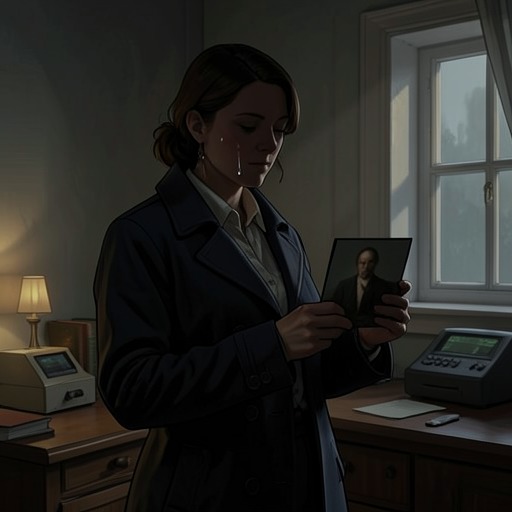
At the stone, Six-Thirty studies its words. Elizabeth Zott is trying to teach him that words are not commands: the distinction gives the epitaph a special place in his learning. The marker holds language addressed to a human reader, yet Six-Thirty attends to it as he learns how words work. Its message also returns him to the loss he cannot forget; the passage frames failure as something that remains present rather than something remembrance can simply correct.
Damage and Public Consequence
The marker is struck during Six-Thirty’s intervention against an armed man in the cemetery. When a bullet passes Six-Thirty and hits Calvin’s tombstone, the memorial becomes part of the immediate danger rather than a background object. Six-Thirty knocks the man down, then helps stop the bleeding from a wound near his ear and barks for people to come. The damage to the stone follows this act of protection, joining the continuing risk of violence to the place that already marks Calvin’s death.
The episode receives public attention through a newspaper report headed “Dog Mourns Master and Saves Man’s Life” and “Cemetery Dog Ban Lifted.” The article says visitors had complained about the groundskeeper and his gun, including reports that he had shot at squirrels and birds during funerals. It promises that the man will be replaced immediately and that the grave marker will be replaced as well. In the close-up accompanying the report, the bullet has removed about a third of the inscription. What had been incomplete because of the engraver’s mistake is now visibly broken by violence.
Elizabeth Zott reads the remaining words as “Your days are nu,” then recognizes “Nu” as the beginning of a different, intimate memory: Calvin’s childhood mantra, “Every day. New.” The damaged lettering unexpectedly brings her back to a night when Calvin shared that phrase with her. The fragment does not restore the missing inscription; instead, its broken form prompts a new association, turning damage into an occasion for recognition.
Replacement and Reinterpretation
Cemetery management offers to provide a new tombstone and include the whole Marcus Aurelius quotation this time. Elizabeth Zott declines that repair. Rather than give the replacement another round with the same philosophical quotation, she opts for a chemical response that results in happiness. The choice makes the new marker more than a correction of the old one: it allows Elizabeth Zott to decide how Calvin’s memorial will speak, and redirects its message toward chemistry and an affirmative answer to grief.
At the new inscription, Elizabeth Zott tells Calvin that she is finally going to see someone about her pregnancy. She identifies Dr. Mason as the rower who let her row in the men’s eight, linking the news to a person and an earlier part of her life rather than speaking of the pregnancy in isolation. She points to her bump and looks at the stone as though waiting for a reply. The gesture keeps the conversation unresolved: the memorial cannot answer, but it remains the surface on which she addresses Calvin and marks a change in her own life. Across its successive forms, the tombstone holds together what grief cannot undo and what Elizabeth Zott can still choose to make new.