Coercion and forced separation at homes for unwed mothers
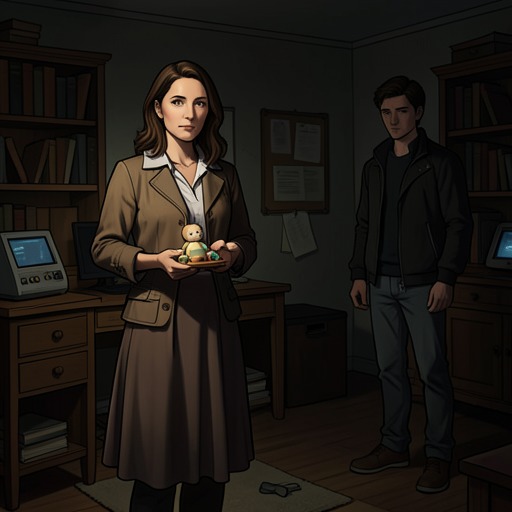
Lessons in ChemistryCoercion and forced separation at homes for unwed mothers is presented through Avery Parker's account of how unmarried mothers were pressured to surrender their children, and how concealment could make that separation permanent. The story she tells Elizabeth Zott follows the machinery from official relinquishment forms and threats to a falsely reported stillbirth, an adoption, and a child sent to All Saints in Iowa. Its consequence is not only a mother's loss: the account links that coercion to Calvin Evans's orphaned childhood and to Avery's decades-long effort to find him.
Institutions and Relinquishment
Avery describes homes for unwed mothers as institutions where young women were gathered after pregnancy outside marriage. Their process centered on relinquishment: after giving birth, mothers were expected to sign an official form surrendering their babies. Most signed, Avery says, but the apparent choice was shaped by intimidation. Women who refused were threatened with having to endure delivery alone and possibly dying. In this account, the form is therefore more than paperwork. It records a decision made under pressure, while the threat makes clear that refusal could bring serious consequences.
Avery's account also places the homes within a wider network of charitable and religious authority. Her parents had long funded unwed mothers' homes and orphanages because they believed this made them good people. She later condemns their blind allegiance to the Catholic Church, which, in her view, helped make an orphan of her son. The contrast between charitable intention and harmful outcome is central: funding institutions did not protect the people within them from coercion or separation.
Refusal and Institutional Punishment
Avery's example is a seventeen-year-old girl who became pregnant after falling in love with a young man. Her prominent parents, ashamed of her pregnancy, sent her to a Catholic home for unwed mothers. Though the staff warned her of the consequences, she refused to sign the relinquishment form and continued to insist that she had rights. Avery presents that insistence as a direct challenge to the institution's demand that she surrender her child.
When labor began, the girl was placed alone in a room and the door was locked. Avery says she remained there for a full day before a doctor, angered by the noise, entered and anesthetized her. Afterward, the girl was told that her baby had been stillborn. When she asked to see the body, the doctor said it had already been disposed of. The account establishes a sequence in which confinement and medical authority leave the mother unable to verify what happened. The news she receives closes off her immediate ability to resist the separation, while the missing body prevents her from confirming the claim.
Concealment and the Child's Journey
Ten years later, a nurse from the home contacted the now twenty-seven-year-old woman and asked for money in exchange for the truth. The nurse disclosed that the baby had not died but, like the other babies, had been put up for adoption. The child's adoptive parents later died in a tragic accident, followed by the death of the child's aunt; he was then sent to a place called All Saints in Iowa. Avery's account thus traces the consequences beyond the initial surrender: a false report concealed the adoption, and subsequent family losses left the child in an institution.
The delayed disclosure changes the meaning of the earlier separation. What the young mother had been told was an irreversible bereavement was, according to the nurse, a concealed adoption. Yet the truth arrives only after a decade and through a demand for money. Avery does not describe the nurse's motives beyond that request, but the circumstances make clear that access to the information was controlled by someone else. The mother could begin searching only after learning that her son was alive and receiving a clue to where he had been sent.
Avery Parker's Search and the Aftermath
Avery identifies herself as the young woman in the story and as Calvin Evans's biological mother. The nurse's disclosure began her quest to find her son. Avery tells Elizabeth that she had never seen him, held him, or heard his voice, and that she later learned he had suffered after losing her, his adoptive parents, and his aunt. She describes the consequences as compounded losses, ending in Calvin's placement at All Saints Boys Home. Her account therefore connects the separation imposed on a birth mother with the deprivation and instability experienced by the child.
Avery also says she funded her son's memorial before he was dead and had, in effect, buried him twice. Her words describe how the false stillbirth report and her later belief that Calvin was gone shaped her life before she knew his actual fate. After a representative returned from the boys' home, she sank into a deep depression; she had not met Calvin and knew he had suffered. The story she tells Elizabeth is consequently both a history of institutional separation and an explanation of the grief that followed its concealment.
Narrative Significance
The account makes the separation legible as a chain of connected acts rather than a single surrender: a family sends a pregnant teenager away; a home pressures her to sign; her refusal is met with threats and confinement; a doctor tells her the baby is dead; and the adoption remains hidden until a nurse discloses it years later. Each stage narrows the mother's access to choice or knowledge. The contrast between the official form and the concealed adoption shows how a procedure presented as relinquishment could be enforced through coercion and maintained through misinformation.
Avery's family history further complicates the language of benevolence. Her parents supported the homes and orphanages as charitable institutions, but Avery sees their support and religious allegiance as part of the circumstances that separated her from Calvin. The account does not claim that every woman's experience was identical; Avery recounts her own history while describing practices at the home. Its significance lies in showing how institutional authority, family shame, and the presumption that mothers should relinquish their children could converge, leaving both mother and child to bear the consequences long after the original decision was imposed.