Elizabeth resumes abiogenesis research
Lessons in ChemistryElizabeth Zott resumes abiogenesis research in the novel’s closing scene, converting a moment of family reunion into a concrete return to scientific work. After years in which institutional authority had tried to push her out of the laboratory, she takes a pencil and opens a fresh notebook: “Abiogenesis,” she says. “Let’s get started.”
The Earlier Break with Institutional Science
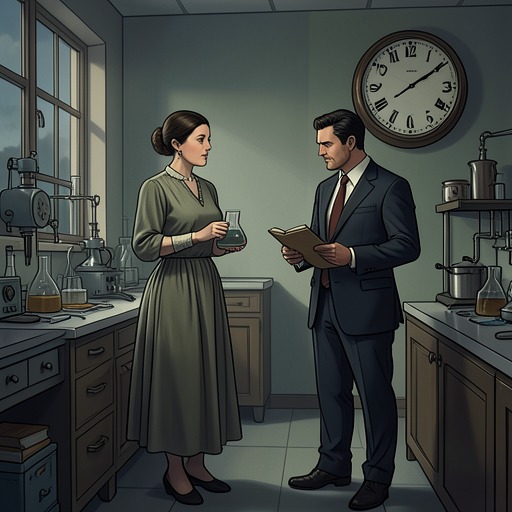
Elizabeth’s return gains force from the circumstances of her departure from Hastings. Miss Frask told her that the code of conduct required her to sign a paper and clear out her desk; Elizabeth challenged the decision as discrimination against a pregnant, unmarried employee and asked what would happen to the man involved. When Dr. Donatti invoked an unwritten rule, she countered that she had read the employee manual and that an unwritten rule was not legally binding.
The dispute ended not with a negotiated leave but with an order to leave the building by noon. Her salary and health benefits were to end on Friday, and she was forbidden to discuss the reasons for her dismissal. These conditions show the material as well as professional force of the institution’s decision: it cut off her employment and benefits while attempting to control how she could speak about what had happened. Against that history, resuming research is more than a return to an old subject; it is a renewed act of scientific agency outside the terms imposed on her by Hastings.
A Family Scene Becomes a Working Scene
The resumption comes after Avery Parker turns back to Elizabeth and calls them “the whole family.” Once the door closes, Elizabeth bends to Six-Thirty, takes his head in her hands, and asks how soon he knew. Six-Thirty’s narration supplies the precise answer he would give—“At two forty-one”—and adds that he plans to call her that. The thought preserves the scene’s playful canine perspective without interrupting its movement toward Elizabeth’s work.
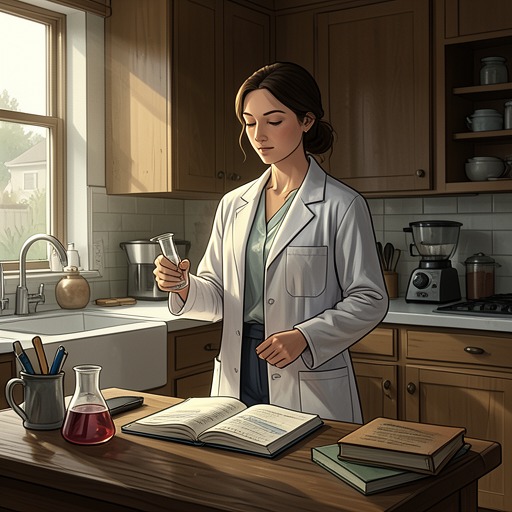
Six-Thirty then jumps onto the opposite counter and grabs a fresh notebook. Elizabeth removes the pencil from her hair, takes the notebook from him, and opens its first page. The exchange gives the return a physical beginning: a blank page, a pencil already at hand, and a dog who has brought the notebook into reach. Elizabeth names the subject and starts. Research is not merely promised for some later time; the book ends with her beginning it.
The Significance of the Ending
Abiogenesis—the study of life arising from nonliving matter—returns the ending to Elizabeth’s defining scientific curiosity. The choice also places work beside, rather than in opposition to, family: the family has just been affirmed, and the next action is Elizabeth’s renewed research. Hastings had tried to make pregnancy and scientific employment incompatible; the closing scene refuses that imposed separation by letting domestic closeness and scientific inquiry occupy the same moment.
The notebook provides a quiet counter-image to the termination paper. Earlier, Elizabeth was ordered to sign a document that would formalize her exclusion; at the end, she opens a new page and begins on her own terms. The novel closes not with a claim that her obstacles have disappeared, but with the decisive gesture of returning to the work itself.