Harriet Sloane’s abusive marriage
Lessons in ChemistryHarriet Sloane’s abusive marriage is a long-running structure of humiliation and control, not a single eruption: Mr. Sloane drinks, curses, calls her names, and treats her as a personal servant, while religious counsel and domestic advice repeatedly direct Harriet to accommodate him. The marriage’s effects surface in her habits of self-correction, her reluctance to involve the police, and her eventual recognition that she needs a career rather than another attempt to become a better wife. The story’s turning point is not an instant escape but a changed account of what Harriet’s life might be for.
The marriage and its justifications
Harriet describes a marriage in which Mr. Sloane’s conduct is an enduring burden. For thirty years, she tells her priest that her husband drinks and curses, does not attend Mass himself, treats her as his personal slave, and calls her names. The priest listens, but his advice does not ask Mr. Sloane to change: divorce is presented as out of the question, while Harriet is offered prayer, self-examination, and greater attention to her appearance. The pattern makes the religious institution part of the marriage’s machinery of endurance. Its counsel offers Harriet options only so long as the responsibility for improving the household remains hers.
Harriet herself has a complicated attachment to religious belief. She considers belief in God a requirement of decent life, as ordinary and compulsory as brushing one’s teeth or wearing underwear. She also understands her own marriage through that belief: God, she thinks, is why she and Mr. Sloane remain married and why the marriage is her burden to bear. But this conviction does not soften her view of her husband. She takes comfort in the possibility of hell because she wants to believe that he will be punished there. Faith gives her a language for endurance and for anger, even as the priest’s counsel keeps her inside the marriage rather than offering a way out.
Violence and Harriet’s refusal
The abuse becomes physically explicit after Mr. Sloane is angered by several things: Harriet has thrown out his girlie magazines, the Dodgers have lost, and he disapproves of Elizabeth encouraging a woman who wants to become a heart surgeon. He throws an empty beer bottle at Harriet, and she falls backward as if struck at a shooting range. The bottle’s emptiness does not make the act harmless; it is the force of the throw and Harriet’s fall that give the scene its unmistakable threat.
When Elizabeth reaches for the phone to call the police, Harriet stops her, resting a hand on her arm. She expects the police to do nothing and refuses to give Mr. Sloane the satisfaction of seeing her call them. She also reports that she hit him with her purse. Her response is not presented as proof that she is unafraid of violence; rather, she distinguishes fear from disgust. Mr. Sloane disgusts her, she says, and he does not scare her. Elizabeth recognizes the feeling, remembers her own earlier encounter with the police, and embraces Harriet. Although the two friends rarely touch, Elizabeth tells her there is nothing she would not do for her. Their exchange makes solidarity tangible without pretending that friendship can itself end the danger at home.
Self-improvement and a different future
For years, Harriet tries to follow the advice offered to wives. She subscribes to women’s magazines because she treats them as bibles of self-improvement, hoping they will tell her what to do. Even a perm is an effort to meet the promise of one magazine’s advice that it will make her husband notice her. Instead, Mr. Sloane complains about how terrible she smells. The episode captures the futility of a system that makes Harriet responsible for winning better treatment while leaving her husband’s behavior untouched.
Elizabeth’s arrival in Harriet’s life helps her consider another possibility: perhaps what she needs is not new clothes or a different hairstyle, but a career. Harriet knows magazines unusually well and begins to regard that knowledge as a qualification rather than merely a means of trying to please her husband. She sees a professional opportunity in Roth’s unpublished article about women in science. In her view, he has made a mistake by assuming that only science magazines would want the piece. While Roth is away in Vietnam and cannot be reached, Harriet submits the article without his permission, reasoning that acceptance might benefit him and rejection would leave him no worse off. The act is practical and audacious: she uses her own judgment, makes a decision, and enters a professional arena on the strength of experience acquired in a life that had been organized around someone else’s demands.
Separation and the possibility of a new life
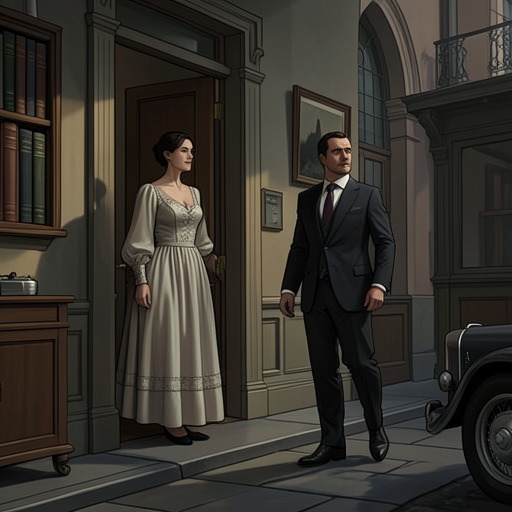
Harriet’s departure from the marriage is still in process when she and Walter Pine’s relationship becomes visible to Elizabeth. At the doorstep, Walter and Harriet explain that they had hoped to keep the relationship quiet until Harriet’s divorce comes through. Walter reaches for Harriet’s hand; Elizabeth, astonished, realizes she had not known what was happening. The moment marks a change in Harriet’s circumstances, but it does not erase the long marriage or establish that the divorce is complete. Her new relationship and her professional ambitions belong to a future that is being made while the old bond remains legally unresolved.
Harriet’s movement toward that future is not framed as a sudden transformation from passivity into courage. She has already rejected the priest’s blame, recognized the failure of magazine advice to reform Mr. Sloane, resisted Elizabeth’s impulse to confront him with a baseball bat, and stated her own assessment of what does and does not frighten her. She also accepts Elizabeth’s embrace and, later, reaches for Walter’s hand. At Elizabeth’s decision to leave television for scientific research, Harriet draws Walter and Elizabeth close and cries. Her tenderness toward her friends contrasts with the coercion of her marriage: care here is mutual rather than demanded as a wife’s duty.
The marriage’s significance lies in how its private demands are reinforced by familiar authorities and habits. Mr. Sloane’s insults and violence are joined by religious advice that assigns Harriet the work of making herself more pleasing, and by magazines she initially reads as manuals for that work. Her eventual turn toward a magazine career reverses the direction of that reading: she moves from consuming instructions about how to serve a husband to using her knowledge to make decisions of her own. The divorce remains pending, but the change in Harriet’s imagined future is already consequential.