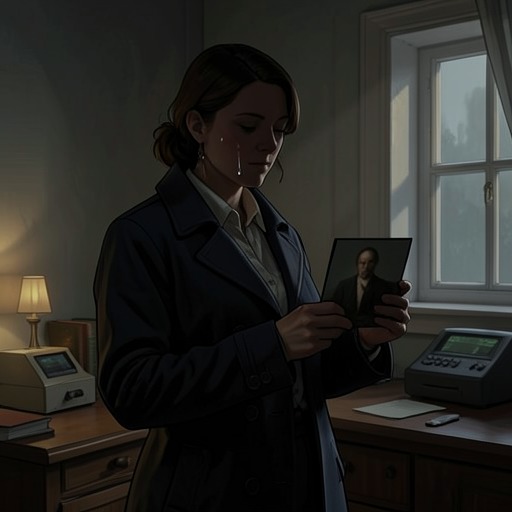
John
Lessons in ChemistryJohn, Elizabeth Zott’s brother and childhood caretaker, gave her both an early education and a lasting reason to question why she survived when he did not. He taught her to read, introduced her to the library, and protected her as best he could from their parents’ priorities. His death when Elizabeth was ten left her carrying a guilt that resurfaced years later: as a child, she had once been in danger in a quarry, and John had gone in after her despite being unable to swim himself.
Identity and Family Background
Elizabeth later described John as the person who raised her. Her account makes his role practical as well as emotional: he taught her to read and opened the library to her, giving her access to a world beyond the household. She also remembered him trying to shield her from their parents’ devotion to money. The contrast is stark: John offered care and intellectual encouragement within a family whose adults, as Elizabeth recalled them, failed to provide comparable protection.
The family circumstances she disclosed to Roth help define the limits within which John acted. Their father was a doomsday performer who was eventually imprisoned for killing three people during a performance. When John died, their father did not wait for the police before leaving, unwilling to be late for another performance. Their mother later left for Brazil with a new family; Elizabeth had not seen her for more than twelve years. The evidence does not establish all the details of John’s childhood or his reasons for taking his own life, but it places his care for Elizabeth against a background of parental absence and instability.
Care and Intellectual Influence
John’s influence on Elizabeth is remembered through concrete acts of teaching and introduction. He did not merely help her acquire the mechanics of reading: by taking her to the library, he connected that ability to a larger, continuing source of knowledge. These memories clarify why Elizabeth describes him as the person who raised her, rather than simply as a sibling. His care helped form the habits of inquiry that remain central to her adult identity.
His efforts to shield her from their parents’ attachment to money also suggest a protective role, although the account does not specify particular incidents or methods. Elizabeth’s description is brief, but its structure is telling: she names what John taught her, what he showed her, and what he tried to keep from harming her. The record of his importance is therefore not a generalized claim of closeness but a set of actions that shaped her childhood.
The Quarry and John’s Death
A later conversation with Reverend Wakely reveals another defining memory between the siblings. Elizabeth told him that she had jumped into a quarry as a child, could not swim, and still could not swim. John jumped in after her and managed to get her to the side, although he did not know how to swim either. The episode establishes both the danger she faced and the risk John took to save her; it does not establish that he could have saved himself in a similar situation.
Elizabeth was ten when John died by suicide. She had disclosed his death to Reverend Wakely as part of a confession about her past, and Wakely recognized the connection between that loss and the quarry episode. He understood that Elizabeth believed John had saved her and that she ought, in turn, to have saved him. He tried to distinguish the circumstances of the two events, explaining that suicide is more complicated than the desperate rescue of a child in water. Elizabeth answered that John had not known how to swim either. Her response shows why reassurance could not simply dissolve her guilt: to her, his rescue and his death remained painfully joined by the fact that both involved a person unable to swim.
Memory and Narrative Significance
John is represented through Elizabeth’s recollections rather than through an independent account of his thoughts. The narrative gives no explanation for his suicide and does not claim that the quarry rescue caused it. That distinction matters: the guilt belongs to Elizabeth’s later understanding of the events, not to a proven account of John’s motives. Her own words reveal how a childhood rescue became entangled with bereavement, while Reverend Wakely’s response offers a compassionate alternative to treating the two events as equivalent.
The family tree Madeline made also preserves John’s death as part of the family record: at its bottom is a child’s image indicating suicide. The image gives visible form to a fact Elizabeth has carried privately, linking a personal loss to the family history Madeline is trying to understand. Across these recollections, John’s significance lies in the durable shape of his care: he gave Elizabeth access to books and knowledge, tried to protect her, and once risked himself to save her. His absence is felt not through an invented account of what he might have become, but through the life he helped Elizabeth continue and the guilt she has struggled to separate from his final act.