KCTV Studios
Lessons in ChemistryKCTV Studios is the production setting for Elizabeth Zott’s move from scientific work into local television, and the place where that move becomes entangled with the medium’s demands and the reactions her broadcasts provoke. Its wardrobe room, corridors, offices, and parking lot trace a widening conflict: first over how Elizabeth is expected to appear on camera, then over what she is permitted to say, and finally over the threats directed at the station.
Setting and Television’s Promise
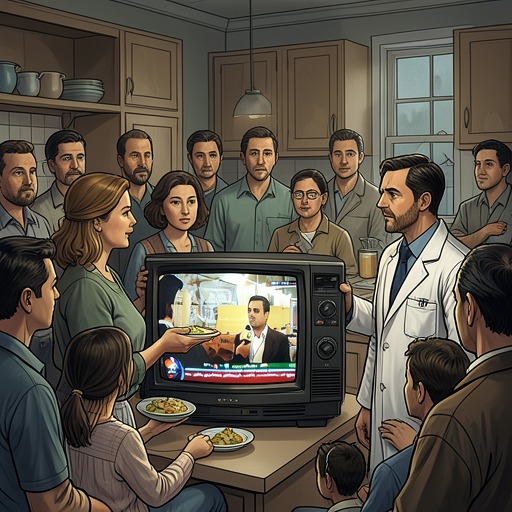
After a one-month time marker, the narrative introduces KCTV Studios through Walter Pine’s long familiarity with television. He had been in the medium from almost its beginning and valued its promise of escape from daily life; that attraction had helped draw him to the industry. The studio’s work is local afternoon programming, a setting whose ordinary entertainment format becomes the vehicle for Elizabeth’s unusually direct approach to cooking and science.
Walter approaches Elizabeth with a business proposal after first apologizing for the lunch situation involving Amanda and saying that it has been corrected. He identifies himself as a producer of local afternoon television and describes his plan to change the lineup by adding a cooking show. His pitch treats the format as a way to enliven the schedule, and his attempted joke, followed by Elizabeth’s silence, makes his nervousness plain. The studio therefore enters the story not simply as a workplace, but as an institution trying to recruit Elizabeth into a familiar television category.
Elizabeth’s Work and the Studio’s Conventions
Elizabeth’s first experience inside the studio exposes the assumptions built into that category. Emerging from the wardrobe room, she objects that every dress is too tight to wear comfortably. She had expected the tailor’s measurements to be accurate, but Walter explains that the clothes are meant to fit snugly because the camera is said to add weight. His casual description of the practice as a way to slim the presenter contrasts with Elizabeth’s direct response: she cannot breathe in the dresses. The exchange makes the studio’s visual rules concrete, locating pressure not in an abstract demand for polish but in the clothes selected for her body.
The chapter heading associates this workplace with the Afternoon Depression Zone, while the scene itself shows Elizabeth confronting the discrepancy between what television expects and what she can accept. She has already taken the job despite hating the idea of making food on television for housewives; when she weighs that prospect, she looks toward Six-Thirty and Madeline Zott, lying together on the floor while Madeline tells the dog about Tommy Dixon. The domestic scene is set against her impending public role, making the decision feel bound to the life she must support as well as to her distaste for the format.
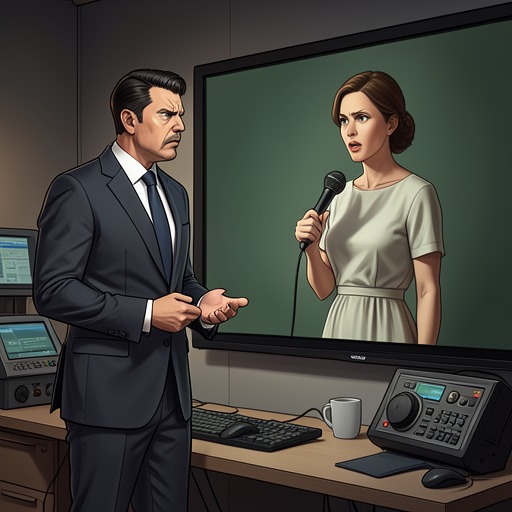
KCTV’s corridors and offices also become sites of private pressure. A few minutes before seven, after finishing notes for the next day’s show, Elizabeth carries her large bag through the empty hallways to Phil Lebensmal’s office. Inside, the enormous desk is covered with papers and half-eaten food; four televisions broadcast reruns, including Jack LaLanne, a children’s program, a soap opera, and Supper at Six. Elizabeth has never watched her own show before and finds hearing her recorded voice horrible. Lebensmal stubs out a cigarette, indicates a chair, shuts the door, and locks it. The scene establishes an enclosed managerial encounter, but the cited episode does not establish its outcome.
Protest and Threats at the Studio
As Elizabeth’s program reaches viewers, the station’s exterior becomes a stage for public opposition. At KCTV Studios, a picketer holds a sign attacking Elizabeth as godless. Walter catches up with her and warns that this is why television workers avoid certain opinions and keep them private. His warning clarifies the risk attached to the studio’s reach: a statement made on an afternoon program can follow its presenter from the broadcast into the parking lot. The protest also shows that the audience is not uniformly receptive to Elizabeth’s views.
The hostility escalates into a bomb threat at the studios. A reporter, the same man who had appeared at the cemetery, has installed an illegal police radio in his car; it alerts him to the discovery of a small bomb in a woman’s handbag at KCTV. Seymour tells him the bag had simply appeared on his table. When he opened it looking for identification, he found flyers denouncing Elizabeth as a godless Communist and two sticks of dynamite wired together with flimsy wires. The reporter’s surprise that anyone would target a station known for afternoon programming prompts Seymour to connect the trouble to one of its hosts saying she does not believe in God. The account records discovery of the device and its contents, not an explosion or an identified perpetrator.
Narrative Significance
KCTV Studios links the intimate mechanics of television production to the consequences of public speech. The snug wardrobe, Elizabeth’s unheard discomfort with the camera’s version of her, the locked office, and the pickets outside are distinct pressures within the same workplace: her body is managed for the image, her work is subject to managerial authority, and her opinions provoke a response beyond the studio. The bomb threat makes that response materially dangerous without resolving who placed the bag.
The location also sharpens the contrast between Walter’s original attraction to television as escape and the danger that surrounds Elizabeth’s broadcasts. The studio can offer a platform for her ideas, yet the same platform makes her visible to hostile viewers. Across its production spaces and public frontage, KCTV Studios is thus both the setting that enables Elizabeth’s television work and the place where the limits and risks of that visibility become impossible to ignore.