Letters from Avery Parker to Calvin
Lessons in ChemistryLetters from Avery Parker to Calvin are the surviving trace of a reunion that never took place: after discovering that Calvin Evans was alive, Avery wrote repeatedly to explain who she was, ask to meet him, and offer support for his research. Calvin kept the letters but never answered; only after his death did Elizabeth Zott recognize their signature and understand that the woman he had called Sad Mother was Avery, his birth mother. The letters therefore serve both as evidence of a concealed relationship and as a belated opening toward a family Calvin never knew he had.
Discovery and Purpose
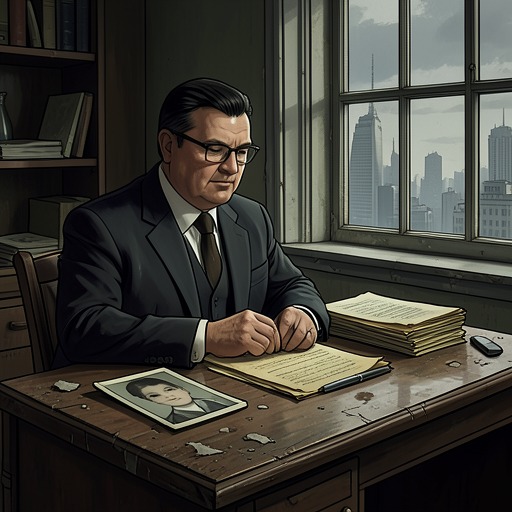
Avery’s correspondence began after the magazine Chemistry Today Issue Featuring Calvin on the Cover brought Calvin’s identity to her attention. Wilson, Avery Parker’s lawyer, showed her the issue, and she called the bishop at All Saints Boys Home. The bishop dismissed the shared surname as coincidence; Avery knew he was lying and intended to sue, but Wilson persuaded her that publicity could damage the foundation and embarrass Calvin. She cut off funding immediately.
Avery then wrote to Calvin several times. In the letters she explained what she could, asked for a meeting, and offered to fund his research. She understood that a stranger claiming to be his mother might seem like a scam, especially given that both she and Calvin had been targeted by people claiming family ties. The letters were her attempt to make the claim credible without forcing an immediate encounter.
The Unknown Writer
Calvin kept the letters, but Avery never heard from him. She had learned that he had grown up at All Saints Boys Home and sent Wilson there the next day; she did not go herself, later acknowledging that she had not been brave enough. After Wilson’s visit, she chose to approach Calvin slowly. Because he was an adult, she believed he should have time to consider the possibility, investigate her foundation, and decide whether to trust her. She expected that this patience might take years, and later regretted having waited too long.
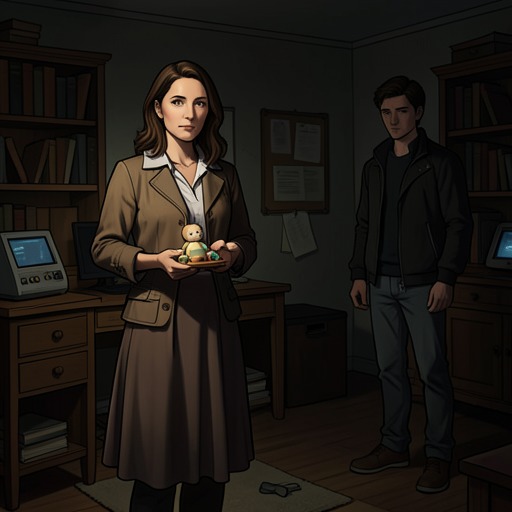
The letters’ identity remained unresolved for Elizabeth until Avery described writing to Calvin. Elizabeth remembered the Sad Mother letters that Calvin had kept and recognized Avery Parker’s signature at the bottom of them. The recognition abruptly connected the grieving woman who had written to Calvin with the person now sitting before her. The letters had been present in Calvin’s life, but their meaning had been hidden by the absence of a reply and by his belief, recorded in his diary, that his biological mother had died in childbirth.
From Correspondence to Family
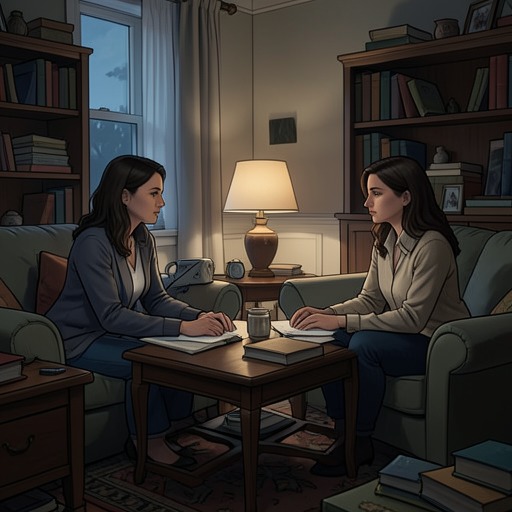
The letters could not give Avery the meeting she had wanted with Calvin, but they carried her appeal forward to Elizabeth. Avery said she wished she had known him and hoped she might know him through Elizabeth. Elizabeth answered by welcoming her as family, adding that Madeline Zott had understood this already: on Madeline’s family tree, it was Avery—not Wilson—who had a place. The correspondence thus became more than a record of an unanswered request. Its delayed recognition made possible a new relationship with the surviving family Calvin had left behind.
The novel’s treatment of family also resists reducing kinship to a diagram or to biological fact alone. Walter Pine, learning that Amanda was not his biological daughter, still understood himself as her father because he loved and raised her. Madeline, meanwhile, described a family photograph that included Elizabeth, Six-Thirty, herself before birth, and Calvin in his coffin; Reverend Wakely concluded that families do not fit neatly on trees. Against that wider pattern, Avery’s letters establish a biological connection, while Elizabeth and Madeline’s welcome gives that connection a place in lived family life.