Life magazine
Lessons in ChemistryLife magazine is the national publication that turns Elizabeth Zott’s growing television visibility into a distorted public portrait, then provides a forum for a challenge to that portrait. Its six-page cover feature pairs photographs of Elizabeth at work with hostile testimony and a misleading use of Madeline’s family tree; the result damages Elizabeth even as the issue sells out in less than a day. Later, Life publishes Miss Frask’s account of Elizabeth’s treatment at Hastings Research Institute, and that letter helps prompt the Parker Foundation to investigate and take over the institute.
The cover feature and its framing
Two months after Roth’s interview, Elizabeth appears on the cover of Life magazine with her arms folded and a grim expression. The headline presents her as someone whose audience will accept whatever she serves. Across six pages, fifteen photographs show her on her program, using the rowing erg, wearing makeup, petting Six-Thirty, meeting with Walter Pine, and adjusting her hair. The selection makes her television work and public appearance the organizing frame for an article about a chemist.
The feature’s opening line had described Elizabeth as the most intelligent person on television, but the published version replaces intelligent with attractive. The change redirects the emphasis from her intellectual ability to her appearance. The article does list episodes that became major successes, including those about a fire extinguisher, poisonous mushrooms, and her disbelief in God, and concludes that her program offers life lessons. That recognition sits beside a presentation that reduces her work to a marketable image.
Testimony assembled against Elizabeth
The article’s portrait depends in part on remarks from people hostile to Elizabeth. Her father, interviewed in the visitation room at Sing Sing, condemns her character. Dr. Meyers, speaking from UCLA, depicts her as an unimpressive student more interested in men than in scientific work and disparages her appearance. Dr. Donatti, asked about her employment record, responds with a sexualized nickname rather than an account of her research or professional history. The feature thus gives space to claims that discredit Elizabeth without making the circumstances of her conflicts at Hastings its central subject.
Mrs. Mudford supplies another hostile account, arguing that Elizabeth’s place outside the home harms Madeline and that Elizabeth exaggerates her daughter’s abilities. Life accompanies that testimony with a copy of Madeline’s family tree, which Mrs. Mudford had marked as false and had asked to discuss. The document contains both relatives and imaginative or personal entries: Walter is listed as a relative; other drawings include a grandfather in prison clothes, a grandmother eating tamales in Brazil, a dog reading Old Yeller, and an acorn identified as a fairy godmother. It also refers to Harriet, Elizabeth’s dead partner, and several historical women.
Printing the family tree turns a child’s assignment into supposed evidence about Elizabeth’s private life. Readers take Walter’s inclusion to mean that Elizabeth is sleeping with her producer, although the family-tree entry itself does not establish that. The article’s use of the page therefore compounds its other distortions: a document created for a school project becomes material for public speculation, and Madeline’s imaginative account of family is treated as a report about her mother.
Circulation, protest, and personal consequence
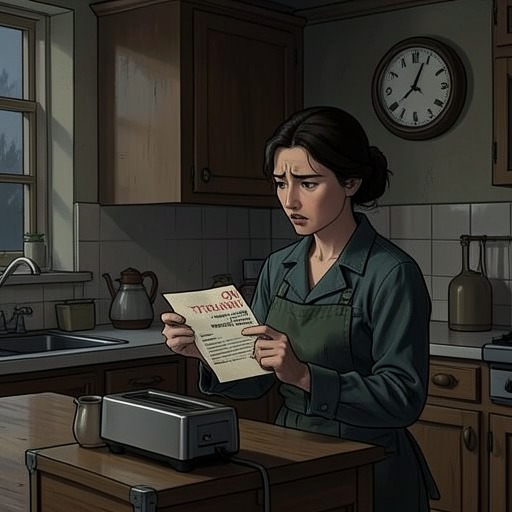
The issue sells out in less than twenty-four hours. Its rapid sales establish the reach of the feature, but do not make its portrait reliable. The article’s circulation gives its claims a visibility that Elizabeth cannot simply counter by continuing her work. For several weeks she tries to carry on and keeps her attention on ordinary routines, including preparing notes for Madeline’s lunch box. When Harriet brings her the latest issue and reports that readers are protesting, Elizabeth refuses to read it.
Harriet says women from across the country have written to object and that one correspondent claims to have worked with Elizabeth at Hastings. Their support does not immediately relieve Elizabeth. The narrative shows the limits of a public correction: the letters arrive, but Elizabeth experiences the magazine’s account as a lasting mark on her reputation. Her familiar strategy of carrying on, which has helped her endure earlier losses and injustices, fails to make this misrepresentation recede. Life’s influence in the story lies not only in what it prints, but in how difficult its published image is for Elizabeth to escape.
Miss Frask’s letter and institutional consequences
Miss Frask responds to the cover story by writing directly to Life’s editors. She says that she knows Elizabeth and that the article is false, then cites her own former work with Dr. Donatti and says she has documents to support what she knows. Her letter describes Elizabeth’s scientific accomplishments and the injustices at Hastings: Donatti reappropriated Elizabeth’s funding, dismissed her without cause, later stole her research, and lied to investors. Miss Frask also acknowledges her own part in the earlier events and connects her letter to an effort to make amends. Although she expects Life not to print it, the magazine publishes it in the very next issue.
That publication gives Miss Frask’s account a route into a wider institutional reckoning. When the Parker Foundation later explains its acquisition of a majority share in Hastings Research Institute, Wilson identifies the letter in Life as the reason the foundation looked more closely at the institute. The resulting review leads to the takeover and Donatti’s termination. Life does not itself conduct the investigation or dismiss him, but its decision to print Miss Frask’s allegations helps set those consequences in motion.
The magazine consequently occupies two opposing positions in Elizabeth’s story. Its cover feature converts selective testimony and a school assignment into a damaging public narrative; its later publication of Miss Frask’s letter makes room for evidence of professional misconduct that the feature had obscured. The contrast is not a simple reversal of the first article, since Elizabeth remains hurt by the image it circulated. Instead, Life’s importance rests in its power to amplify accounts: that power first magnifies a false portrait, then helps bring documented accusations against Hastings to the attention of people able to act.