Mr. Wilson
Lessons in ChemistryMr. Wilson is a representative of the Parker Foundation whose search for the boy Calvin Evans brings the institution’s history of neglect into contact with the family Calvin lost. He arrives at All Saints Boys Home intending to take Calvin away, not to make a donation. When the bishop falsely presents Calvin as dead, however, Wilson accepts the account and offers money in the boy’s memory. Years later, the foundation and Wilson’s name resurface as Madeline Zott tries to understand her father’s origins, making him a well-intentioned but indirect figure in her search for kinship.
Identity and Mission
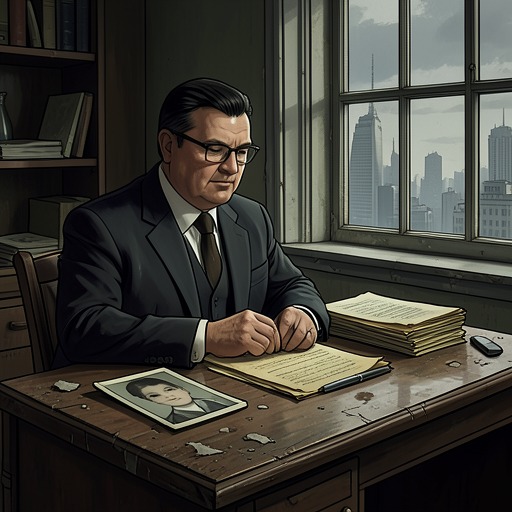
Mr. Wilson arrives at All Saints Boys Home on behalf of the Parker Foundation, which the bishop regards as an exceptionally wealthy Catholic fund. The bishop assumes that a foundation representative must have come to discuss a donation and privately anticipates bargaining for a larger one. Wilson’s actual purpose overturns that expectation: he is looking for a ten-year-old boy, probably tall and blondish, whose family was lost in a series of accidents about four years earlier.
Wilson explains that living relatives have only recently learned the boy exists and want him back. He names Calvin Evans and says his plan is to take the child with him. The specifics make his errand unmistakable: he is not seeking an abstract beneficiary for the institution but a particular boy with a known past and relatives waiting for him. His glance at his watch and mention of a flight in two hours give the visit a tight practical deadline; he asks to meet Calvin rather than linger over a ceremonial introduction.
The Search at All Saints
The bishop has watched Calvin grow up amid trouble and rejection. Calvin has broken a window, stolen a book, and given a priest a black eye; couples sometimes visit the boys’ home to adopt, but none has chosen him. Against that history, Wilson’s arrival offers a possible route out of All Saints. The bishop, however, mistakes the visitor’s purpose. His expectation of financial rescue is so strong that he has already imagined an acceptance speech before learning that Wilson has come for a child.
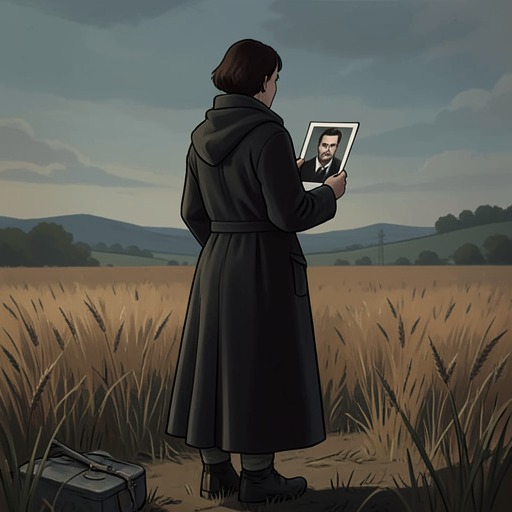
Wilson’s request also prompts the bishop to wonder whether the visitor might himself be one of Calvin’s relatives, perhaps an uncle or even a father. That speculation does not establish Wilson’s relationship to Calvin; it records the bishop’s attempt to make sense of the man’s apparent grief. When Wilson looks down at a photograph and falls silent, the bishop takes his reaction as confirmation that the news has reached him. Wilson does not ask for proof, and the bishop lets the false account stand.
A Memorial Instead of a Reunion
Believing Calvin to be dead, Wilson offers to endow a memorial fund through the Parker Foundation. His voice is unsteady as he speaks of honoring the boy’s memory, and he takes out a checkbook. The bishop names the proposed fund the Calvin Evans Memorial Fund, turning Wilson’s mistaken understanding into an institutional tribute. Wilson says he will return with details about the ongoing contribution and leaves an immediate check on the foundation’s behalf.
The exchange reverses the purpose of Wilson’s visit. He had come to take Calvin back to living relatives; after the bishop’s lie, he instead gives money to an institution that had failed to find Calvin a family. Wilson’s offer is framed as a sincere act of remembrance, but the memorial fund rests on information the bishop has distorted. The tragedy of the scene lies not in Wilson’s stated intention but in the ease with which an intended reunion is converted into a donation for a dead child.
Wilson’s Name in Madeline’s Search
Years later, Reverend Wakely tells Madeline that he has looked up the Parker Foundation and found that it is run by a Mr. Wilson, who lives in Boston. He presents Wilson as a possible benefactor, calling him Madeline’s acorn fairy godfather. Madeline is not persuaded by the hopeful framing: she thinks Wilson sounds misinformed, as though he has never read Oliver Twist. Her response refuses to treat a foundation, a fund, or a promising name as proof of family connection.
That distinction becomes clearer in the novel’s treatment of family trees. When Madeline asks whether Elizabeth keeps secrets, Harriet Sloane briefly lies to her, then answers more sincerely about Elizabeth. Elsewhere, Madeline struggles to make her own family fit a school assignment: the photograph she offers as a family picture is a clipping of Calvin’s funeral, showing Elizabeth and Six-Thirty at the graveside, with Madeline, as she explains it, still inside her mother and her father in the box. Reverend Wakely finally observes that families do not fit neatly on trees and suggests that people belong to the animal kingdom instead. Wilson’s name, like the tree’s branches, cannot by itself establish belonging.
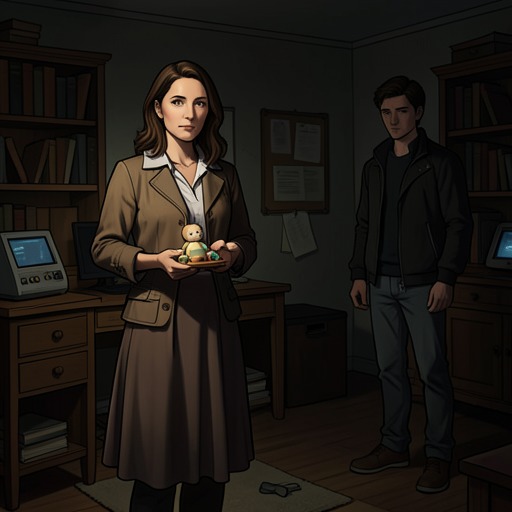
The later welcome Avery Parker receives from Elizabeth makes the contrast explicit. Elizabeth tells Avery that Madeline did not put Wilson on her family tree; she put Avery there. Wilson remains an intermediary associated with the foundation and the search that might have returned Calvin to relatives. Avery, by contrast, is recognized as family in the present. This distinction echoes another account of parenthood in the novel: Walter Pine learns that he is not Amanda’s biological father, but the test results do not alter his conviction that she is his daughter. In this wider pattern, Wilson’s mistaken memorial and his later appearance as a possible clue show how institutions and names can point toward kinship without defining it; the novel gives greater weight to the relationships people recognize and sustain.