Unwed mothers’ home relinquishment policy
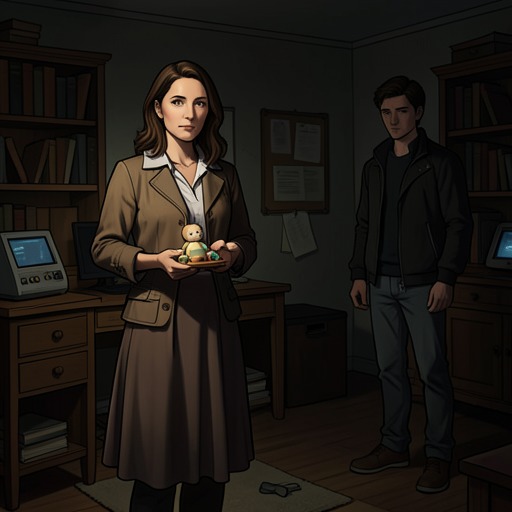
Lessons in ChemistryThe Unwed mothers’ home relinquishment policy is a coercive practice in which a Catholic home pressures young women to surrender their newborns for adoption. Avery Parker’s account to Elizabeth Zott shows its force extending beyond childbirth: the institution controls the mother’s choices, presents separation as settled fact, and leaves her child’s identity and whereabouts hidden for years.
Purpose and Pressure
Avery Parker describes a home for unmarried pregnant women where residents were expected to give up their babies. An official form recorded that surrender, and most women signed it. Those who refused were threatened with being left without assistance during labor and warned that they might die. The policy therefore depended not simply on a signature, but on making refusal seem too dangerous to pursue.
Avery’s account presents her as a seventeen-year-old who would not sign. Her insistence on having rights did not protect her from the institution’s authority. The home’s procedure treated the mother’s decision as something to be overridden through isolation and intimidation rather than respected as her own.
Enforcement and Separation
When Avery went into labor, she was put alone in a room and the door was locked. She remained there for a full day before a doctor anesthetized her. On waking, she was told that her baby had been stillborn and that the body had already been disposed of. The institution thus imposed separation and supplied a false explanation that made the loss appear final.
The account describes how the policy operated in practice: the form was the visible instrument of relinquishment, while threats and confinement constrained the choice behind it. Avery’s refusal did not stop the separation; instead, she was left without reliable information about what had happened to her child.
The Concealed Outcome
Ten years later, when Avery was twenty-seven, a nurse from the home contacted her and sought money in exchange for the truth. The nurse disclosed that the baby had not died but had been placed for adoption. Avery learned that the child’s adoptive parents had died in an accident, that the child’s aunt had also died, and that the child had then been sent to All Saints Boys Home in Iowa.
The revelation makes the policy’s consequences more than a single forced relinquishment. Avery had been deprived both of her child and of the truth about the child’s survival; years later, she could trace the child only through a chain of deaths and institutional placement. The account connects the home’s practices to Calvin Evans’s childhood at All Saints Boys Home, bringing the concealed history into Elizabeth Zott’s present. Elizabeth freezes as Avery reaches the name of the institution.
Records and Institutional Power
The relinquishment form belongs to a wider pattern in which paperwork defines family status and channels institutional decisions. At the Hastings Research Institute, Miss Frask invokes a code of conduct and orders the pregnant, unmarried Elizabeth Zott to sign a paper and clear her desk. In a separate intake encounter, a receptionist gives Elizabeth forms asking for a husband’s workplace, telephone number, insurance, age, and bank account before Elizabeth challenges the assumptions behind them. These are not parts of the home’s relinquishment procedure, but they show how official forms can make marriage and male authority seem like prerequisites for women’s lives.
Family records also shape how people are seen. At school, Mrs. Mudford assigns a family-tree project; later, a copy of Madeline Zott’s tree appears in a damaging article, marked with accusations. Set beside Avery’s account, these episodes show that documents can do more than record relationships: institutions and individuals can use them to classify, discipline, or misrepresent a family. The home’s policy is the most consequential instance, turning a pressured signature and a false account of death into a separation that lasts for years.