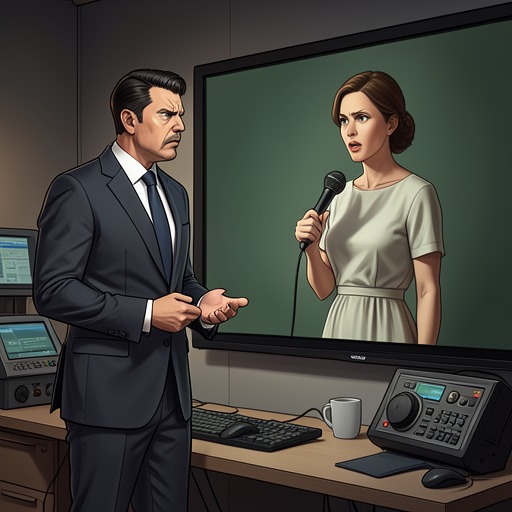
Walter Pine learns Amanda is not his biological daughter
Lessons in ChemistryWalter Pine’s disclosure that he is not Amanda’s biological father turns a paternity test into a test of what makes a parent. Although the result confirms that they are unrelated by DNA, it does not diminish his love for Amanda or alter his certainty that she is his daughter.
Causes and Background
Walter reveals the result while talking with Elizabeth Zott about divorce. After she expresses sympathy for his situation, he waves away the comparison and blurts out that Amanda is not technically his daughter in the biological sense. He has known for only three weeks, and his unplanned disclosure makes the discovery feel newly present rather than settled background information.
His former wife had long suggested that he was not Amanda’s biological father. Walter had taken those remarks as attempts to hurt him, and their lack of physical resemblance did not persuade him: children, he reasoned, need not look like their parents. Whenever he held Amanda, he felt certain of a deep, permanent biological connection. That conviction was emotional and lived, but the test would answer the narrower question of genetic parentage.
The Test and Its Result
When paternity testing became available, Walter provided a blood sample. Five days later, the results showed that he and Amanda were complete strangers in the DNA sense. The test supplied an unequivocal answer to his former wife’s repeated insinuation, but it did not provide the emotional upheaval he had anticipated.
Walter had expected to feel cheated or devastated, or to experience some other reaction he thought the result required. Instead, he was nonplussed. The contrast is central to the event: the evidence overturns his belief about biological kinship, while leaving his knowledge of the relationship formed through years of fatherhood intact.
Fatherhood Without Genetic Kinship
Walter’s conclusion is unambiguous: Amanda is his daughter, he is her father, and he loves her with all his heart. His account does not treat devotion as a substitute that reluctantly fills a biological absence; the test simply proves that biology had never been the basis on which his relationship with Amanda depended. His concise judgment that biology was overrated follows from this experience, not from indifference to the truth of the test.
The episode also connects to the novel’s wider attention to family beyond descent. Madeline Zott calls a funeral clipping a family picture because it includes her mother, Six-Thirty, and her father’s casket; Reverend Wakely responds that families cannot be adequately fitted onto trees. Later, Elizabeth tells Avery Parker that Madeline had placed Avery, rather than Wilson, on her family tree. These moments do not alter Walter’s story, but they echo its distinction between a family’s biological record and the relationships its members recognize and sustain.
Significance
The revelation resolves a question raised by Walter’s former wife without allowing that question to define his relationship with Amanda. In the scene with Elizabeth, the disclosure follows an awkward comparison of divorce and loss; what begins as a personal admission becomes a statement about the limits of genetic evidence. The test can establish that Walter and Amanda share no biological parentage, but it cannot undo the father-daughter bond he already knows through love and care.