Walter Pine—Amanda Pine relationship
Lessons in ChemistryWalter Pine—Amanda Pine relationship is defined by a decisive separation between biological fact and family belonging. When Walter learns that he is not Amanda’s biological father, he does not withdraw from her or revise his place in her life. The test changes what he knows about their ancestry, not whom he loves or regards as his daughter.
The Discovery and Its Context
Walter reveals the result while speaking with Elizabeth Zott about divorce. He has only recently learned the truth: his ex-wife had repeatedly suggested that Amanda was not biologically his, but he had assumed the accusation was meant to hurt him. Their lack of physical resemblance gave him no reason to conclude otherwise; he knew that children need not look like their parents.
The uncertainty nevertheless stayed with him. When paternity testing became available, Walter provided a blood sample. Five days later, the results showed that he and Amanda were not biologically related. The revelation was new—he had learned it only three weeks before telling Elizabeth—and it settled a question that his ex-wife’s insinuations had kept alive. The evidence establishes the test’s conclusion, but the relationship’s meaning emerges from Walter’s response to it.
Fatherhood Beyond Biology
Walter had expected the results might leave him feeling cheated or devastated, feelings he imagined he was supposed to have. Instead, he was nonplussed: the answer did not matter to his love for Amanda. He continued to understand himself as her father and her as his daughter, affirming that he loved her with all his heart. His certainty rests not on a genetic link but on the existing bond between them.
That distinction also complicates Walter’s earlier confidence. When he held Amanda, he had felt sure of a deep biological connection; the test disproved that explanation, not the attachment itself. His experience makes the point more quietly and forcefully than an abstract argument could: an emotion he had mistaken for proof of shared DNA remains real after DNA is ruled out. Walter’s conclusion that biology was overrated is grounded in this personal reversal, not in indifference to what the test revealed.
He tells Elizabeth that he had not planned to become a parent, yet has become a devoted father. His account places fatherhood among the parts of life that cannot be secured by planning or reduced to a single origin story. The surprise is not that the test altered his family, but that the test failed to alter the relationship it measured.
Care in Ordinary Life
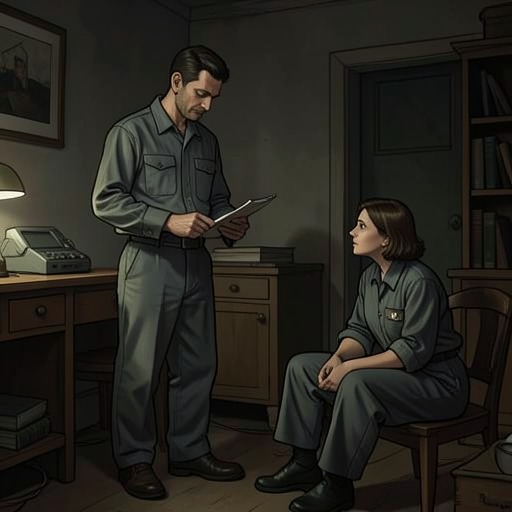
The bond also appears through practical care. On one occasion, Walter is unwell and has eaten neither lunch nor dinner. Elizabeth takes charge and gives him the spinach casserole she has just made, with instructions to bake it at 375 degrees for forty minutes. Walter objects that he cannot manage it and that Amanda hates spinach. His protest is followed by an apology to a member of the crew, and he leaves the building insisting that he is fine.
The casserole is left on the hood of his car with the baking instructions. At home, Walter puts it in the oven, and later sits down to dinner with Amanda. Three bites into the meal, she calls it the best thing she has ever eaten. The episode does not present a grand declaration between father and daughter; instead, it locates their shared life in the small sequence of a meal made, carried home, cooked, and eaten together. Amanda’s earlier dislike of spinach makes her enthusiastic verdict a particular, playful reversal, while Walter’s bringing the food home turns Elizabeth’s help into care that reaches his household.
Family as a Lived Relationship
Across the novel, family is not confined to biological descent. When Madeline Zott tries to explain her family through a photograph, Reverend Wakely challenges the assumption that families must fit neatly onto a family tree. Later, Elizabeth tells Avery Parker that Madeline understood Avery belonged to the family and had placed her, rather than Wilson, on the tree. These moments do not directly describe Walter and Amanda, but they frame the same distinction that his story makes concrete: biological lineage and family belonging can overlap, yet one does not guarantee or exhaust the other.
Walter’s relationship with Amanda gives that idea a domestic form. The paternity result is conclusive about biology, while his response and their shared dinner show what it cannot decide. He remains her father through love and the ordinary continuance of their life together. The relationship’s significance lies not in denying biological fact, but in refusing to treat it as the final measure of parenthood.