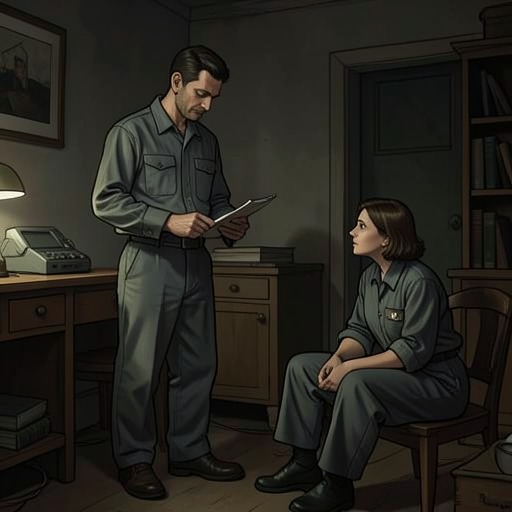
Walter discovers he is not Amanda’s biological father
Lessons in ChemistryWalter discovers he is not Amanda’s biological father when a paternity test confirms what his ex-wife had long suggested. The result unsettles his assumption about their biological bond but not his commitment to Amanda: he continues to regard her as his daughter and himself as her father. The revelation gives a concrete form to the novel’s distinction between biological connection and family made through love and care.
Background and Test
Walter discloses the result to Elizabeth during a conversation about divorce and love. He has known for only three weeks, and the revelation comes out unexpectedly as he explains that his divorce was not like hers: Amanda is not his daughter in the DNA sense. His ex-wife had repeatedly insinuated that he was not Amanda’s biological father, but he had taken those claims as attempts to hurt him rather than as fact.
The possibility remained difficult to dismiss. Walter and Amanda did not look alike, though he knew that resemblance alone could not establish parentage. He had nevertheless felt certain that holding her confirmed a deep biological connection. Once paternity testing became available, he provided a blood sample. Five days later, the result established that he and Amanda were not biologically related.
Walter’s Response
Walter had expected the test to leave him feeling cheated, devastated, or otherwise wounded. Instead, he was nonplussed: the result did not change what he understood Amanda to be to him. He loved her wholeheartedly and continued to claim the roles of daughter and father without qualification. The discovery alters the biological account of their relationship, not its lived reality.
He tells Elizabeth that he had never planned to become a parent, yet has become a devoted father. His reflection makes the revelation part of a larger recognition that life can defeat a person’s plans. In his case, the unexpected fact of non-paternity does not undo fatherhood; it clarifies that the bond he values does not depend on genetic proof.
Family Beyond Biology
The scene’s significance resonates with other moments in which the novel questions whether family can be reduced to a biological lineage. Madeline calls a funeral clipping a family picture because it shows Elizabeth and Six-Thirty at Calvin’s funeral, with Madeline still inside Elizabeth and Calvin in the coffin. Reverend Wakely responds that families are not meant to fit on trees, framing kinship as something broader than the diagram of descent Madeline has been asked to understand.
That distinction also appears when Elizabeth welcomes Avery Parker into the family and explains that Madeline placed Avery, rather than Wilson, on her family tree. These episodes do not change the facts of Walter’s test; they place his response within a recurring pattern. Biological information may reveal who is related by descent, while love, care, memory, and recognition establish who belongs to a family.