Expressen
Let the Right One InExpressen is presented as an evening newspaper whose reporting became part of the public experience of the Vällingby ritual murder investigation. Its clearest individual act was to put a photograph of a police officer handling the King’s sheep on the front page on 8 November, accompanied by the caption “Wolf in sheep’s clothing?” The image was both a piece of news and a moment of uneasy humor: it gave a frightened public something new to look at when the search itself seemed to offer little that was new.
Place in the Coverage
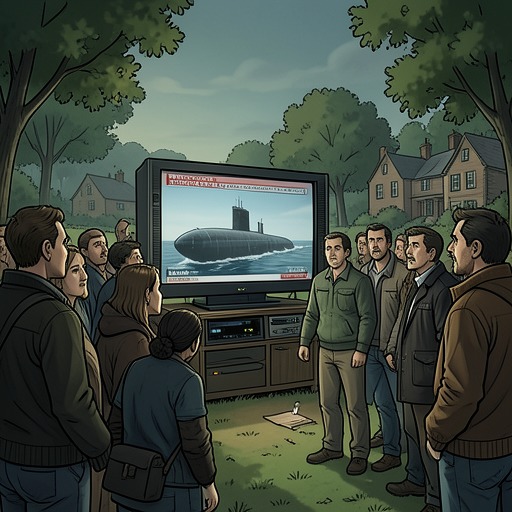
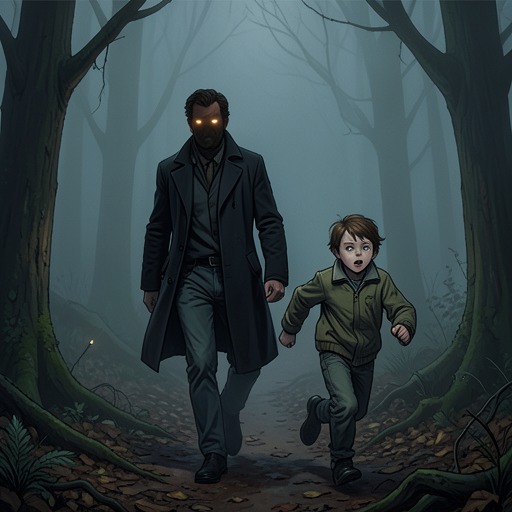
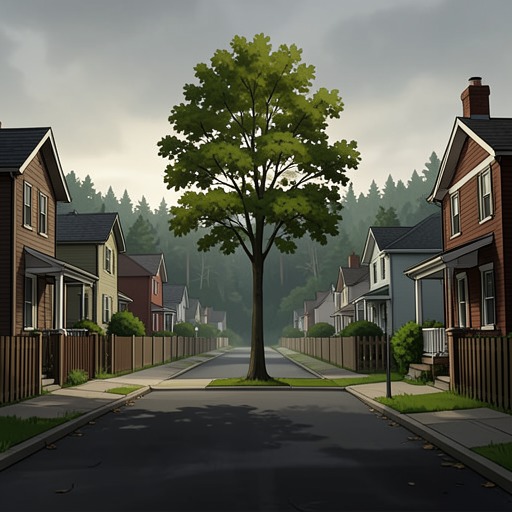
The evidence places Expressen within a wider press response rather than describing its organization, staff, or usual editorial practices. On Sunday, the newspapers published a fuller account of the Vällingby murder under the headline “Victim of Ritual Murder?” The coverage included photographs of the boy, the hollow in the forest, and the tree, but not a photograph of the killer. The absence mattered: readers could see the victim and the site, yet had no likeness through which to imagine the person responsible. The report seemed to record that the crime had happened without making its perpetrator visible.
The resulting uncertainty was not simply a lack of information. A composite sketch later gave the suspect a recognizable form, and evening papers printed it; the account stresses that people began scrutinizing men in the western suburbs who resembled the image. But public attention also attached itself to speculation that the murderer might be a foreigner. That speculation appeared amid reporting about a separate police announcement: on 26 October, police said they had arrested five Lebanese men in what they described as Sweden’s largest drug seizure to date. The narrative exposes how readily a concrete, unrelated arrest could supply a frame for guessing about an unidentified suspect. It does not establish that Expressen itself originated or endorsed those prejudiced conjectures.
The paper’s role is therefore best understood through the changing objects of attention in the news cycle: first the crime scene and victim, then the suspect’s composite image, and later an arrest in a different case that fed public talk. The coverage existed in a suburb portrayed as carefully planned and modern, with playgrounds and pedestrian paths but little shared past. In that setting, the lack of an established local history or church is associated with residents’ being unprepared for the arrival of violence. This background helps explain the force of a crime that seemed to enter an orderly place from outside its ordinary expectations; it is not, however, a claim that Expressen caused that vulnerability.
The Front-Page Sheep Photograph
By Sunday evening, 8 November, public interest in the police search of Judarn Forest had reached a high point. The evening news could not keep printing the composite picture, and the papers had hoped instead to show an arrested suspect. With no apprehension to report, both evening papers ran the sheep photograph. Expressen gave it particular prominence by putting it on the front page.
The contrast with the coverage already familiar to readers was decisive. Maps of Judarn Forest and the western suburbs, reports of sightings, and accounts of how police had organized their search occupied several pages, but these materials had appeared before in other forms. The photograph was new. It showed a police officer handling the King’s sheep, and the account describes the picture as dramatic without turning it into evidence about the missing man. The image could attract attention precisely because it offered a vivid public scene where the investigation had not produced the expected one: no captured suspect, no resolution, and no new likeness.
Expressen’s caption, “Wolf in sheep’s clothing?”, made a small joke out of the photograph. The phrase connected the sheep to the still-unidentified threat, but it remained a caption rather than a revelation about the murderer. The joke gave readers a way to respond to the picture while leaving the central uncertainty intact. The paper had an arresting image to publish; it did not have the arrest its audience had been waiting for.
Fear, Humor, and Public Attention
The comic caption landed in a community whose fear had practical consequences. The suspected man had killed two people and nearly a third, was again at large, and children were subject to a curfew. A school field trip to Judarn Forest planned for Monday was canceled. In that climate, the paper’s humor is presented not as a dismissal of danger but as something people needed amid it. The joke briefly loosened the pressure of a story in which one person’s continued freedom could dominate many others’ lives.
The difference between the maps and the photograph also shows how news attention works in the account. Maps and sightings could describe the search in detail, but their repetition made them familiar; the sheep image stood out because it disrupted that routine. The public remembered the new picture rather than the information that had already circulated. Expressen’s front-page placement thus amplified an image that was adjacent to the investigation but did not advance its central question. The newspaper’s influence here lies in selection and prominence: it helped determine which scene became memorable while the suspect remained absent.
Narrative Significance
Expressen’s coverage gives the novel a concrete view of how a local crime becomes a collective experience mediated by headlines, photographs, and repeated public speculation. The reporting moves between the identifiable—the boy, the forest hollow, the composite sketch, the sheep—and what cannot yet be known: who the killer is and where he will appear. At one point the lack of a perpetrator’s photograph leaves the crime seeming to have simply happened; later, the composite image encourages people to inspect strangers, though it cannot settle the identity of the suspect.
The front-page sheep photograph sharpens that tension. It is memorable, even amusing, but it is not an answer. Expressen converts an unexpected incident from the search into the evening’s most distinctive picture, while the danger that prompted the search remains unresolved. The episode consequently presents the press as both a channel for information and a force that organizes attention: its choices can make fear visible, give it a temporary outlet, and keep an uncertain threat in public view without bringing that threat to a conclusion.