Fernando Cristobal de Reyes y Avila
Let the Right One InFernando Cristobal de Reyes y Avila, usually addressed as Mr. Avila, is both a formidable physical-education teacher and an avid winter skater. His authority gives Oskar Eriksson’s class a rare measure of order, while his discovery of a human head frozen in the ice draws him into the novel’s chain of violence and concealment.
Identity and Background
Mr. Avila had been a fighter pilot during the war. He sometimes entertained his pupils with stories of airborne skirmishes and emergency landings in wheat fields, tales that helped earn their respect. His past as a pilot sits alongside the discipline of his present work: he has taught the boys physical education since they were in fourth grade.
He is physically imposing, with stubbly gray hair, an eagle nose, an impressive physique, and an iron grip. The narration stresses that he is not naturally inclined to sympathize with a meek, somewhat chubby, bullied boy like Oskar. Yet his class is governed by rules rather than by the bullies’ usual power.
Authority in the Gym
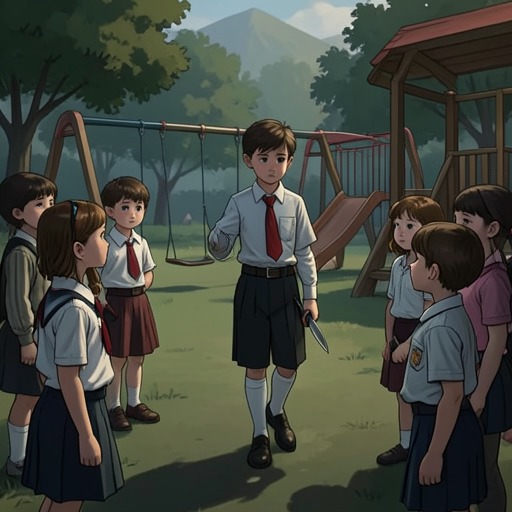
The boys in class 6B line up outside school, each holding a gym bag, at arm’s-length intervals. Even when Mr. Avila is out of sight, the unruly class keeps its formation. If the line falls short of his expectations, he makes them wait an extra ten minutes or cancels a promised volleyball game in favor of pull-ups and sit-ups. Jonny Forsberg and Micke do not dare torment Oskar while Mr. Avila is present; the teacher’s authority changes what the boys can get away with, even if it does not erase Oskar’s vulnerability.
During a gym session, Mr. Avila sets the class to a sequence of exercises. Oskar manages two pull-ups and does well at jump rope, while Staffan struggles with the pommel horse. Oskar is relieved to be paired with him, watching Jonny and Micke fly over the apparatus before Staffan runs at it, bounces hard from the springboard, and fails to get onto the horse. Mr. Avila comes over and instructs him, “Up on pommel.” Staffan answers, “Can’t do it.” The brief exchange shows the teacher’s direct, demanding manner, while the pairing offers Oskar a moment away from the boys who bully him.
Skating and the Discovery
Mr. Avila enjoys ice skating and particularly values Sweden’s long winters. He has participated in the Vasa cross-country ski race for ten consecutive years. When the outer archipelago freezes solid, he drives to Graddo Island on weekends and skates as far toward Soderarm as the ice permits. The waters have not frozen for three years, but an early winter gives him hope; although he expects skating enthusiasts to crowd the area in daylight, he prefers to skate at night.
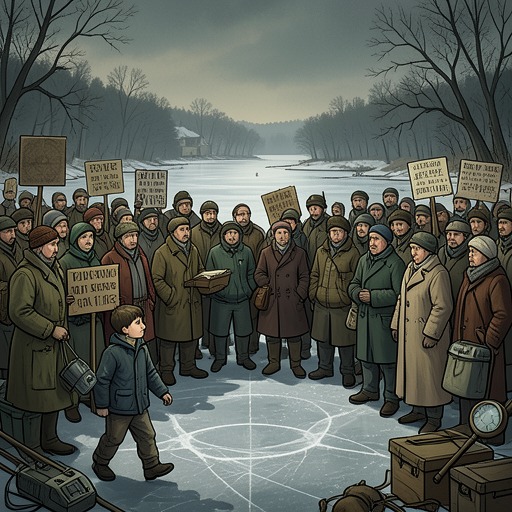
While skating, he approaches a group of children and asks what is wrong. One points to a lump frozen into the ice. What first looks like a brown clump with a red line proves to be a human head, with only its crown and forehead visible above the ice. Nearby, the boy Mr. Avila had sent to urinate sits sobbing and says that he ran into it. The discovery turns the winter landscape he seeks for pleasure into the scene of a grisly revelation.
Narrative Role
Mr. Avila connects two sharply different settings: the ordered gym, where his presence checks bullying, and the frozen outdoors, where a child’s discovery exposes the physical aftermath of violence. The text gives him no explanation for the head or its identity in these moments. Instead, it makes his movement from disciplined teacher to witness carry the revelation: the same authority who can make a class hold its line is confronted with evidence that cannot be controlled by rules.