Hakan's anesthetic gas canister
Let the Right One InHakan's anesthetic gas canister is central to his planned attack at Vällingby Pool: it gives him a way to subdue a living victim without immediately using a knife, but its audible discharge threatens to expose him. The canister belongs to a larger set of equipment and a tightly improvised plan; in the changing room, its hiss becomes a risk Hakan must manage while other people are nearby.
Purpose and Preparation
On his way to the pool, Hakan carries the canister as part of a plan to find a victim in a place he expects to be relatively quiet. The scene connects the object to his deliberate preparation: he has decided where to act and imagines the attack in advance, even as the plan remains dangerous. The canister is not presented as an isolated possession but as one instrument in an intended sequence of actions.
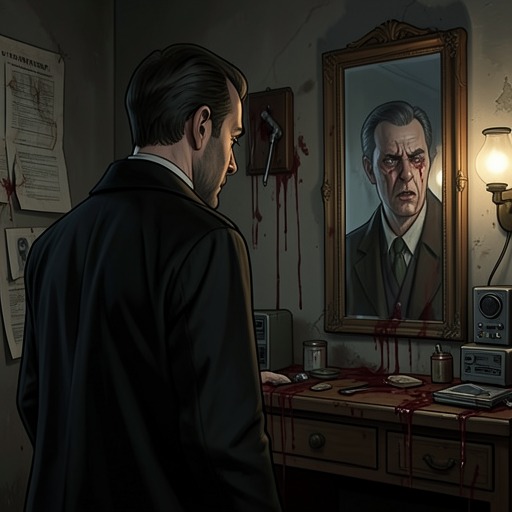
In a private changing cabin, Hakan takes the canister from his coat alongside a knife, rope, funnel, and container. He has removed his clothes because he forgot to bring a raincoat and expects that avoiding bloodstains may matter afterward. This setting makes the canister's use part of a broader effort to prepare for the practical demands of the attack. Hakan tests a hook and considers how a body might be positioned, while the anesthetic is meant to help him gain control before proceeding. His calculations suggest preparation, but the missing raincoat and the need to adapt also show how dependent the plan is on circumstances he cannot fully control.
Use at the Pool
When Hakan notices that one boy is left behind as others depart, he picks up the canister and places a finger on its trigger. He hesitates over whether to keep his ski mask on, weighing the possibility that the boy might escape against the possibility that someone could enter the changing room. He has already taken off his clothes, which he now recognizes could make a quick getaway harder. The canister is therefore bound up with a narrowing moment of choice: there is little time to reconsider, and Hakan acts as the boy approaches the cabin.
After dragging the boy into the room and locking the door, Hakan relies on the gas to keep him subdued. The boy makes little noise, but the canister's hiss could attract attention, so Hakan knows he must work quickly. The gas does not make the scene private: when a door opens and people begin talking nearby, Hakan turns it off and removes the mask from the boy's face. He continues with the boy suspended from the hook while listening to the men outside. The canister's operation thus has a practical limit in the scene: Hakan cannot simply leave it running without risking discovery.
Narrative Function
The canister embodies the contrast between Hakan's effort to control the attack and the interruptions that make control precarious. He has assembled tools and planned the room's use, yet the hiss gives away the possibility of what is happening just as other people enter the surrounding space. His response—shutting off the gas and continuing in silence—shows the attack adapting to immediate pressure rather than unfolding securely according to plan.
Its role also clarifies the distinction Hakan makes between incapacitating a victim and killing one. He believes the blood he needs must come from someone living, so the anesthetic serves his attempt to keep the boy alive and subdued while he proceeds. The canister is consequently more than equipment: it is the means by which Hakan tries to preserve the conditions his plan requires, and the sound that threatens to undo them.