Hakan's jar of concentrated acid
Let the Right One InHakan's jar of concentrated acid turns a concealed plan into an irreversible act, then returns in Hakan's broken memory as evidence that the plan did not succeed. First held in a bag, it is opened amid the noise of a battering door; later, after Hakan wakes in hospital, he recalls unscrewing its lid and understands that the acid did not kill him.
The Jar and the Decision
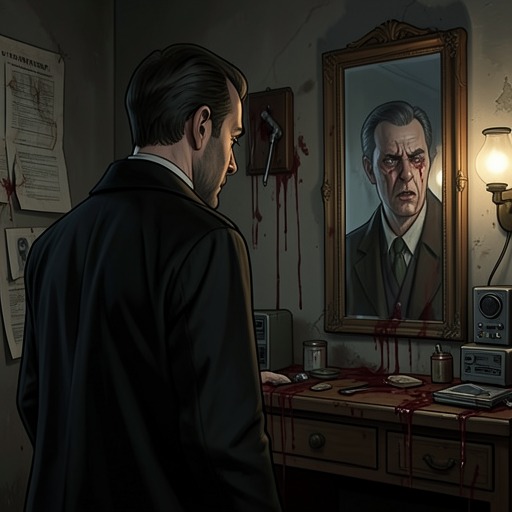
As the door rattles under repeated blows and a boy screams, Hakan drops a knife and turns back to his bag. The surrounding sounds seem to disappear; his vision narrows to a tunnel, through which he sees his hand take out the jam jar. He sits down hard and unscrews its lid. The sequence makes the jar the last object in a plan already underway, though the supplied scene does not describe how he obtained it or how long he had carried it.
The Act at the Door
With the door giving way, Hakan thinks of his beloved and imagines a boy angel coming down from heaven to carry him somewhere they can remain together forever. Three men stand outside after the door flies open, staring without understanding at the scene. Hakan nods, accepts what is happening, calls out to Eli, and pours the concentrated acid over his face. The jar's use is therefore bound to both his attempt to escape his circumstances and his imagined reunion with the person he loves; the immediate outcome, however, is not death.
Survival and Recollection
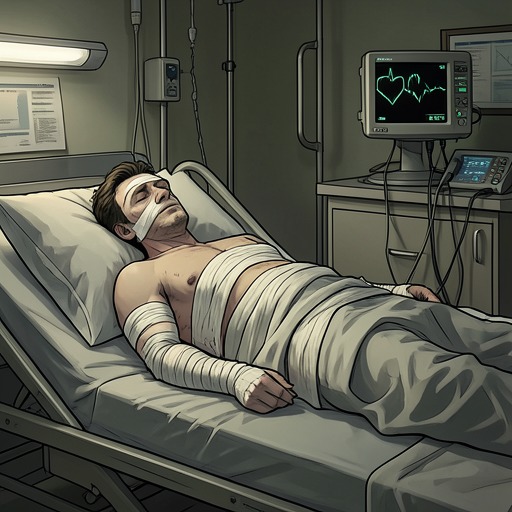
When Hakan later wakes, a tube enters a metal socket implanted in his throat, and he recognizes that it is the apparatus he could pull out if he wanted to die. His memory stops at the moment he unscrewed the jar. He concludes that he must have poured the acid over himself as planned, but that his survival was the miscalculation. The jar is not physically present in this later scene: it persists as the recalled cause of his injuries and as the point at which his memory breaks off.
Narrative Significance
The jar's function changes with Hakan's condition. In the first scene, it is a concrete instrument within a desperate plan, handled in the narrowed perception of an immediate crisis. Afterward, it becomes a remembered object that explains what Hakan cannot fully recall and why he is still alive. The gap between his intention and the result gives the jar its decisive significance: opening it does not close Hakan's story, but leaves him to confront survival and the physical consequences of the act.