Independent brain tissue in the heart
Let the Right One InIndependent brain tissue in the heart is a literal biological development associated with vampiric infection, not merely a metaphor for a changed emotional state. In Virginia, brain cells grow inside the heart’s sinoatrial node and become self-sufficient, raising a disturbing possibility: the new tissue may persist even if the rest of her body dies. The novel presents the anomaly through medical detail, personal recognition, and a later test of what it means for a heart to be alive.
Formation and biological significance
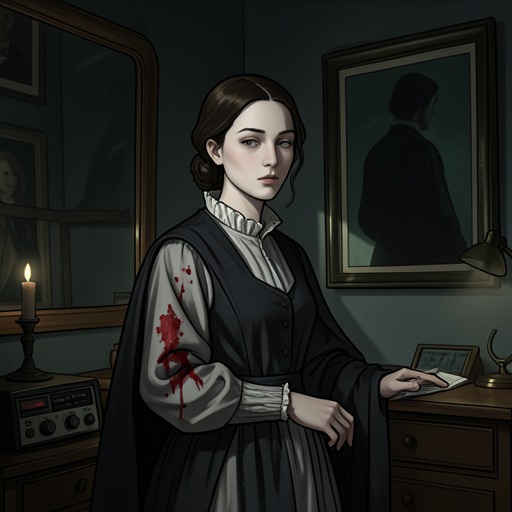
After Virginia has lain still for eleven hours, her body has undergone an irreversible change. Its temperature has fallen to twenty-seven degrees, matching the temperature inside the closet, and her heart beats only four faint times per minute. Her stomach and lungs have adapted to a different kind of existence. These altered bodily conditions establish the scale of the transformation, but the most consequential change is taking place inside the heart.
A cyst in the sinoatrial node, the cluster of cells that controls the heart’s contractions, has grown to twice its former size. The growth is described as cancer-like and made of foreign cells. The account emphasizes how difficult the finding would be to accept medically: a tissue sample would appear contaminated or mixed to heart specialists. The apparent contamination is, however, the point. The cells are brain cells, and a separate, small brain is forming within Virginia’s heart.
This account distinguishes the growth from an ordinary cardiac disorder. It is not simply a damaged heart or a failing pacemaker; it is a new center of brain tissue developing in a place where such tissue should not be. At first, this smaller brain depends on the larger brain. It then becomes self-sufficient. The change therefore introduces a division within Virginia’s body: the infection produces a tissue system that begins in dependence but acquires the capacity to continue on its own.
Virginia’s recognition of the infection
Virginia identifies the change before the medical explanation is narrated in full. She tells Lacke that the child infected her and that the infection has grown, locating it in her heart and comparing its spread to cancer. She says that she cannot control it. Her account gives language to a bodily process that is otherwise nearly impossible to observe from outside, while the later description confirms that her sense of its location is correct.
The growth turns a change in condition into a question of survival and agency. Virginia does not treat the infection as a passing illness: she asks Lacke to destroy her heart. Her request follows from her understanding that the heart contains the growing center of the transformation and that she cannot govern it. The scene does not present her request as a medical treatment with a known outcome; it shows the extent to which the new tissue has made her fear the future of her own body.
Her situation also gives the independent tissue a precise and unsettling consequence. Because it has become self-sufficient, its continuation no longer seems guaranteed to depend on Virginia’s ordinary life. The possibility that it could outlast her body is part of the horror of the development: the infection is not only changing its host but potentially establishing a separate persistence inside her.
Eli and the question of ending vampiric life
The same question of whether the heart governs continued existence appears in Eli’s recollection of an earlier exchange about death. Eli asks whether vampires can die. The answer identifies fire as one means, but also singles out the heart as a possible point of destruction; the speaker presses a finger to Eli’s chest while indicating where it is. Eli flees from the proposed idea, and afterward feels the slow beat of his own heart. The passage connects knowledge of bodily vulnerability with Eli’s unresolved decision to continue living: his conscience, the narration says, is weaker than his will to survive.
That memory gives the heart more than a physiological function. It becomes the apparent place where life might be stopped, even as Eli’s choice not to act on that knowledge reveals that knowing a possible means of death is not the same as choosing it. The distinction matters beside Virginia’s request. She asks another person to act on her heart; Eli, faced with a similar possibility in memory, withdraws from it. The two moments present different responses to the prospect of ending a condition that has altered the body.
Hakan and the limits of the heart as a measure
Later, Eli tries to stop Hakan by reaching into his chest and finding his heart. The heart feels cold and soft, and Eli recognizes that it is not alive. He nevertheless believes that it must be the means of stopping Hakan, and squeezes it until it breaks apart. Hakan does not stop: he reacts only slightly, then resumes reaching for Eli. Eli escapes the room while Hakan searches blindly and catches at his dress.
The episode does not state that Hakan’s heart contains the same brain-cell growth described in Virginia. Its importance lies instead in the contrast it establishes. The heart is identified as lifeless, yet its destruction does not end Hakan’s movement. The scene therefore refuses to make the heart a reliable, self-explanatory measure of life in an infected body. Read alongside Virginia’s independent brain tissue, it leaves the location and limits of vampiric survival uncertain: a new center of activity can develop within the heart, while an apparently dead heart can also fail to account for a body that continues to act.
Taken together, these episodes make the heart a site where bodily life, infection, and the will to survive meet without resolving into a single rule. In Virginia, the heart becomes the setting for an autonomous growth and the focus of her plea. In Eli’s memory, it marks a possible point of death that he does not choose to use. In Hakan’s case, destroying it proves insufficient. The concept’s force comes from that tension: the heart is central to the transformation, but it does not offer a simple boundary between life and death.