Oskar and Eli flee Blackeberg
Let the Right One InOskar and Eli flee Blackeberg when the removal of their apartment lock makes staying impossible. The escape carries them from a threatened domestic space to a journey away together, and its intimate center is a kiss through which Oskar briefly sees himself as Eli sees him: loved, handsome, and strong.
The lock and the escape
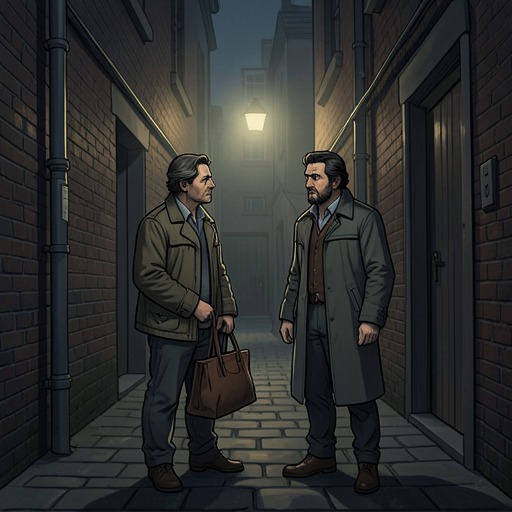
By evening, Oskar and Eli have put their clothes on and are standing with their arms around each other in the living room. The embrace is interrupted by the sound of a saw. Someone is removing the lock; the pair hear the work from inside the apartment, then hear an unidentified person react from within. The threat is immediate, but the evidence does not identify who is at the door or explain how the lock came to be targeted. The scene keeps attention on what Oskar and Eli can hear and on the short time left to act.
They run to the balcony and jump over its railing, landing in the bushes below. The movement is a direct break with the apartment: rather than wait to discover who is entering, they leave by a route that takes them outside and beneath the building. They curl up under the balcony because there is no time to do anything else. The bushes offer concealment for the moment, not a settled refuge; the scene’s urgency is built from the contrast between the lock being worked on above and the pair huddled below it.
A kiss and a changed self-image
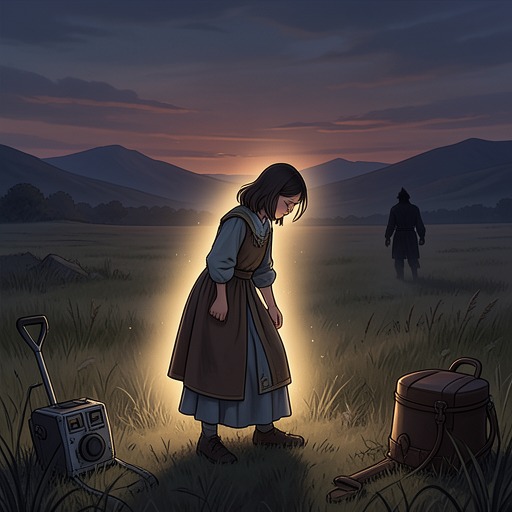
In that brief shelter, Eli turns to face Oskar, closes her mouth, and kisses him on the lips. The gesture follows their flight rather than interrupting it: even under immediate pressure, their connection remains central to the scene. For a few seconds Oskar sees through Eli’s eyes. What he sees is himself, but not as he had thought of himself: he appears more handsome and stronger, and the perception is explicitly shaped by being seen with love.
The moment changes the meaning of the escape without making the danger disappear. Oskar’s new vision is not a physical transformation or a promise that their circumstances have become safe. It is a change in how he apprehends himself, made possible by Eli’s perspective and conveyed through the brief crossing of their viewpoints. Set against the saw and the forced flight, the kiss gives the pair’s departure an emotional center: they are not simply moving away from a door being opened, but remaining together while Oskar experiences himself as worthy of love.
The journey away
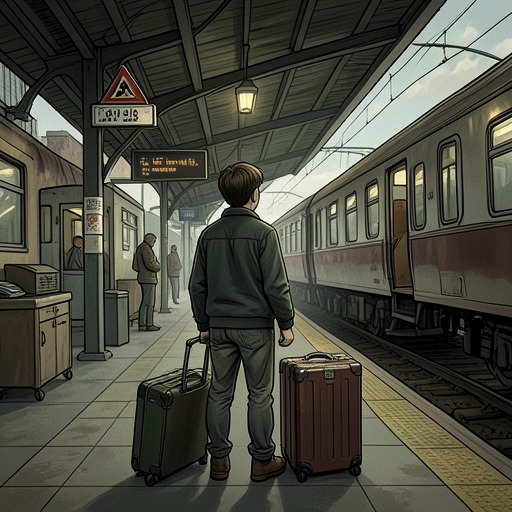
The later train scene places Oskar in a compartment on the Stockholm City–Karlstad line. Conductor Stefan Larsson notices a bag on the luggage rack and identifies it as an old-fashioned trunk. Oskar nods when asked whether it is his and presents his ticket, which Stefan punches. The practical details make the departure tangible: Oskar is not merely imagined as going away but is aboard a train with luggage and a valid ticket.
Stefan asks whether someone will meet Oskar at the other end. Oskar shakes his head. When the conductor points out that the boxes are his too and asks how he will manage, Oskar says that he will get help later. The exchange establishes both the scale of the luggage and the absence of an arranged reception at the destination. It does not disclose who will help, where the boxes are going, or what waits at the end of the journey. Oskar's answer is limited to the immediate problem: help can come later.
Departure and its open ending
Stefan closes the compartment door and moves to the next one. From his brief encounter, Oskar seems to know what he is doing; the conductor also observes that the boy looks happy, despite carrying a trunk and boxes and traveling without anyone expected to meet him. Stefan qualifies that impression by allowing that youth may make the situation seem different. The ending therefore leaves the destination and practical arrangements unresolved while giving the departure an unmistakable forward motion.
The sequence balances vulnerability with decision. At the apartment, the pair have only seconds to escape and must hide beneath a balcony; on the train, Oskar has a ticket, luggage, and a simple answer about getting help. The old trunk and boxes make their movement weighty and concrete, while the conductor's passing judgment cannot fully explain Oskar's happiness. What the scenes do establish is that Oskar and Eli have left the threatened apartment and are traveling onward together. Their future remains unspecified, but the final image is not of Oskar alone in place: he is already moving, with Eli's shared departure behind the journey and the possibility of help still ahead.