Stockholm Police
Let the Right One InStockholm Police are the institution charged with investigating the Vällingby ritual murder and pursuing the suspected killer, but their role extends beyond solving a crime. They construct and circulate a suspect’s image, mobilize an unusually large search, and address an increasingly fascinated public. The investigation’s reach is substantial; its certainty is not. The case repeatedly demonstrates how official action, incomplete evidence, and public speculation can become entangled without resolving the underlying fear.
The Case and the Public Image of the Suspect
The murder first enters the news as a troubling, incomplete account. On a Sunday, newspapers report more details under the question of whether the victim was the subject of a ritual murder. They print pictures of the boy, the hollow in the forest, and a tree, but no photograph of the killer. That absence matters: readers can see the place and the victim, yet have no likeness that would make the perpetrator seem identifiable. The public account presents an event that has happened without making its cause or author comprehensible.
On Monday, 26 October, police announce what they describe as Sweden’s largest drug seizure to date: five Lebanese men have been arrested with five kilos of heroin. The announcement is separate from the murder inquiry, but its appearance alongside public discussion of the killer helps expose the prejudices through which the surrounding community tries to make sense of danger. Rumors speculate that the ritual murderer might be foreign, leaning on generalized associations with Arabs, Muslims, and violence. The narrative presents these as public assumptions, not as findings by Stockholm Police. Their contrast with the later suspect image is pointed: on Monday the police release a composite of a young girl’s account, built after investigators take time and precautions, and the face is described as that of a normal Swede, with a vacant, ghost-like expression. The image gives the public a visible object for its fear, while the evidence behind it remains a witness’s report and a constructed likeness.
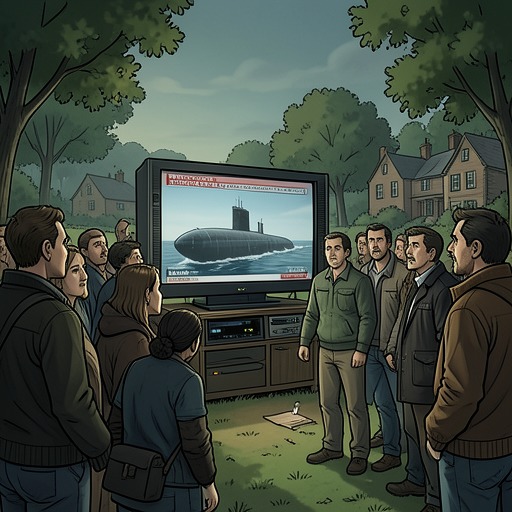
The composite changes the direction of attention without ending uncertainty. Men in the western suburbs who resemble the phantom image are scrutinized by strangers and then question their own appearance at home. The police image thus becomes part of ordinary social life: it prompts looks, self-inspection, and anxious speculation even among people who see no resemblance to it. By the time rumors reach the school on 28 October, the children’s talk about the Vällingby murderer has become a channel for claims that many have seen or even been attacked by him. The institution’s public-facing work supplies a recognizable suspect, but the image also circulates through a rumor culture that expands far beyond what has been established.
Investigation and Escalating Search
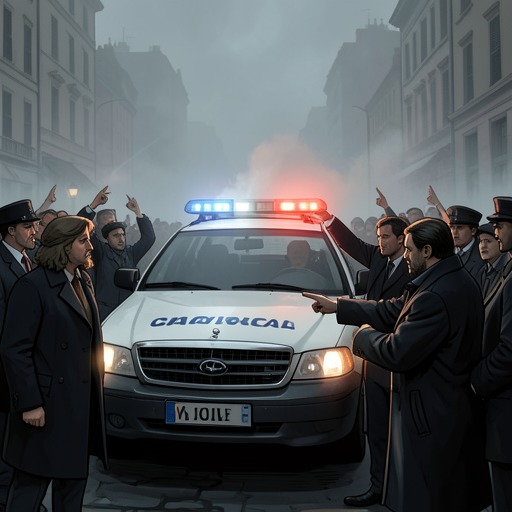
Stockholm Police respond to the suspected killer’s flight with a major operation in Judarn Forest. In one search, five police dogs and twenty officers are deployed, along with a helicopter—an unusual resource for this kind of pursuit. The effort is larger than the apparent practical need to track one wounded, confused man. The case has drawn intense media attention, and two officers are assigned simply to handle reporters gathered around a nursery beside the Åkeshov subway station. The police also want to demonstrate that they are applying maximum effort on a Sunday morning. The search is therefore both an attempt to find a suspect and a public demonstration of institutional action.
A further discovery raises the stakes. Police find remains they believe to be those of Benke Edwards because a wedding ring bears the name Gunilla, his wife. The identification is not yet confirmed, and the uncertainty creates a human difficulty for the authorities: his coworkers know who Gunilla is, but no one can bring themselves to call her while the body’s identity remains unresolved. A pathologist who had arrived early to examine the suspected ritual killer’s body is redirected to the new case. His preliminary assessment of the remains is passed to police, who classify the offender as extremely violent. This assessment helps explain the scale of the response, but it does not make the identity or condition of the person they seek any clearer.
The search later becomes a continuing public story in its own right. An official update says that the man who escaped Danderyd Hospital early Sunday, after killing one person, has not been found. Police have searched all of Judarn Forest; the fugitive is understood to be critically wounded, and investigators suspect that he has an accomplice. Arnold Lehrman of Stockholm Police calls an accomplice the only logical explanation for how a man in that condition could remain hidden. The police say they will keep searching the forest because his presence there cannot be ruled out, while diverting some personnel to investigate how he has managed to get away. Their account sets out both a working theory and its limits: the search has been extensive, but the fugitive’s continued absence resists the expected logic of the operation.
Press, Spectacle, and the Limits of Control
By Sunday evening, public interest in the Judarn Forest search has reached a high point. The evening papers can no longer rely on printing the composite image again, and, without an arrested suspect to photograph, they publish a picture of a police officer handling a sheep. Expressen puts it on its front page. The photograph’s drama, and the royal connection to the sheep, give the search an absurdly memorable image just as the actual fugitive remains at large. The media’s attention does not simply report police activity; it finds spectacle where the investigation has not produced its expected resolution.
Stockholm Police hold a press conference that evening in a room intended for forty people, but reporters from European newspapers and television stations make it too small. The failure to recapture the man during the day has made the story more sensational. A British journalist characterizes the search as a hunt for the archetypal Monster, an embodiment of evil from fairy tales that people hope to catch and thereby declare the danger finished. The conference moves to a larger room. At eight o’clock, the chief of police for the Stockholm district arrives with the commissioner leading the investigation and the patrol leader who directed the forest operation. They have decided to offer the reporters a photograph of the man. The image answers the press’s demand for something new, but the scene also reveals how the hunt has acquired a life as public drama, organized around the face of a supposed monster and the promise that capturing him will make the threat disappear.
The institution’s authority also appears in smaller, less spectacular contexts. Staffan is due to report for duty in Judarn to continue the search, though he expects it to be fruitless. Before going, he considers speaking with Tommy in ordinary clothes, but decides that the matter is vandalism and that his uniform gives him a shell of authority. The detail does not establish a separate police investigation into the murder; rather, it shows how police identity and authority enter domestic and neighborhood relationships through an individual officer. The same uniform is both work clothing and a way to make an encounter feel official.
Custody, Evidence, and Institutional Reach
The man at the center of the search has been held at Danderyd Hospital because he is sick, and his eventual escape turns medical custody into a police emergency. The search effort, the continuing updates, and the press conference all follow from the failure to keep him in custody and the danger attributed to him. Yet the institution’s public statements remain constrained by what investigators can establish: the man is presumed to be the so-called Ritual Killer, an accomplice is suspected, and the possibility that he is still in the forest cannot be dismissed. Those qualifications matter. They distinguish an official theory from a completed identification or a successful capture.
Stockholm Police also stand at the edge of other characters’ attempts to interpret the violence. After Virginia is attacked, Lacke believes the same child who killed Jocke was responsible. At the hospital he has to restrain himself from telling the examining police officer and doctor that this is what he thinks; he plans instead to speak first with Gösta, hoping that Virginia’s involvement will change Gösta’s perspective. The episode shows the gap between a witness’s conviction and what has been formally established. Lacke’s belief is consequential to the people around him, but it is not presented as a police finding.
Taken together, these episodes portray Stockholm Police as active but not omniscient: investigators gather witness information, form a composite, examine new evidence, hold a suspect in hospital, and mount a large search, yet the case continues to generate uncertainty and rumor. Their public presence makes the danger visible, while media images and popular speculation repeatedly exceed the facts available to them. The unresolved search is not merely an operational failure in the narrative; it is the point at which the machinery of law enforcement, the demand for a recognizable monster, and the community’s need for reassurance are shown pulling in different directions.