Vampire invitation rule
Let the Right One InThe Vampire invitation rule governs a vampire’s entry into a home: crossing its threshold requires an invitation from someone inside. The rule is more than a barrier that prevents entry. In Eli’s case, she can cross without permission, but the attempt brings on a dangerous physical reaction; an invitation stops it. The scenes involving Virginia, Gosta, Eli, and Oskar establish the rule through two different encounters, one in which permission is given and one in which its absence is tested.
The threshold and permission
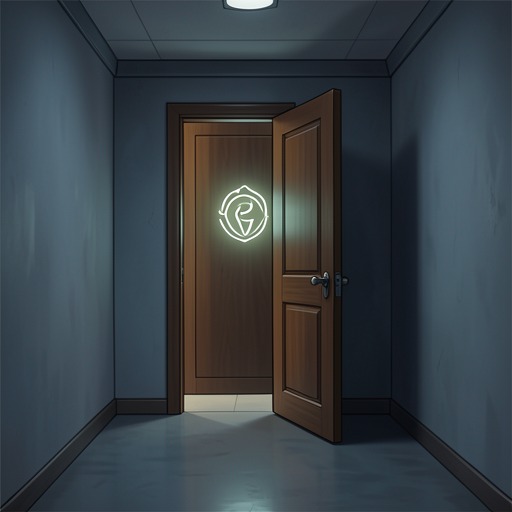
At Gosta’s apartment, Virginia arrives and rings the bell. When Gosta opens the door, he reacts with alarm. Virginia gestures toward the apartment, apparently uncertain about what she must do but intuitively aware that she needs an invitation. Gosta steps back and says, “Please come in.” She crosses the threshold after he gives permission. The scene presents the invitation as a necessary condition of entry, even though Virginia herself cannot fully explain what would happen without it.
The scene also distinguishes reaching an open doorway from being admitted. Gosta has opened the door, but Virginia still signals toward the apartment and waits for a response. His explicit welcome precedes her step inside. The rule therefore concerns permission to enter, not simply whether a door is physically open.
A new entrance requires a new invitation
Eli’s arrival at Oskar’s home tests how the rule applies when she has already entered by another route. Oskar goes inside to find a record, while Eli remains outside the front door. She tells him he has to invite her in. Oskar objects that she has already come through the window, but Eli distinguishes that earlier passage from entering through this doorway: this is a new entrance.
That exchange clarifies the rule’s threshold-by-threshold operation. Prior access to a home does not count as permission for a later entry through a different entrance. Eli does not simply follow Oskar inside; she makes clear that he must welcome her across the front threshold.
The cost of crossing without permission
Eli then steps over the threshold before Oskar invites her. Oskar braces for an immediate supernatural response, but nothing happens at first. Eli enters the hallway and closes the door. The apparent absence of an effect briefly leaves the rule uncertain, until her distress becomes visible: her face and hands redden, and blood appears on her skin. The account makes the consequence bodily and unmistakable without making the initial crossing itself an automatic physical barrier.
Oskar calls out that Eli can come in and is welcome and allowed to be there. Eli relaxes, and the reaction stops progressing. The invitation does not erase what has already happened: the blood remains on her face and hands and begins to dry. The sequence establishes both the rule’s condition and its limit as shown here. Permission halts the continuing reaction, but it does not immediately undo its visible effects.
What the rule establishes
The two encounters give the rule complementary forms. Virginia’s visit shows the ordinary sequence: an occupant opens the door, grants permission, and the vampire enters. Eli’s encounter makes the requirement explicit by separating a previous entry through a window from a new attempt at the front door, then demonstrating the consequence of crossing without an invitation. Together, the scenes present the threshold as a boundary governed by welcome rather than by physical access alone.
The contrast also makes the rule legible through character action. Virginia senses that an invitation matters before she can articulate why; Eli knows the requirement and insists that Oskar provide one. Oskar initially treats her previous passage through the window as sufficient, then understands the distinction when her condition worsens. His words of welcome change the immediate outcome, while the remaining marks show that the crossing has already exacted a cost.