Vampiric infection
Let the Right One InVampiric infection becomes legible to Virginia not as a diagnosis supplied by another person but through a sequence of bodily experiences that overturn her expectations. Ordinary food repels her, blood briefly brings relief, and the force she identifies within herself appears capable of continuing beyond her own life. The infection is therefore both a condition she suffers and an independent presence whose survival may not depend on hers.
First Signs and Changing Appetite
At the back of the store, near the milk products, Virginia is trembling with hunger. She examines cans of tomatoes, mushrooms, mussels, tuna, ravioli, beer sausage, and pea soup, but finds them revolting. The scene establishes a sharp division between familiar food and the need that has taken hold of her: she is hungry, yet the range of ordinary provisions offers no answer. Her search through the shelves gives that change a mundane setting, making the altered appetite visible in the middle of routine shopping.
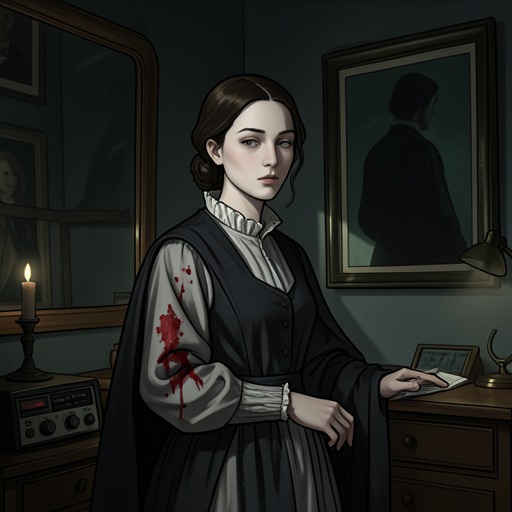
Later, while working with frozen shrimp, Virginia pricks a finger. She puts it in her mouth automatically, intending to deal with the small amount of blood, but discovers that its taste brings an intense sense of satisfaction and well-being. She continues before realizing what she is doing. The episode is an accidental recognition rather than a planned act: the new need declares itself through her response before she can understand it. The contrast with the canned food is decisive. What she could not tolerate as nourishment is replaced by a taste that momentarily seems to answer the hunger.
Attempts to Manage the Need
Virginia’s first effort to meet the need without involving another person is to drink her own blood. During the night, she repeatedly opens wounds and tries to draw enough from them to relieve her hunger. The relief diminishes with each attempt, however, and by morning she is left in anguish. The repetition is important: the strategy is not simply unsuccessful once, but becomes less satisfying as she returns to it, making clear that self-supply cannot resolve the condition.
Her body also resists the effort to end her life. The cuts she makes with a fruit knife close with unnatural speed; the bleeding stops quickly, and scar tissue is already visible within an hour. Virginia concludes that another person’s blood would make her healthy, while recognizing that she cannot successfully kill herself. The evidence does not present this as a cure she has obtained, but as an urgent conclusion drawn from the failure of both self-treatment and attempted escape. Hunger, rapid healing, and the wish to die converge in a situation that leaves her with no simple way to control what is happening.
Recognition of an Independent Force
Toward morning, while sitting in the kitchen and again drinking from a cut, Virginia experiences what she understands as a perception of the infection within her. The narration makes the limits of this knowledge explicit: she does not literally see it. Instead, she apprehends it through an image like an ultrasound showing a large, writhing snake where a child might be expected. The comparison gives form to something otherwise inaccessible, while preserving the distinction between a bodily sensation and a visible object.
The crucial realization is that the infection has a life and force of its own, independent of Virginia’s body. In her understanding, her death would not destroy it: it could take control of the body and continue. This changes the meaning of suicide in the scene. What had seemed a possible way to escape the condition becomes ineffective, because the infection is imagined as capable of outlasting the person who carries it. The recognition is not merely that she is ill, but that the boundary between her own survival and the infection’s survival may have broken down.
Sunlight, Survival, and the Infection’s Stakes
Sunlight appears to be the one thing the infection fears. Virginia finds its effect more painful than the deepest cut, and watches the dawn light fall through the blinds across the soiled living-room rug. The detail establishes a possible vulnerability, but not a settled solution: the light hurts, while the infection remains present. Its significance lies in setting a limit on the force she has perceived, even as that limit brings its own danger to her.
The light also recalls Virginia’s grandson Ted, who once crawled into a patch of afternoon sun and fell asleep. Remembering his vulnerable presence, she catches herself thinking in a way that alarms her and interrupts the thought. This moment connects the infection’s hunger to a threat extending beyond Virginia herself, without showing her acting on it. Her recoil registers a remaining capacity to recognize the danger and resist what her new condition might prompt.
As presented here, vampiric infection is defined less by an explanation of its origin than by its consequences: ordinary food fails, blood offers a powerful but inadequate relief, the body heals with unnatural speed, and the infection seems able to persist independently of its host. The sequence makes Virginia’s discovery a conflict over agency as well as survival. She can perceive and fear the force within her, but cannot simply starve, heal, or destroy it by willing her own death; sunlight is the only fear she identifies, and even that knowledge does not erase the danger.