City of Light
Life After LifeCity of Light is a recurring image in near-death experience accounts: a radiant place glimpsed beyond ordinary earthly surroundings, associated in one detailed report with departed relatives, joyful people, and the possibility of not returning. Its significance in the book lies both in the consistency of the phrase across several accounts and in the particular woman’s description of a city that appeared to mark a threshold between return and departure.
Emergence in the Reports
In Life After Life, the author had not found accounts describing heaven in a traditional sense. In the later collection, however, numerous people reported glimpses of other realms that might be considered heavenly. Several independently used the phrase City of Light, a recurrence the author found notable. The reported imagery also seemed reminiscent of The Bible, though the comparison is presented as an observation about imagery rather than as proof of a particular religious account of the afterlife.
The image belongs to the book’s discussion of new, comparatively uncommon elements in near-death reports. These elements had been reported by more than one person but were less frequent than the fifteen common elements previously identified. The author adds that, apart from supernatural rescues, the unusual elements discussed in this context appeared only in reports of encounters of extreme duration. City of Light is therefore presented as a recurring motif, not as a feature claimed to occur in every near-death experience.
The Reported Landscape
One woman described reaching the scene after floating away from her body and passing through a dark tunnel into brilliant light. She found herself with her deceased grandparents, father, and brother. The surroundings were unlike earthly scenery: bright colors, happy people, and groups gathered in different places, some of them learning. Her account combines a reunion with dead relatives and a wider landscape populated by people beyond her family circle.
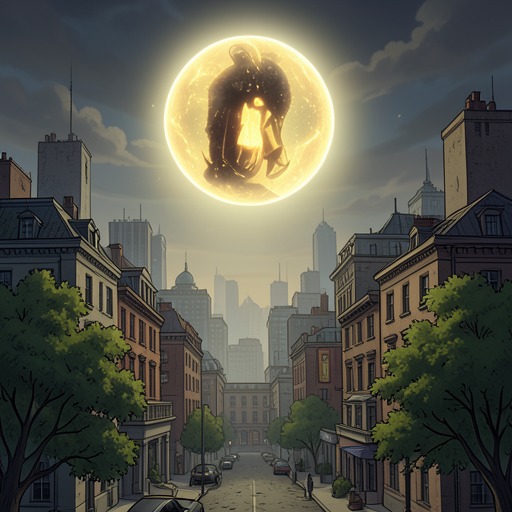
In the distance she saw a city made up of separate, gleaming buildings. She described sparkling water and fountains, and recalled music and an atmosphere in which everything seemed to glow. These concrete features give the phrase City of Light its force in the account: it names not simply brightness, but an inhabited place with buildings, water, social activity, and sound. The woman’s description is one person’s report; the book does not claim that every person who uses the phrase saw the same details.
A Boundary and a Choice
The city was not only a scene to observe. The woman understood that entering it would prevent her return, and she was told that the decision was hers. Her account thus makes the city a boundary in the experience: approaching it carries the consequence of leaving earthly life behind, while not entering leaves return possible. The report gives no further description of what happened inside the city, because the woman did not enter it.
This choice connects the image to the broader pattern of near-death accounts in which a person reaches a limit associated with continuing onward or returning to earthly life. In this instance, the city itself supplies the focus of that limit. Its radiance and apparent happiness are set against the irreversible consequence the woman associates with entering, making the scene both welcoming and final.
Interpretive Limits
The author’s account keeps the distinction between reported experience and established description in view. The phrase recurs across several reports, and the city’s imagery invites comparison with traditional ideas of heaven, but the material does not establish a single, uniform landscape or settle what the reports ultimately mean. The book presents City of Light as a meaningful feature of some people’s accounts, while leaving its metaphysical status open.