Clinical death
Life After LifeClinical death is one possible circumstance of a near-death encounter, not a uniform condition that every person reporting an experience must have undergone. The book distinguishes cases in which a person is believed or pronounced dead from crises that stop short of that point, and asks clinicians to take patients’ accounts seriously without claiming that the reports settle what happens after death.
Definition and Limits
Moody defines a near-death experience as a conscious perceptual experience occurring during a near-death encounter. The encounter, in turn, is an event in which a person could easily die or be killed, might be believed or pronounced clinically dead, but survives and continues physical life. This definition makes survival part of the frame: clinical death, as discussed here, is apparent and reversible in the cases under consideration, rather than a claim that irreversible death has been undone.
The reports do not all arise at the same degree of danger. Some people describe experiences despite not knowing themselves to have been close to death or ill; others have no recollection of any conscious experience, even after an apparent clinical death. Between these poles are varied medical crises. Moody therefore treats the closeness of death as a spectrum and proposes a classification to prevent the label from erasing important differences in circumstance.
A Range of Near-Death Encounters
The classification begins with a person who believes death is imminent in a situation that could easily prove fatal but escapes unharmed. It next distinguishes grave illness or injury in which physicians give little hope of survival, although no apparent clinical death occurs and the patient eventually recovers. Neither category requires that doctors believe the person has died.
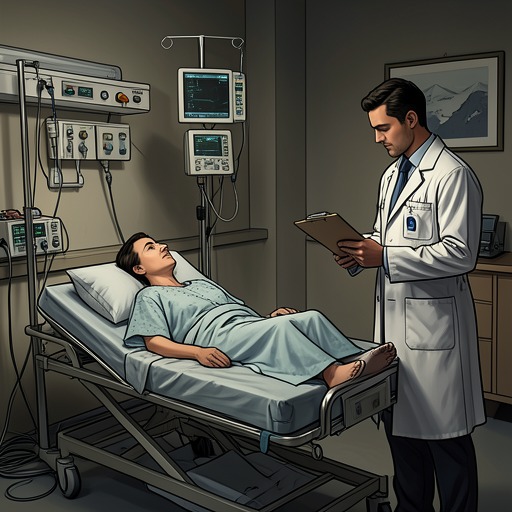
In a third kind of encounter, some criteria associated with clinical death are met—for example, the heart stops beating or breathing stops—and physicians may believe the person dead. Resuscitation begins immediately, however, nobody pronounces the person dead, and the measures succeed. The distinction turns not just on the severity of the crisis but on what clinicians observe and do.
Two further categories include an actual pronouncement of death. In one, resuscitation is attempted and then abandoned as unsuccessful; later it is resumed, and the person is revived, potentially after a death certificate has been signed. In the other, the case initially seems hopeless and resuscitation is not begun; after the person has been believed or pronounced dead, efforts are eventually started and revival follows. These are separate pathways in the scheme, not interchangeable descriptions of a single medical sequence.
The final category concerns a person who meets some criteria for clinical death, is believed or pronounced dead, and then revives spontaneously after resuscitation has either not been attempted or has been abandoned. Moody had collected near-death experience reports associated with every listed type except this one. He nevertheless notes that such spontaneous awakenings occur: one person he spoke with had awakened after being believed dead but remembered no experience during the interval. The distinction prevents an unexplained recovery from being mistaken for evidence that an experience was reported.
Reports, Research, and Interpretation
In the expanded study that followed Life After Life, Moody found that some interviewees had been pronounced clinically dead while others had come close through serious injury or accident. The original fifteen common elements continued to recur, but newer and less frequent reports broadened the range of accounts. Except for supernatural rescues, the unusual elements discussed in this context came from encounters of extreme duration. One such report was a vision of knowledge: a brief impression that knowledge of past, present, and future coexisted, or that complete understanding had arrived. Those reporting it said the state could not ultimately be put into words, did not persist after return, and did not remove the desire to learn; they described it instead as encouragement to pursue learning in ordinary life.
The book’s model experience begins with a man at the point of greatest physical distress hearing a doctor pronounce him dead. He then hears a disturbing noise, moves rapidly through a tunnel, and finds himself outside his physical body, watching the resuscitation attempt from the immediate surroundings. This is a constructed model containing common elements, not a claim that every person pronounced dead follows the same sequence. In reports of an out-of-body state, some people said they felt no pain while medical personnel worked on them, even if they had been in great pain beforehand; some said pain returned immediately upon re-entering the body. These are accounts of subjective sensation, not conclusions about what clinical signs establish death.
Clinical Listening and Care
Moody’s medical perspective arises partly from patients’ accounts of experiences connected with resuscitation. During his medical education, two patients volunteered such accounts in ordinary conversations, months after their experiences. One was an elderly man being seen for a skin problem; the other was a twelve-year-old boy with a congenital endocrine disease. Neither knew of Moody’s research, and he had not asked about the subject. Taken aback, he made an innocuous response and did not pursue the disclosures. Looking back, he felt he might have offered support by letting them know that others had reported similar experiences. He understood these encounters as evidence that physicians may fail to notice the phenomenon simply because they do not recognize or follow up when patients mention it.
His proposed response is deliberately limited: acknowledge that many people have described such experiences, avoid claiming that medicine or science can specify what they represent, and recognize that the experience may matter deeply to the person who had it. Understanding and integrating it remain personal tasks; discussion with others and reading religious writings are possible sources of help. The approach combines validation of the report with restraint about its meaning.
That restraint also has practical consequences around resuscitation. Patients revived after an attempt have sometimes repeated remarks made by physicians who thought they were lost, so Moody urges care in what is said at the bedside. He describes a physician who stays with patients for a time after they have died and talks to them, although that physician interprets near-death experiences as physiological processes continuing in the brain after the heart stops. The example separates considerate practice from agreement about explanation: a clinician can act cautiously without adopting a supernatural interpretation.
Ethical and Human Significance
Moody does not present these reports as resolving the ethical questions surrounding artificial life support, including cases in which brain function is considered irreversibly impaired. He regards the research as too elementary to support conclusions; even if near-death phenomena became established scientific fact rather than anecdotal and speculative, the ethical dilemmas would remain. The classification clarifies what kinds of crises are being discussed, but does not turn those distinctions into a rule for treatment.
The accounts also bear on attitudes toward suicide, though they do not provide final answers to the varied questions raised by suicidal behavior. People who reported near-death experiences often said they had not wanted to return, yet disavowed suicide as a means of reaching that state. They described returning with a sense of purpose and a serious commitment to living; none of Moody’s interviewees sought to repeat the experience. In this account, the apparent proximity of death does not amount to an invitation to pursue it. Clinical death remains a contested point in a medical crisis, while the survivor’s report may become a consequential part of subsequent care and meaning-making.