Out-of-body experience
Life After LifeOut-of-body experience is a reported state in which a person feels separated from the physical body and perceives it, its surroundings, or ongoing events from an apparent vantage point outside it. In Raymond Moody’s account, it forms a striking part of the model Near-death experience: the body remains in immediate view while the experiencer feels removed from it, sometimes observing resuscitation without the pain associated with the physical crisis. The book presents this as a recurring feature of testimony, not as proof of what causes the experience or what it ultimately means.
Place in the Near-Death Experience
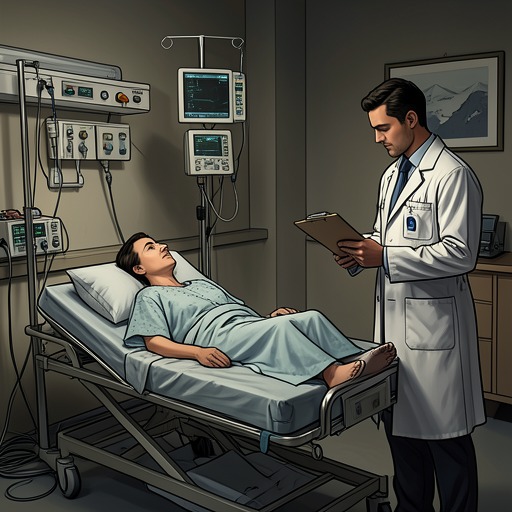
Moody introduces the out-of-body state within a theoretically complete model assembled to represent the common elements of Near-death experience accounts. In that model, a dying man reaches a point of acute physical distress and hears a doctor pronounce him dead. He then hears a loud ringing or buzzing and feels himself moving rapidly through a long tunnel. Afterward, he finds himself outside his physical body but still in the immediate physical environment, watching his own body from a distance as medical personnel attempt resuscitation. The separation is accompanied by emotional upheaval; it is not described as an initially calm or fully understood condition.
The model is a composite, not a claim that every experiencer follows an identical sequence. Moody distinguishes its common elements from unusual features reported less often, and notes that many of the less common elements came from accounts involving exceptionally long encounters. The out-of-body state is presented instead as one of the recognizable features that can occur within the larger experience. Its place in the sequence matters: it follows the crisis and, in some reports, the tunnel, while keeping the physical scene perceptually present.
A woman’s account makes the bodily transition more specific. She described a vibration surrounding her body; when it occurred, she became separated and could see her body. From the head of the bed, she watched doctors and nurses working. At one point, a nurse reached toward the wall above the bed for an oxygen mask, and the woman perceived the nurse’s arm passing through her neck. The detail makes the altered vantage point concrete: she did not merely report a general impression of floating away, but a view organized around her body and the people attending to it.
Perception, Pain, and the Body
For many people in the accounts, separation from the body also means a marked change in sensation. Moody reports that experiencers who felt themselves outside their bodies often sensed no pain, even when they had been in great pain immediately beforehand. Some were astonished to see medical personnel pounding on their chests or inserting intravenous needles while feeling none of those actions. In reports where the person re-entered the body, pain returned immediately. The contrast links the experience to bodily events while distinguishing what is seen from what is felt.
The state can also alter a person’s sense of ownership and access. In accounts Moody compares, an experiencer views a body that at first seems not to be their own. The reports also include a one-way-mirror effect: the person can see and hear others, yet appears invisible and inaudible to them. These descriptions do not establish a uniform set of powers or sensations; they record how some people made sense of a viewpoint in which ordinary bodily presence and social recognition no longer seemed to coincide.
Moody also discusses reports in which people perceived details of resuscitation from a position they described as hovering above the scene. Physicians told him that they could not understand how patients could describe aspects of the effort unless they had been near the ceiling. Other people reported witnessing events at a distance, including outside a hospital, which independent observers later confirmed. Moody treats such reports as a challenge that warrants open-minded investigation, including the possibility of controlled testing; he does not present them as already established experimental proof.
Awareness and the Limits of Interpretation
The out-of-body state belongs to a larger reported shift in how awareness relates to other people. In Moody’s discussion of Near-death experience, people who encounter other beings sometimes describe direct understanding of one another’s thoughts rather than communication through words. He connects this to a feeling of exposure: thoughts and deeds can no longer be hidden behind the social and bodily distinctions that ordinarily shape encounters. This theme broadens the state beyond a change in viewing position, though it remains part of the reports and Moody’s interpretation of them rather than a feature attributed to every out-of-body episode.
The book also places near-death accounts beside reports of out-of-body experiences that happened spontaneously, without the person being dead, ill, or in jeopardy. In most of the cases Moody mentions, the experiences were not sought; they arrived unexpectedly. He acknowledges similarities between these episodes and Near-death experience testimony, while explaining that his inquiry concentrated on experiences involving a near-death encounter. The distinction preserves two points at once: an out-of-body experience is not restricted to the circumstances of apparent death, but this book’s evidence and analysis are chiefly drawn from that setting.
Testimony and Research
Moody’s account depends on people describing experiences that they may fear will invite ridicule or disbelief. He says that when his research began, there was no manual for interviewing people who had returned from apparent death, so his approach developed through experience and remained open to revision by future researchers. Sympathy is his first guideline: a hostile, inquisitorial manner, especially one aimed at exposing contradictions, would make people less willing to speak. He also cautions interviewers to notice whether their own fear of death shapes their response to the subject.
That method bears on how the out-of-body state is presented. The model gathers recurring reported elements, while individual accounts retain their distinctive details and limits. Some people describe bodily separation and observation of medical efforts; some report a striking absence of pain; some describe perceptions that others later corroborated. The book keeps these kinds of testimony in view without reducing them to one explanation. Its central tension remains unresolved: awareness is reported as detached from the body, yet its descriptions stay closely tied to the body, the room, and the actions taking place there.