Tunnel experience
Life After LifeTunnel experience is a recurring element in Raymond Moody’s account of Near-death experience, describing a passage through darkness that may end in brilliant light. Its significance lies in its place within a larger reported transition: it can follow awareness of the body and its surroundings, and lead into accounts of another realm. Moody presents it as part of a model assembled from common features, not as a necessary experience for every person or a settled explanation of what happens near death.
Place in the Composite Account
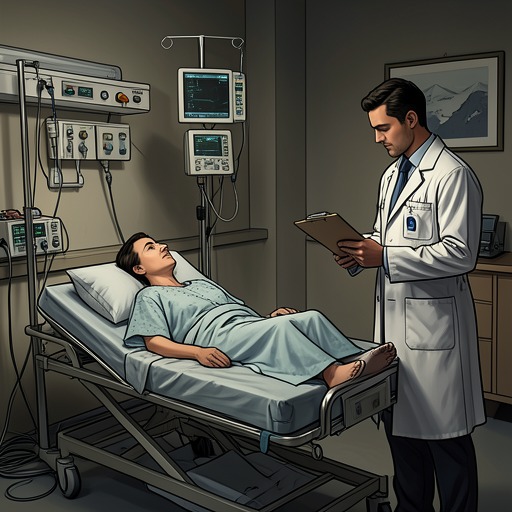
Moody restates a theoretically complete model first constructed in Life After Life to represent common elements reported in Near-death experience. In that sequence, a dying man reaches a point of extreme physical distress and hears a doctor pronounce him dead. An uncomfortable noise—a ringing or buzzing—accompanies the sensation of moving rapidly through a long tunnel. The man then finds himself outside his physical body, watching his body and the resuscitation attempt from nearby. The tunnel is therefore one transition in a sequence, not the whole experience: it connects the crisis of the physical body with a changed vantage point and, in some reports, further encounters.
The model continues beyond the passage through darkness. The person becomes accustomed to a different kind of body, encounters deceased relatives or friends, and may meet a Being of light. The being’s non-verbal question and the panoramic review of the person’s life lead toward a boundary between earthly life and what seems to be another life. The person is told, or otherwise understands, that the time for death has not come, resists returning, and eventually reunites with the physical body. This framework gives the tunnel a structural role: it marks movement into unfamiliar experience, while the later encounters and return supply other parts of the account. Moody’s composite model should not be mistaken for a claim that every individual report contains every element in precisely this order.
Reported Sensations and Variations
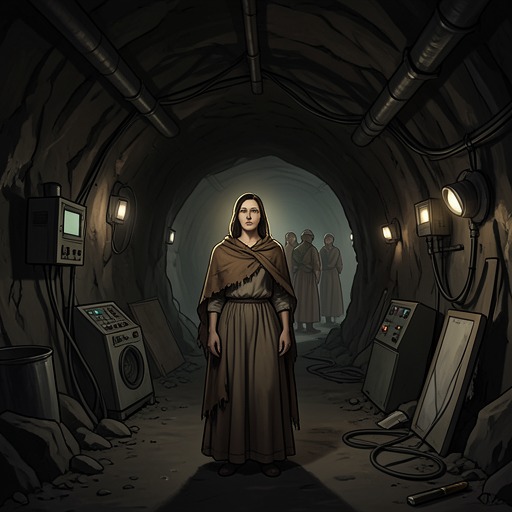
One man who experienced cardiac arrest recalled that sounds became distant while he remained conscious of events in the room. As his awareness seemed to fade, he heard a rapid sound that he compared to a drumbeat and rushing water. He then rose a few feet above his body, saw people working on him, and felt neither fear nor pain, but peace. After what he described as a second or two, he seemed to turn upward and enter a dark hole or tunnel. A bright light grew progressively brighter, and he seemed to pass through it. In his account, the tunnel follows both the sound and the out-of-body vantage point; it is not described as an isolated image.
A woman’s report gives a different sensory lead-in. She described a vibration around her body and a separation through which she could see herself and the medical staff. After floating upward, she went through a dark tunnel and came out into brilliant light. She then described deceased relatives, a beautiful place, vividly different colors, and people gathered there, including some who appeared to be learning. In the distance she saw gleaming buildings, fountains, and what she called a city of light. She understood that entering it would mean she could not return, and that the decision was hers. The account thus makes the tunnel a passage toward a scene of reunion and choice, while also showing that its meaning depends on what follows it.
These reports share a movement from darkness toward light, but differ in what is described before and after that movement. The man’s account emphasizes a rapid rushing sound, his view of resuscitation, and the growing light; the woman’s includes vibration and separation, deceased family members, and a distant city. Moody’s broader account also includes people who describe an intense noise and rapid movement through a long tunnel, followed by separation from the body. Such convergences support treating the tunnel as a recurrent reported feature, while the differences caution against turning it into a uniform, fixed script.
Relation to Other Reported Elements
Moody places the tunnel among the common elements of his composite Near-death experience, in contrast to unusual features discussed as additions to the earlier model. He notes that accounts of a tunnel can occur alongside out-of-body observation and other familiar elements. The passage is therefore connected to a cluster of reported experiences rather than functioning as proof, by itself, of what the surrounding events mean. In accounts of out-of-body states more generally, people have reported feeling no pain while medical personnel worked on their bodies, even when they had been in pain beforehand; pain could return upon re-entry. That observation concerns the broader out-of-body experience, not a specific effect attributed to the tunnel.
The book also acknowledges a medical resemblance: sensations of being drawn through a dark tunnel are sometimes reported by people being placed under anesthetics, especially ether. Moody argues that this resemblance is not a complete explanation of Near-death experience, noting that very few of his subjects were under anesthetic when their experiences occurred. He also reports that neurologists have pointed to similarities with temporal lobe seizures, including noise at the onset of an episode, while identifying panoramic memory as another point of comparison. These comparisons frame possible explanations for elements of the reports; they do not establish that the tunnel has one cause.
Evidential and Narrative Significance
Moody presents the tunnel through a combination of synthesis and individual testimony. The composite model makes the experience legible as one of several recurring stages, while the first-person accounts preserve differences in sensation, sequence, and destination. That distinction matters: the model organizes reported features, but does not make every feature universal. Moody notes that the unusual elements added in his later collection were reported by more than one person but were less common than the original fifteen; he also observes that, apart from supernatural rescues, those newer elements came from accounts of exceptionally long encounters. The tunnel, by contrast, belongs to the earlier set of common elements in his framework.
The accounts are presented as reports from ordinary people who had not sought these experiences and, in Moody’s characterization, had no prior interest in or knowledge of the subject. His emphasis on the witnesses’ certainty records how they understood their experiences; it does not independently resolve their cause. The tunnel’s importance in the book is consequently both descriptive and structural. It recurs in accounts that move from bodily crisis toward light and other encounters, yet its interpretation remains open, held between the vivid consistency of reported imagery and the limits of what testimony alone can explain.