Vision of knowledge
Life After LifeThe Vision of knowledge is a reported element of some near-death experiences: for a brief interval, a person seems to have access to all knowledge, including truths about the universe and time, but cannot carry that comprehensive understanding back into ordinary life. Its significance lies in this tension between total insight and lasting limitation. The accounts describe knowledge as immediately present and difficult to express, while also insisting that its disappearance does not make learning in life pointless.
Place within the reported pattern
In introducing the Vision of knowledge, Raymond Moody distinguishes it from the common elements of the model experience in Life After Life. He presents it as one of several newly encountered elements in accounts collected after that book was completed. More than one person reported it, but it was substantially less common than the original fifteen elements. Apart from supernatural rescues, the unusual elements discussed in this context appeared exclusively in reports of near-death experiences of extreme duration. The Vision of knowledge is therefore presented as a recurring but uncommon feature, not as a necessary stage in every experience.
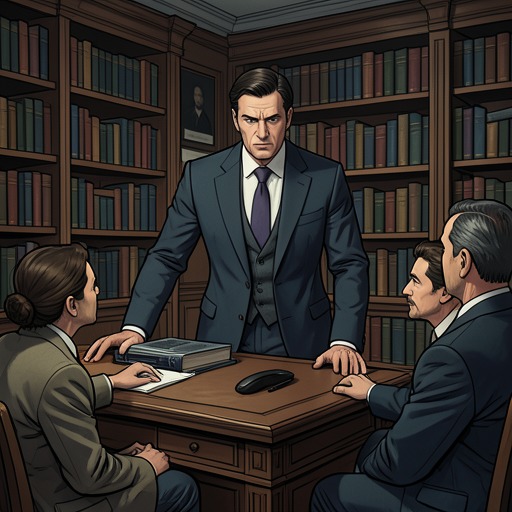
The reports share a central impression: knowledge of the past, present, and future seems to coexist in a timeless state, or the person experiences a moment of complete understanding. The accounts differ in how they convey that impression. Some liken it to universal insight; others reach for images of a school, a library, or a place of higher learning. Moody suggests that these descriptions may point toward an underlying state of consciousness, while making clear that the proposed unity is his interpretation of different reports, not a description every participant gives in the same terms.
Knowledge beyond ordinary learning
The experience is repeatedly described as resistant to language. The words people choose are treated as approximations, not literal accounts of a familiar place or a lesson delivered in an ordinary classroom. One woman recalled that, after seeing her life pass before her, she seemed for a second to know the secrets of every age and the meaning of the universe, the stars, the moon, and everything else. She could not specify how long the knowledge lasted, because its duration did not seem to belong to earthly time.
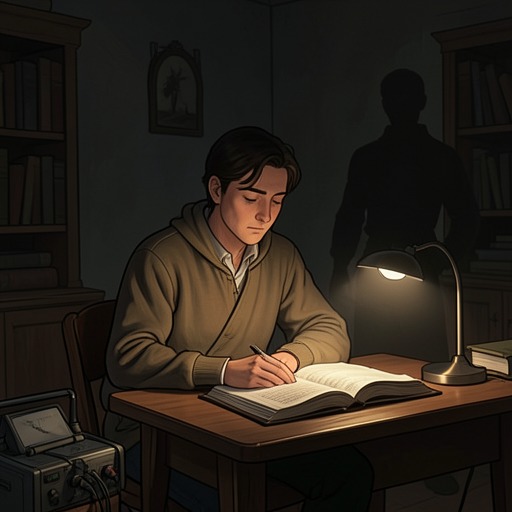
For her, this was not simply a matter of receiving a set of explanations in words or pictures. She described knowledge as present through sights, sounds, and thoughts, with nothing apparently outside its reach. The breadth of the experience matters: she did not report mastering one subject, but a temporary access to everything. Its totality also marks the limit of her account. She retained the memory that the knowing had happened, but not the knowledge itself, and could not later recover what she had known.
Schools, libraries, and immediate understanding
Other accounts give the experience a more spatial or educational image without making it ordinary instruction. A young man described what seemed to be a real school, though he saw no one there. He nevertheless sensed the presence of many beings and felt that lessons were coming to him continuously. The setting was empty to the eye and populated in another sense; learning occurred without the usual visible teacher or group of students.
When the interviewer compared his account with reports of libraries and institutions of higher learning, the young man recognized a shared experience despite the differences in wording. He described knowledge as readily available and absorbed rather than studied step by step: attention directed toward one area seemed to bring information flowing to him at once. His school imagery thus conveys both the sense of a place and a process of immediate knowing. A middle-aged woman offered a related but more compressed description: for a moment she felt that she knew all things and that communication was unnecessary, because whatever she wanted to know seemed knowable. Together, these accounts suggest a family resemblance rather than a single fixed scene.
Return, forgetting, and the value of learning
The woman’s account makes the return to life the decisive limit on the experience. She said she had chosen to return to her children and understood that she would not retain the knowledge. She also associated the period afterward with continued illness and several further close calls, and recalled being told that some of these experiences would erase the all-knowing knowledge. What remained clear was the memory of having known; the content itself vanished when she returned to her body. Her report distinguishes the lasting recollection of an event from the fleeting state that constituted it.
That loss did not lead her to dismiss learning in ordinary life. She continued seeking knowledge and regarded the effort to discover answers as worthwhile, describing it as part of a purpose that extended beyond one individual and involved using what people know to help others. Another reported reflection similarly joins the desire to seek knowledge with a desire for wisdom. The Vision of knowledge therefore does not replace inquiry with permanent omniscience: in these accounts, its temporary completeness coexists with, and may even reinforce, the work of learning after return.
Moody’s presentation preserves the distinction between participants’ descriptions and conclusions drawn from them. The reports supply recurring images of comprehensive insight, altered time, and knowledge that cannot be carried back; his suggestion that they may arise from one underlying state remains a tentative interpretation. The concept’s defining paradox endures across the accounts: people remember that everything once seemed knowable, but return unable to say what that everything was.