
Need Against Conscience
Life of PiHunger gradually alters Pi Patel’s relationship with killing and food, while his memory and prayers preserve a moral awareness of the change.
increasing Bearing strength in each event
 decreasing
Bearing strength in each eventdecreasingThe Vegetarian’s First Kill
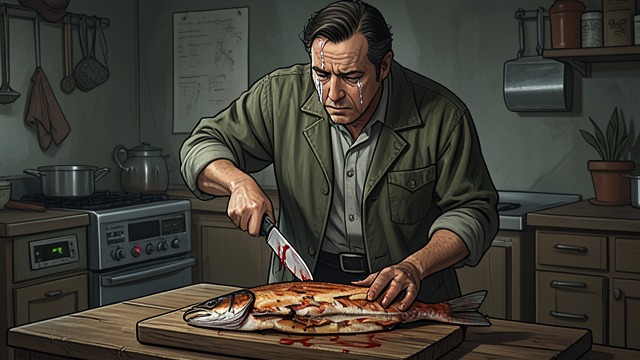
A Moral Boundary
Hunger’s Demand
Pi Patel needs bait and food but has no experience killing a living animal for himself.
A Difficult Death
He kills a Flying fish only after repeated hesitation, then weeps over what he has done and prays for the creature.
Survival begins with an act he experiences as a moral wound.
Learning to Fish
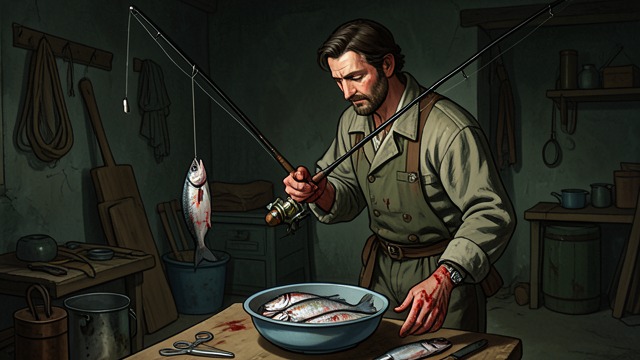
Necessity Becomes Skill
First Success
With a Flying fish head for bait, Pi Patel catches a Dorado and kills it to feed himself and Richard Parker.
A New Practicality
The act becomes easier as hunger and responsibility reorganize his priorities.
His growing competence does not yet mean he has forgotten the cost of taking life.
Butchering the Turtle
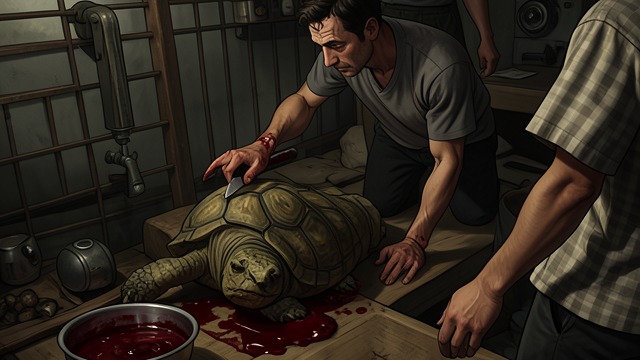
A Further Descent
Blood for Water
Pi Patel captures a Hawksbill turtle and follows the survival manual’s advice, drinking its blood and cutting it apart.
The Cost of Adaptation
He is exhausted by the work and appalled by how far his actions have moved from childhood vegetarianism.
The body’s needs steadily overrule the moral habits of his earlier life.
Eating Without Ceremony
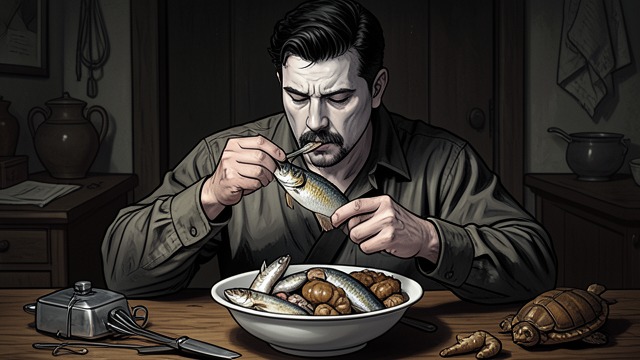
Hunger Changes Appetite
More Than Emergency
As supplies diminish, Pi Patel eats fish and turtle with increasing speed and less preparation, using every available part.
An Unsettling Resemblance
He notices that his frantic eating resembles Richard Parker’s, an observation that blurs the distinction he once relied on between human and animal behavior.
Adaptation sustains life while unsettling his sense of himself.
The Human Flesh Confession
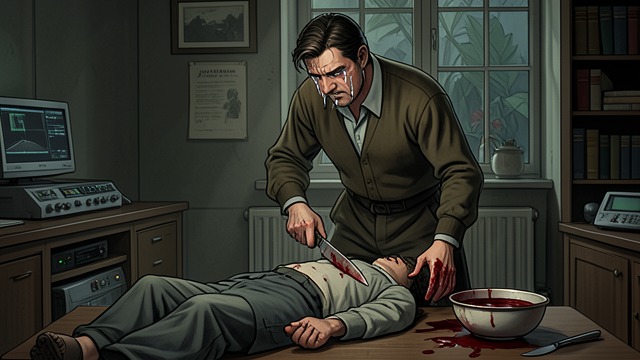
A Moral Memory Reopened
The Alternate Account
In the animal-free story, Pi Patel admits that he ate small pieces of the Frenchman’s body after Richard Parker killed him.
Guilt and Prayer
He presents the act as the product of extreme need and madness, and says he continues to pray for the dead man’s soul.
The confession refuses to make survival either innocent or beyond compassion.
The first week after the shipwreck
The early weeks of the drift
During the early months at sea
The middle stretch of the drift
During the later interview after rescue
