“The better story”
Life of Pi“The better story” is Pi Patel’s name for a choice between two accounts that cannot be separated by factual proof. Both describe the sinking of the Tsimtsum, the deaths of his family, and his suffering; neither explains the sinking, and neither makes a factual difference to the investigators. When they choose the version with animals, Pi answers, “And so it goes with God.” The expression turns a preference about storytelling into a compact statement about belief: where proof cannot decide, the story one accepts still matters.
The phrase and its first formulation
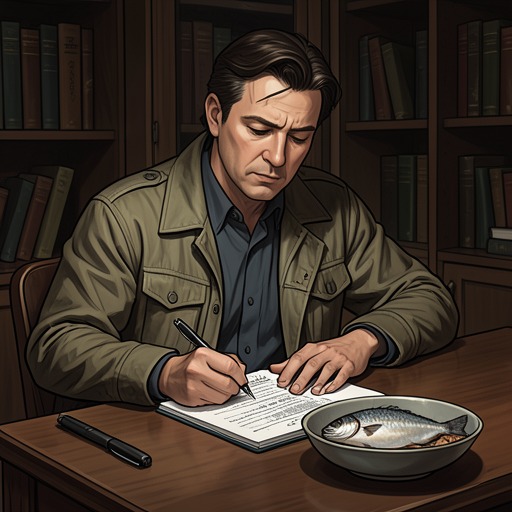
Pi first records the phrase while reflecting in a downtown cafe after spending most of an afternoon with a visitor. The encounter leaves him thinking about two formulations that had struck him: “dry, yeastless factuality” and “the better story.” The contrast is not simply between fact and fiction. It sets a bare, supposedly sufficient account against a story whose form can disclose meaning that factual verification alone cannot establish.
In the same reflection, Pi tries to describe what he calls divine consciousness. He associates it with moral exaltation and lasting feelings of elevation, elation, and joy, but says the quickening of the moral sense matters more than intellectual understanding. He imagines existence aligned along moral rather than intellectual lines, with love as its founding principle. That love may work unclearly, untidily, and not immediately, yet still works itself out in the end. The phrase “the better story” belongs to this account of meaning: a story may be valuable not because it supplies a provable explanation for every event, but because it makes a moral and emotional understanding available.
Pi does not present this as the removal of uncertainty. He pauses over God’s silence and adds that an intellect can remain confounded while a person retains a trusting sense of presence and ultimate purpose. That qualification matters to the phrase’s later force: the choice of a story does not make unanswered questions disappear. It describes how belief can persist alongside them.
Factuality, imagination, and belief
Pi’s imagined deathbed contrast gives the phrase a sharper edge. He pictures an atheist’s last words as “White, white! L-L-Love! My God!” and imagines a final leap of faith. By contrast, an agnostic who remains beholden to “dry, yeastless factuality” might explain the warm light of dying as “Possibly a f-f-failing oxygenation of the b-b-brain,” thereby missing what Pi calls the better story. These are imagined examples, not reports of actual deathbed conversations; their purpose is to stage two possible responses to an experience that resists certainty.
The contrast does not establish that a religious interpretation can be proved, or that a physiological explanation is false. Rather, Pi’s language emphasizes the difference between explaining an experience in strictly factual terms and allowing it to carry spiritual significance. In his framing, the agnostic explanation may be rationally available, yet remain imaginatively narrow. The better story is the one that lets love and the possibility of God enter the account without pretending that the mystery has been resolved.
The choice between the two accounts
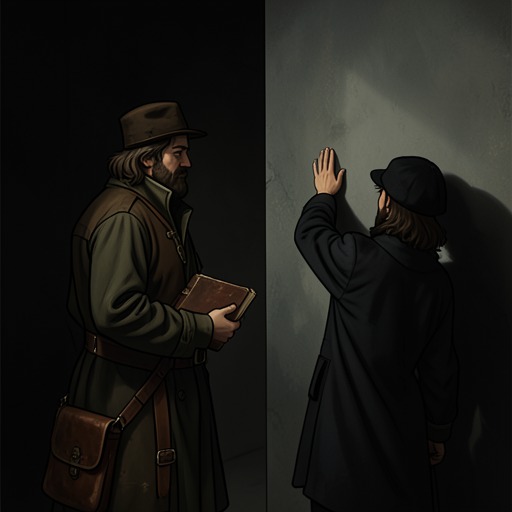
The expression reaches its decisive test in Pi’s conversation with Tomohiro Okamoto and Atsuro Chiba. He first identifies what he takes their preference to be: a story that will not surprise them, confirm what they already know, or make them see higher, further, or differently—a “flat story” and an “immobile story” grounded in “dry, yeastless factuality.” When he states that they want a story without animals, one of them agrees. Pi then makes the request explicit: they want an animal-free story that will explain the sinking of the Tsimtsum.
The exchange makes the animals a test of how much the listeners will accept, but Pi does not claim that they can prove the animal account. He tells them that he has given two stories for the 227 days between the sinking and his arrival on the coast of Mexico, and that neither explains why the ship sank. He further insists that the accounts make no factual difference to them and that they cannot prove which is true. In both, the ship sinks, his entire family dies, and he suffers. Those shared events establish the limit of the choice: the listeners may prefer one account, but that preference does not alter the losses at its center.
Pi asks which they prefer, the story with animals or the story without them. Atsuro Chiba answers, “The story with animals.” Tomohiro Okamoto agrees that it is the better story. Pi thanks them and says, “And so it goes with God.” Their answer does not verify the animals, just as his analogy does not offer proof of God. Instead, the closing comparison asks the investigators to recognize that they have already made a choice of the kind Pi describes: faced with accounts that cannot be resolved by their evidence, they prefer the one that gives them more than a flat recitation of facts.
Narrative and thematic significance
The phrase links the book’s two accounts without collapsing them into one. The animal story can be preferred, but the existence of that preference does not settle whether it is literally true. Nor does the animal-free account supply the missing cause of the shipwreck. By leaving the factual question open while making the investigators state their preference, the ending gives the reader a choice rather than a verdict.
That structure clarifies why “the better story” is more than praise for an entertaining narrative. It names a way of meeting what cannot be conclusively known: the listener weighs not only proof, but also the meaning and imaginative reach of an account. Pi’s final connection to God makes the analogy explicit while preserving its uncertainty. His statement does not demonstrate that God exists; it suggests that choosing a story with spiritual meaning is like choosing the animal story—not a factual solution, but an affirmation of the kind of account one finds worth receiving.