Atsuro Chiba
Life of PiAtsuro Chiba is a junior official from the Japanese Ministry of Transport who accompanies Tomohiro Okamoto to interview Pi Patel about the sinking of the Tsimtsum. Though the narrative gives him little individual biography, Chiba has a clear role in its final inquiry: he listens to Pi’s competing accounts, then chooses the story with animals when asked which one he prefers. His answer helps shift the interview from investigating what can be proved to considering how a story can be received.
Identity and Arrival
Chiba travels with Okamoto to the Benito Juárez Infirmary in Tomatlán, where they are to speak with Pi, the lone survivor of the Tsimtsum’s disappearance. The two officials have been sent to learn what light Pi can shed on the ship’s fate. Their long, difficult journey to the infirmary is recounted as Okamoto’s experience; Chiba appears as his companion and assistant rather than as an independent point-of-view character.
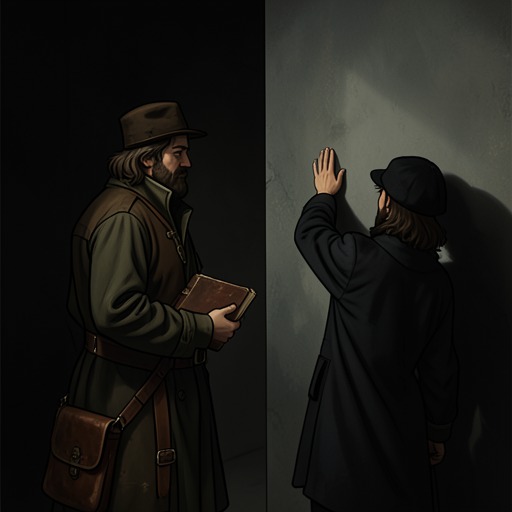
The interview begins with Okamoto identifying himself and introducing Chiba. Okamoto addresses his colleague as new to the work and tells him to pay attention and learn. This establishes an evident professional hierarchy: Okamoto leads the inquiry, while Chiba is present to observe and assist. The passage does not describe Chiba’s background, private thoughts, or previous experience beyond that instruction, so his characterization rests on his position in this encounter and on the judgment he eventually offers.
The Interview
Pi agrees to speak with the officials, and the conversation is recorded. Chiba is part of the interviewing party as Pi recounts what happened, but the text supplies no sustained account of Chiba’s questions or reactions during the interview. The scene instead gives him a brief, distinct presence at two points: first, as the junior colleague Okamoto is teaching, and later as one of the listeners who must respond to Pi’s alternative accounts.
The interview is not merely an effort to gather a survivor’s testimony. By the end, it becomes a test of what testimony can establish. Pi points out that the two stories share the shipwreck, the deaths of his family, and his suffering, while the officials cannot prove which account is true. He asks them to choose between the version with animals and the version without them. The question changes the terms of the exchange: the officials are no longer being asked to establish the ship’s fate, but to say which telling they find more compelling.
The Choice
Chiba answers first. His response is brief: “The story with animals.” Okamoto then agrees that the story with animals is the better story. The text gives no explanation for Chiba’s preference, and it does not show that he considers the animal account more factually reliable. What it does establish is that, when faced with a choice the evidence cannot settle, he is willing to state a preference for one version.
That distinction matters. Chiba’s answer does not resolve the contradiction between the accounts; it makes the contradiction part of the exchange’s conclusion. The animal story has won the listeners’ preference, but preference is not proof. Pi’s reply, “And so it goes with God,” draws the choice into a larger question of belief. Chiba’s uncomplicated selection helps make that final turn possible: his response supplies the human judgment to which Pi can attach the comparison.
Narrative Role
Chiba is a minor character whose significance comes less from an extended personal arc than from the position he occupies at the end of Pi’s account. As a junior official, he enters the scene within an institutional inquiry aimed at explaining a vanished cargo ship. Yet the interview closes without offering a verifiable answer to the central question of which story is true. Chiba’s choice acknowledges a different kind of response: a listener can decide which account to accept as a story even when the available facts do not decide between them.
The narrative leaves the grounds of his preference unstated. It neither supplies a private motive nor turns Chiba into an authority on the truth of Pi’s experience. Instead, his small, firm answer becomes part of the book’s final movement from investigation toward interpretation. He cannot settle what happened aboard the Tsimtsum, but he can say which version he prefers—and that modest judgment is enough to carry the closing exchange toward its reflection on faith.