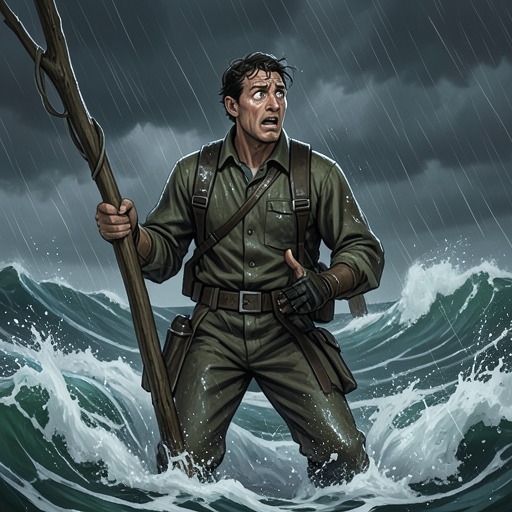
Fear as Life’s Opponent
Life of PiFear as Life’s Opponent is presented as more than an emotion: it is an adversary that can turn a living person against the very resources needed to endure. The narrator traces its advance from a small intrusion of doubt to bodily collapse and self-defeat, then argues that giving fear words is part of fighting back.
Fear’s Entrance
Fear first enters the mind disguised as mild-mannered doubt. A person may feel calm and secure; doubt then unsettles that composure, while disbelief proves too weak to drive it away. Anxiety follows. Reason joins the struggle and may win undeniable victories, but those successes do not guarantee safety: fear can still weaken the person until anxiety becomes dread.
The passage gives fear the tactics of a calculating opponent. It shows no respect for convention or mercy and seeks out the weakest spot. Its defining power lies not simply in the threat a person faces, but in its ability to alter how that threat is experienced, turning an impression into something that seems to occupy the whole mind.
The Body’s Defeat
Once dread takes hold, the conflict moves from thought into the body. The narrator depicts bodily functions failing in a sequence of startling transformations: the lungs flee like a bird, the guts slither away like a snake, the tongue goes dead, and the jaw gallops in place. Hearing falters; muscles shiver; knees shake; the heart strains while the sphincter relaxes. The body's separate parts seem to break down according to their own particular manner.
Only the eyes continue to pay attention. The apparent survival of that one faculty does not restore control: the frightened person makes rash decisions and dismisses hope and trust, the last allies available. In this account, fear triumphs most completely when it persuades its victim to defeat themself. The passage therefore links fear’s inward assault to a practical consequence: impaired judgment can turn an already dangerous situation into a more perilous one.
Memory, Language, and Resistance
The deepest fear, especially the fear of facing mortal danger, remains in memory like gangrene, seeking to rot even the words with which it might be described. That image makes the struggle over language part of the struggle itself. Fear is difficult to express because it threatens the means of expression; silence or avoidance can leave the person exposed to renewed attacks.
The narrator's proposed resistance is to fight to express fear and bring words to bear on it. If fear becomes a wordless darkness that a person avoids or manages to forget, the original opponent has not truly been faced. Naming fear is not presented as an easy cure, but as a necessary confrontation: language shines light on what avoidance leaves obscure, allowing the person to recognize the force that had seemed to defeat them.