Pondicherry Zoo Grounds
Life of PiPondicherry Zoo Grounds is the setting of Pi Patel’s childhood and the family enterprise directed by his father, Santosh Patel. Built on land in the Pondicherry Botanical Garden, it offered a world of animals and daily routines that Pi remembered as a kind of paradise. Its later disappearance gives the place a second life in the narrative: the zoo that once filled a large area is now something Pi can visit only in memory.
Establishment and Layout
Pondicherry became part of the Union of India on November 1, 1954. In the period that followed, a portion of the Pondicherry Botanical Garden was made available rent-free for a zoo. Designed and run according to what the narration describes as modern, biologically informed principles, the grounds were large enough to require a train for visitors to explore them. As Pi grew older, the zoo seemed smaller to him, until its vastness could be carried in his mind rather than measured across the grounds.
The toy train connected two stops, Roseville and Zootown. Roseville stood beside the rose garden; Zootown was the other station’s former name, though its sign had been removed. The train once ran twice an hour every day, while at the time of the later conversation it still ran on Sundays for children’s amusement. That small transport system gives the grounds an internal geography as well as a practical scale: the zoo was not simply a collection of enclosures, but a place large enough to travel through.
Management and Daily Life
Before moving to Pondicherry, Santosh Patel ran a large hotel in Madras. His abiding interest in animals led him into the zoo business, a change of occupation that Pi presents as less straightforward than it might appear. A zoo director must manage animals whose needs do not resemble those of ordinary hotel guests, while maintaining the grounds and coordinating the people who care for them. Santosh was the founder, owner, and director of Pondicherry Zoo Grounds, and headed a staff of fifty-three.
The scale of that work coexisted with the intimacy of family life. For Pi, the animals were not a distant display encountered on an occasional outing: they surrounded the ordinary passage of mornings. Lions served as an informal alarm, roaring between five-thirty and six. The calls of monkeys and birds accompanied breakfast, and the animals were part of the landscape Pi passed on his way to school. The same place that brought his father the recurring demands of management gave his son a childhood environment he remembered with deep affection.
Pi’s Childhood Landscape
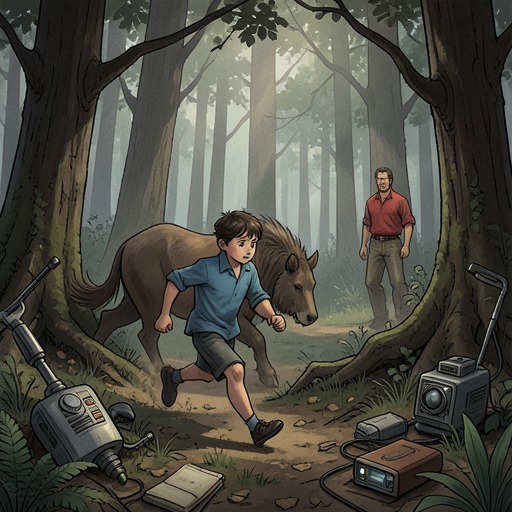
Pi’s account of the grounds moves through layers of vegetation and animal life. Trees, shrubs, and climbing plants crowded the landscape, while labelled plants, benches, and paths gave visitors landmarks among the greenery. The route held successive surprises: giraffes among tall trees, monkeys and birds making themselves heard, Indian rhinoceroses beyond a low wall, and elephants and hippopotamuses that might escape notice until a visitor looked again. The description makes discovery part of the place’s character; the more closely one looked, the more the grounds disclosed.
Pi’s own routine brought him past a changing range of animals. He recalled otters, American bison, and orangutans on the way out, and sometimes stopped to look at frogs or birds. Other animals were less likely to be active at that hour, while baboons, macaques, gibbons, deer, tapirs, llamas, giraffes, and mongooses were among the early risers. Just before leaving through the main gate, he might register a pyramid of turtles, a mandrill, a giraffe standing quietly, or a macaw climbing a wire fence. These brief encounters were part of a hurried school morning, not a separate excursion.
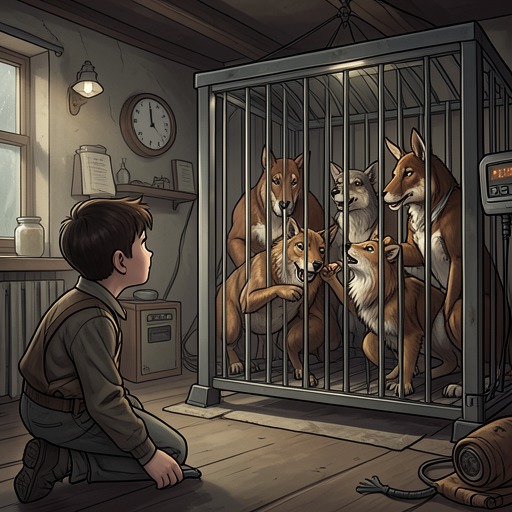
The zoo also becomes the setting for a formative encounter with animal danger. Before it opened to the public, Pi’s father took him through the grounds and past their different animal areas to the big-cat house, accompanied by a keeper. The building stood on a moated island; inside, the cages were divided by thick iron bars. One Bengal tiger, Mahisha, had been kept there while the other cages were empty. His forceful approach to the bars made the tiger’s strength palpable to Pi and his family, while the keeper remained composed. The episode places the zoo’s managed boundaries at the center of Pi’s childhood understanding of animals.
Territory, Closure, and Memory
In retrospect, Pondicherry Zoo Grounds also serves as the basis for Pi’s reflections on captivity and freedom. He describes animal enclosures as a negotiated boundary: animals mark territory, while the zoo’s barriers keep them within it. His examples of animals that returned to their enclosures after escaping complicate the assumption that an open gate automatically means freedom. Yet he does not present this argument as a blanket defence of zoos; he acknowledges the possibility that they should close and that wildlife would then face the limits of the remaining natural world.
The grounds eventually ceased to exist as a zoo. Its pits were filled in and its cages torn down. That physical erasure contrasts with the vividness of Pi’s recollections: in his memory, the paths, animals, train, and routines remain available even though the place itself does not. Pondicherry Zoo Grounds is therefore both a particular landscape and a vanished home, shaping Pi’s early perception of animals while showing how a place can persist after its structures have disappeared.