Survival manual
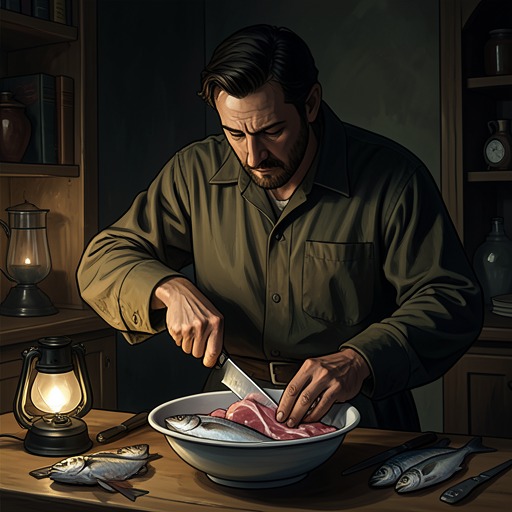
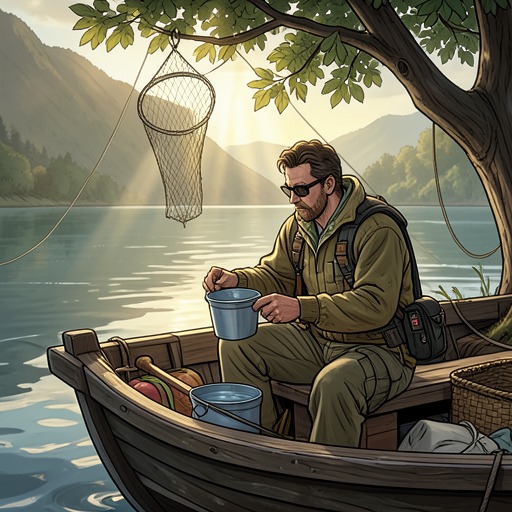
Life of PiThe Survival manual is a practical guide to surviving a shipwreck at sea, written by a British Royal Navy commander. After the Tsimtsum sinks, it offers Pi concrete instructions for conserving strength, finding food and shelter, and maintaining morale. Its usefulness is real but incomplete: the manual cannot tell him how to establish control over Richard Parker, so the work of survival depends on both its printed advice and Pi’s own adaptations.
A practical guide in a precarious setting
When Pi consults the Survival manual, its pages are still wet. It covers the immediate problems of a castaway’s life in unusually direct terms: avoid drinking urine, seawater, or bird blood; do not eat jellyfish or fish with dangerous features; and conserve energy rather than swimming after a drifting craft. The advice repeatedly turns attention from dramatic gestures to manageable decisions. Shelter matters because exposure can kill faster than thirst or hunger, and unnecessary exertion should be avoided. The manual also recommends regular rest, including putting the feet up for at least five minutes each hour.
Its guidance extends beyond physical maintenance. Although idleness can undermine morale, light activities such as card games, Twenty Questions, I Spy, community singing, and storytelling can occupy the mind. The manual counsels a castaway to be daunted but not defeated, making mental endurance part of the practical work of staying alive. These instructions do not promise safety; they describe ways to preserve capacity in a situation where strength, attention, and hope are all limited.
Reading the sea and finding food
The manual supplies small rules for interpreting an unfamiliar environment. It notes that the horizon, viewed from a height of five feet on a calm day, lies two and a half miles away, and offers cryptic points about navigation. It cautions that distant clouds can resemble mountains and advises looking for green as a sign of land; ultimately, a foot is the only reliable judge. Its warning against swimming is likewise grounded in the circumstances of a drifting castaway: the survival craft may move faster than a person can swim, and the sea itself presents danger.
Food advice is similarly specific. The manual describes turtles as comparatively easy to catch and useful for meat, blood, fat, and eggs, while warning the castaway to mind their beaks and claws. It also records that pressing a fish’s eyes can paralyze it. Such details give Pi a working body of information about resources available at sea, rather than an abstract assurance that he will find food. The recommendations are practical, but their usefulness still depends on what he can actually catch and manage from the lifeboat.
The manual’s limits and Pi’s adaptations
The Survival manual does not address the central problem of the lifeboat: how to coexist with a tiger. Pi recognizes that the food supply will not last indefinitely and that he must establish himself as the dominant presence while restricting Richard Parker’s territory. He assigns the tiger the floor and stern and side benches as far as the middle cross bench; the space above the tarpaulin and toward the bow, separated by the middle bench, is to remain Pi’s. The manual gives no instructions for creating this hierarchy. Pi must devise a training program of his own.
Its advice nevertheless helps frame a wider set of immediate tasks. Pi needs to begin fishing, find shelter from sun, wind, rain, and sea, and secure his raft with a second rope in case the first fails. The manual’s warning about exposure is especially relevant to the shelter problem, while its insistence on avoiding unnecessary exertion makes resourcefulness more than a matter of comfort. The guide does not solve these problems for him; it helps identify them and gives him principles to work from. Survival emerges as a combination of instruction, observation, and improvisation under pressure.
Repetition, reading, and endurance
Pi returns to the Survival manual repeatedly. He later estimates that he read it ten thousand times during the ordeal. The repetition gives the small pamphlet a role beyond that of a one-time set of directions: it becomes a stable text in a life governed by changing weather, uncertain food, and recurring danger. Pi keeps a diary as well, beginning about a week after the sinking of the Tsimtsum. Its undated, unnumbered entries condense several days or weeks onto a page, recording practical concerns such as catches, weather, problems, and Richard Parker. The manual and diary thus occupy different but related places in his effort to make experience legible: one offers general instructions, while the other records his particular ordeal.
The manual’s importance is also defined by what it cannot provide. Pi longs for a long book, especially scripture, that he could read again and again with renewed understanding. In the lifeboat there is no scripture; the Survival manual is the only book available. Its directions can help him manage the body and occupy the mind, but they cannot answer every need that reading represents for him. After reaching Canada, he finds a Bible in a hotel bedside table and weeps; the next day he sends a contribution to Gideons International, urging it to distribute sacred writings more widely. That later response underscores the distinction between a guide to endurance and a text of faith. The Survival manual remains indispensable precisely as a limited companion: it offers knowledge for surviving at sea, while Pi must find other resources for the spiritual and relational challenges that survival brings.