The whistle
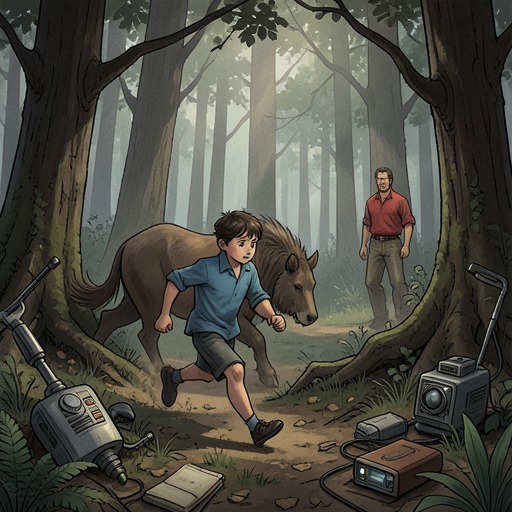
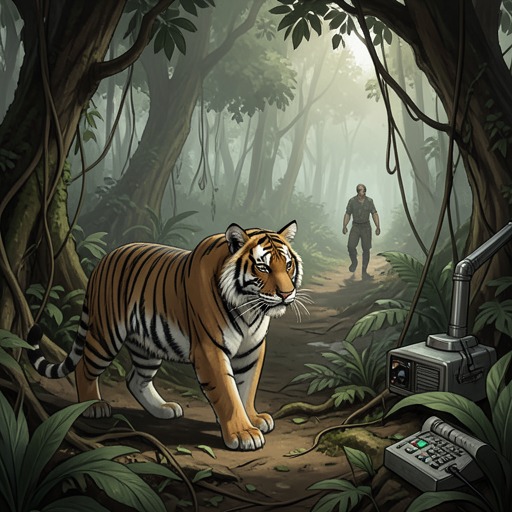
Life of PiThe whistle is the small, repurposed instrument at the center of Pi Patel’s effort to establish a workable order with Richard Parker aboard the Lifeboat. First imagined as a whip, it proves more effective as a sound: its piercing blasts, joined to the motion of the sea, help make trespassing costly for the tiger without requiring Pi to overpower him. The object thus marks a change from panic to deliberate action, and from a contest of strength to a fragile routine that keeps both castaways alive.
Discovery and Intended Use
Pi notices the whistle hanging from a life jacket while considering how he might tame Richard Parker. The open horizon suggests a circus ring with no corner in which the tiger can hide; the sea offers treats with which to condition him; and the whistle seems a possible whip for keeping him in line. The practical problem is urgent: Pi expects that a ship may not sight him for weeks, and he cannot safely rely on Richard Parker dying first. Taming the tiger becomes a necessity of their shared predicament, not an optional display of control.
The whistle’s first imagined role is therefore disciplinary, but Pi’s plan depends on more than threat. He needs a repeatable signal, an available source of reward, time, and a way to make the tiger retreat. The sound will become useful because it can be paired with consequences in the tiger’s own surroundings. Rather than physically overpowering Richard Parker, Pi begins to build an association that can protect his territory at a distance.
The First Training Session
At the first blow, Richard Parker cringes and snarls. Pi sees that the sound has affected him, but the tiger does not leap into the water. Hunger and thirst might overcome his fear of the sea, so Pi treats the reaction as an opening rather than proof of lasting control. He blows again. Richard Parker roars and claws at the air, yet remains aboard; after further blasts, he backs away and drops to the bottom of the boat.
The first session ends with Pi exhausted, but its result is decisive: Richard Parker has yielded ground. Pi’s fear has not vanished, and the danger has not been settled, but the whistle gives him a means to act within it. He names the next stage of his survival strategy Plan Number Seven: Keep Him Alive. The phrase captures the dependence built into the training: Pi must control the tiger, but he also needs him alive, as a presence that prevents isolation and despair from becoming overwhelming.
Sound, Motion, and Territorial Training
Pi later explains the method as a repeatable procedure. He chooses waves small and regular enough to rock the Lifeboat without capsizing it, streams the Sea Anchors to steady the boat, and provokes Richard Parker from the edge of his own territory with a consistent noise. Pi must retreat slowly without breaking eye contact, inviting a border intrusion but not stepping into the tiger’s territory himself. The distinction is crucial: the whistle initiates a controlled confrontation, not an unrestricted attack.
Once Richard Parker crosses into Pi’s territory or makes a determined advance through the neutral space, Pi blows the whistle continuously and helps the Lifeboat turn broadside to the waves. The rocking intensifies the tiger’s seasickness while the shrill sound accompanies it. Pi’s aim is to connect the whistle with the nausea, not to injure the animal. When the tiger is incapacitated, the procedure calls for stopping, stabilizing the boat, offering shade if needed, and making water available as he recovers. Pi stresses that the animal must be allowed to recover before the training is repeated; once the association is established, a single whistle blast can prompt retreat, and the signal should then be used sparingly.
Learning the Limits of Control
The whistle’s effectiveness does not eliminate the physical danger of training. Pi protects himself with shields made from turtle shells, cutting notches into the shell and threading rope through them. His first shield is too heavy and fails when Richard Parker charges and strikes it, sending Pi into the water. Terrified of the tiger and of sharks, Pi swims back to his raft and spends the rest of the day and night there without eating or drinking. A smaller, lighter shell makes a better shield on his next attempt, but the risk remains real.
Richard Parker strikes Pi four times, and each time Pi loses his shield and retreats to the raft. Through these encounters, Pi learns to read the tiger’s ears, eyes, whiskers, teeth, tail, and throat, backing down before a raised paw signals that the charge is imminent. He then resumes his own warning from the Lifeboat’s edge: feet braced on the gunwale, the boat rolling, the whistle sounding, and Richard Parker eventually moaning at the bottom of the boat. Pi’s fifth shield lasts for the rest of the training. The whistle is part of a system that also requires observation, retreat, bodily protection, and control of the boat; it is not a magical command that makes the tiger harmless.
Significance
The whistle changes the terms of Pi and Richard Parker’s coexistence. At first it appears to be an improvised weapon, but its real force comes from a learned connection between sound, territory, and the discomfort produced by the sea. Pi cannot remove the danger or claim mastery through strength. He can, however, establish a boundary that the tiger has reason to respect and repeat the procedure when that boundary is challenged.
That limited success is bound up with dependence. Pi recognizes that Richard Parker keeps him from sinking into despair and gives him reason to continue living; the tiger is at once a threat to be managed and a companion whose presence matters. The whistle does not reconcile those opposing facts. Instead, it makes their shared survival temporarily possible, converting fear into a disciplined signal and an unstable Lifeboat into a space governed by a hard-won, repeatedly tested order.