Chencha
Like Water for ChocolateChencha is a servant in the De la Garza household whose work ranges from cooking and serving to caring for Tita in moments of crisis. She is more than a domestic helper: her quick speech can break tension, her presence offers Tita companionship when the family has driven her into silence, and her return helps reconnect Tita with the life of the ranch. The contrast between Chencha’s seemingly ordinary duties and the emotional weight they carry makes her one of the household’s indispensable figures.
Identity and Place in the Household
Chencha works within a family governed by Mama Elena’s authority and by expectations that fall especially heavily on her daughters. The pressure on Tita is explicit: Mama Elena declares that the youngest daughter must care for her until her death. Chencha is not the person who sets or challenges that rule, but her labor takes place inside the household system it helps sustain. Cooking, serving, and attending to the family are recurring obligations, while the daughters’ futures are shaped by a tradition that treats care as a duty rather than a choice.
Her position gives her access to the practical and conversational life of the family. When Pedro Muzquiz arrives to ask for Tita’s hand and Mama Elena redirects him toward Rosaura, Chencha is carrying coffee and cookies into the living room. She nearly drops the tray, then rushes back to the kitchen to report what has happened to Tita, Rosaura, and Gertrudis. The sisters are making Christmas Rolls for Tita’s birthday, and Chencha’s account turns the formal marriage negotiation into immediate kitchen news. Her startled, irreverent response to Mama Elena’s proposal shows how she can puncture the household’s solemnity without changing its power structure.
Work, Food, and the Ranch
Chencha’s work is shown as continuous and demanding, particularly when the revolutionary army has recently visited the ranch. After Pedro, Rosaura, and Roberto have gone to San Antonio, Tita loses interest in nearly everything except feeding worms to a helpless pigeon. Chencha, meanwhile, must keep up the food work: the household is preparing sausage, salt pork, ham, bacon, and lard from one of the few surviving pigs. She sets a cover on a pan and runs to the kitchen garden to help Tita look for worms, even as Mama Elena repeatedly comes to supervise the sausage and her bath preparations. Chencha worries about the consequences if Mama Elena discovers that Tita is not helping with the sausage. The episode places their small act of care for the pigeon beside the urgent labor required to preserve food and keep the household operating.
Her duties also extend beyond the ranch’s immediate family. During the revolutionaries’ occupation, Chencha serves beans to successive groups of soldiers, working through the fifth breakfast mess and facing further meals until the last supper at ten at night. When Gertrudis, now a general, asks for help understanding a recipe, Chencha refuses. She is exhausted by the service work and makes clear that Gertrudis’s military rank does not make Chencha one of her troops. The refusal gives Chencha a rare moment of independence: she recognizes the difference between serving food as her assigned work and obeying a military command that does not apply to her.
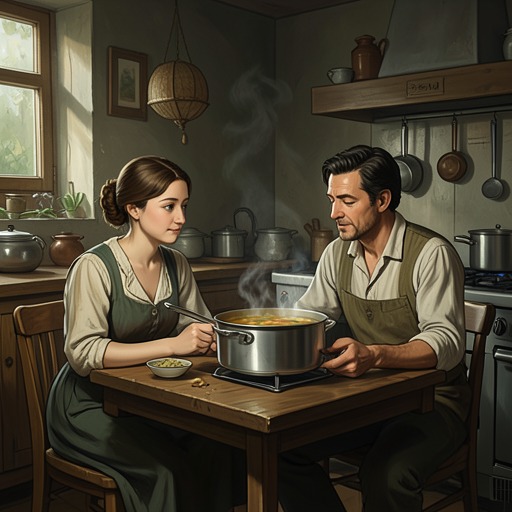
Food also makes Chencha part of Tita’s recovery. When John Brown brings ox-tail soup to the silent Tita, Chencha arrives in tears. Their embrace is brief because they do not want the soup to get cold. As Tita tastes it, memories of Nacha and childhood cooking return; she begins to cry, and she and Chencha laugh and weep together while recalling how the recipe was made. Tita remembers its first step, chopping the onion, and with it begins to recover her ability to cook. Chencha’s arrival does not replace the memories attached to Nacha, but it gives Tita a living companion with whom to share them.
Loyalty and Crisis
When Tita has left the ranch, Chencha tries to devise a story that might make her return acceptable to Mama Elena. Her proposed explanation is that she found Tita dressed as a beggar in Eagle Pass and that Tita had refused to come home because she did not feel worthy of living with such a good mother. The account is an invented excuse, not a report of what happened, and Chencha never gets to deliver it. Before she reaches the house, bandits attack the ranch. Chencha is sexually assaulted, while Mama Elena is struck as she tries to defend her honor and is left paralyzed from the waist down.
The attack interrupts Chencha’s attempt to manage the family’s response to Tita’s absence. Later, when Tita returns after hearing of the calamity, Chencha’s invented story is no longer needed: Tita comes back in person, and Mama Elena receives her in silence. Tita takes responsibility for caring for her mother, despite the rupture between them. Chencha’s planned lie therefore matters less as successful deception than as evidence of her effort to protect Tita from the consequences of returning to an unforgiving home.
Chencha’s own recovery is presented through her later return to the ranch. She arrives with a large, honest smile beside Jesus Martinez, whom Tita recognizes as a quiet, decent man. Chencha, characteristically, takes over the conversation before he can say more than his name. She explains that Jesus was her first sweetheart, that he had never forgotten her, and that they found one another again when she returned to the village. They have married and come to the ranch intending to start a new life and have children. The narrative says that no signs of the trauma she had suffered remain; her reunion with Jesus and her lively account of their plans mark a decisive change from the misery in which she had previously left.
Companionship, Boundaries, and Return
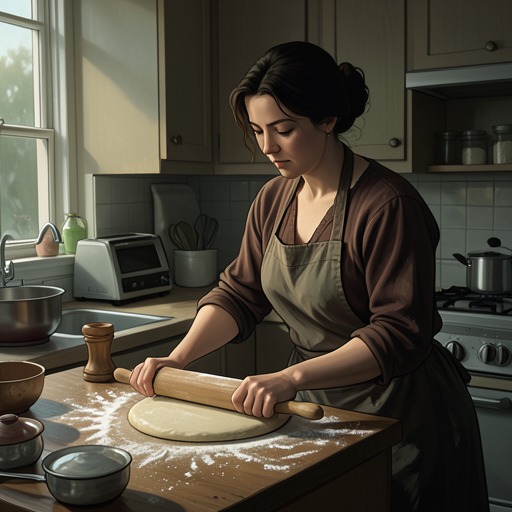
Chencha’s relationship with Tita combines affection with differences in temperament. She can be a confidante and an ally, but she is also known for gossip. When Tita believes she may be pregnant and is considering what that would mean for her wedding to John, she does not tell Chencha. Tita fears that the news would spread through the village by the next day, so she withholds it and redirects Chencha’s attention to bread dough. This moment makes their closeness practical rather than absolute: Tita values Chencha’s company, yet recognizes that some information cannot safely be entrusted to her.
Later, Chencha’s sudden entrance into the kitchen coincides with Mama Elena’s ghost leaving. Chencha notices that Tita seems distracted and asks what is troubling her, but Tita again keeps her private fears to herself. She uses the rising dough as a pretext to change the subject. Chencha’s ordinary concern and kitchen work continue around Tita’s private turmoil, without giving Chencha knowledge of everything Tita faces.
Near the end, Chencha asks permission to visit her village because her husband has gone there to build a house and she feels a strong urge to see him. By then, the household’s old arrangements are loosening: John has left, and Tita and Pedro are preparing to be together without their former precautions. Chencha’s request belongs to her own life beyond service to the ranch. Her movements between village and household, and finally toward the home she and Jesus are making, distinguish her from the daughters whose futures have been prescribed by family tradition. Through food, labor, laughter, concealment, and return, she remains close to Tita while also claiming a life of her own.