Family cookbook
Like Water for ChocolateThe Family cookbook carries domestic knowledge across generations while turning recipes into a record of family memory. Tita began writing it after preparing quail in rose petal sauce; the volume that Esperanza later passed on preserves, recipe by recipe, the story of a love buried beneath the ranch’s ashes. Its survival makes the kitchen’s work more than a routine of feeding others: it becomes a way to transmit experience that the family’s rules and silences had tried to contain.
Beginnings in Tita’s Kitchen
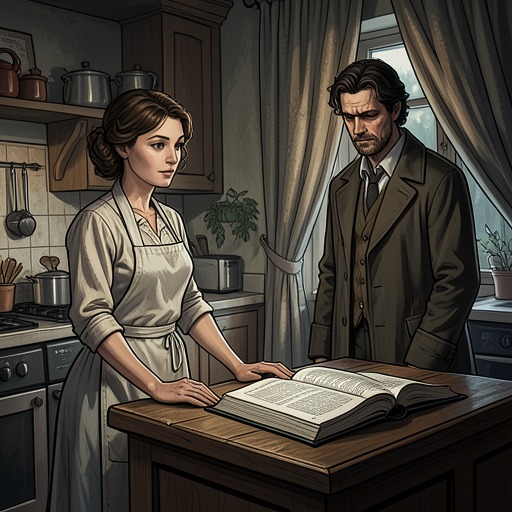
Tita started the cookbook on the night she prepared quail in rose petal sauce, after crocheting a large section of her bedspread, as she did every night. The recipe preserved precise instructions as well as a remembered occasion. She specified that the quail could be presented together on a platter or individually, and preferred separate plates because they kept the garnish from slipping off-center. On each serving, a perfect rose belongs in the middle, with petals arranged around it. Her attention to how the dish reached the table gives the recipe a practical purpose, but the circumstances of its composition make clear that it also holds an emotional history.
That meal affected Gertrudis and Pedro through Tita’s cooking, establishing food as a means by which feeling could pass between people. The cookbook’s first pages therefore arise from more than culinary technique: they follow an episode in which a dish carried desire and altered the people who ate it. Tita later prepared the quail each year in tribute to Gertrudis’s liberation, repeating the recipe as an act of remembrance. The food’s effect did not erase with the moment; it became something the family could recall by making the dish again.
Recipes, Labor, and Family Knowledge
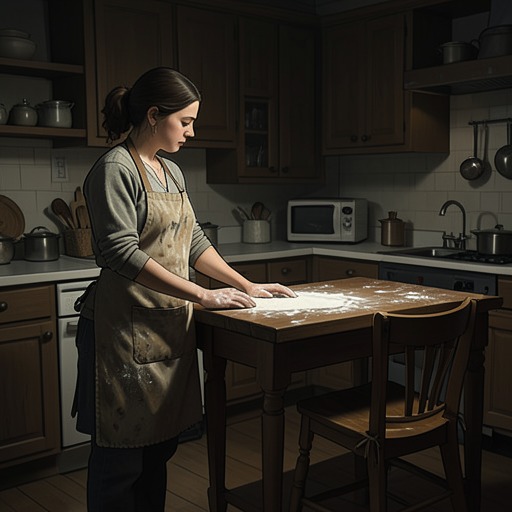
The cookbook belongs to a household in which women’s domestic labor was both essential and tightly directed. Tita had been expected to rise, cook, feed the animals, wash dishes, make beds, iron clothes, and prepare meals day after day. Her mother, Mama Elena, enforced the rule that the youngest daughter must care for her until her death, leaving Tita no right to marry. Tita questioned the tradition’s logic, including who would care for an unmarried daughter in old age, but in the De la Garza family such questions were not welcomed. Against this background, the cookbook records knowledge produced by work that Tita had not freely chosen, while also giving her a means to preserve and shape that knowledge herself.
Food became part of Tita’s relationship with the next generation, too. After Rosaura’s difficult childbirth left her unable to nurse Esperanza, Tita fed the baby gruels and teas. In the arrangement she made with Rosaura and Pedro, Tita was responsible for feeding Esperanza while Rosaura directed her education. Tita also taught her niece what she understood about love and life through the kitchen. When Rosaura argued that Esperanza should not attend school because her future was supposed to be caring for her mother, Tita and Pedro helped secure the girl’s education. Recipes and kitchen knowledge thus sit within a larger inheritance that Tita tried to pass on without reproducing the restrictions imposed on her.
Inheritance and Survival
The family’s history reaches the narrator through a chain of inheritance. After Tita and Pedro died and the ranch burned, a deep layer of ash covered the land. When Esperanza returned from her wedding trip, the cookbook was the only thing she found among the remains. She kept it and, after her own death, bequeathed it to the narrator. The book’s survival gives it a material continuity that the ranch itself no longer has: the place was later made fertile, and Esperanza built an apartment building on the land. Alex, her father, still lives in one of its apartments.
The recipes continue to act in the narrator’s present. While preparing Christmas rolls for a birthday meal with her father, she remembers that her mother made them for her every year. Her tears as she handles onions recall the family story of Tita, who was said to cry whenever onions were chopped, even before her premature birth on the kitchen table. The narrator’s inherited sensitivity links present-day cooking to Tita’s beginnings, just as the recipes link the living to the dead. She understands Tita as continuing to live for as long as someone cooks her recipes: the cookbook preserves not only instructions, but a family’s capacity to remember through repeated acts of making and sharing food.