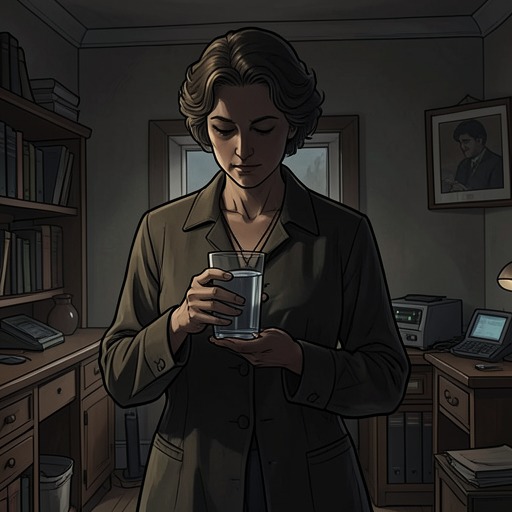
Gertrudis Elopes with Juan
Like Water for ChocolateGertrudis Elopes with Juan is a turning point in which a meal prepared by Tita becomes a force linking private desire to public upheaval. The rose-petal quail produces an extraordinary chain of bodily and environmental changes: Gertrudis feels its heat, the shower enclosure catches fire, and the scent of roses draws a revolutionary soldier from battle to the ranch. Her departure breaks Mama Elena’s control over her daughter and leaves the household to explain an escape it cannot openly acknowledge.
The Meal and Its Effects
The episode begins at the family table, where the effects of the meal differ sharply from person to person. Rosaura, already feeling ill, manages only a few bites. Gertrudis, by contrast, feels an intense heat and cannot sit comfortably. Her thoughts turn to a revolutionary soldier she saw in Piedras Negras, a captain whose gaze had stayed with her after their brief encounter in the town. The memory and the physical force of the food converge, making her desire feel less like a private thought than an energy moving through her body.
Tita is the meal’s source, but its effects reach Pedro through Gertrudis. As Gertrudis turns to seek Tita’s help, Tita remains seated yet appears absent, as if she has been dissolved into the rose sauce, the quail, the wine, and the meal’s aromas. The narrative describes the meal as a new means of communication: Tita transmits, Pedro receives, and Gertrudis becomes the medium. Pedro responds to Tita’s presence in the food without resisting it. This episode establishes the same unusual logic that drives the later escape: feeling passes through food, bodies, and scent rather than requiring an ordinary spoken exchange.
The Shower and the Soldier’s Arrival
After the meal, Gertrudis asks Tita to wash the utensils, an unusual request because washing up is normally her own task. Her body is sweating heavily, and the sweat is pink and rose-scented. She rushes to prepare the outdoor shower, a small plank enclosure behind the patio near the stable and corn crib. Its thirty-gallon tank stands six feet high and must be filled by carrying water up a ladder. Gertrudis makes the climb ten times, but the water drops evaporate before they reach her. The heat coming from her body splits the wooden walls and sets them alight, forcing her to run from the enclosure.
The scent travels beyond the ranch to a battle between rebel forces and federal troops. Juan Alejandrez, the rebel captain Gertrudis had seen in Piedras Negras, abandons the battlefield and rides toward the ranch, leaving an enemy soldier alive behind him. He does not know where he is going until the fragrance guides him to Gertrudis. The narrative presents the pull as an unexplained power: the smell directs him toward a woman he has not yet met, while the heat that began at the table has already transformed the shower and its surroundings.
Gertrudis stops when she sees Juan Alejandrez approaching. He lifts her onto his horse and carries her away at a gallop. The two leave together so quickly that his escort cannot catch them. The departure joins the domestic scene to the revolutionary landscape, but it also reverses the direction of the household’s authority: Mama Elena’s daughter is no longer contained by the ranch, and the soldier leaves his military position to follow a personal summons.
The Story Told at the Ranch
Tita has watched the departure from the patio while washing dishes; Pedro also sees it as he is leaving on his bicycle. The soldiers who later explain Juan Alejandrez’s absence offer a different account, saying that the captain suddenly went mad and deserted the army. The novel sets this version against what Tita witnessed, making the escape an example of how public accounts can obscure private causes. The account given to the army does not explain the rose-scented summons, the burning shower, or Gertrudis’s meeting with Juan Alejandrez.
When Mama Elena demands an explanation, Tita says that federal troops attacked the ranch, set fire to the shower, and kidnapped Gertrudis. Mama Elena accepts the story. Later, Father Ignacio reports that Gertrudis is working in a brothel on the border. Mama Elena responds by burning Gertrudis’s birth certificate and pictures and forbidding anyone to mention her. The family’s silence and the false account of her fate conceal the fact that Gertrudis left with Juan Alejandrez. Her departure therefore produces not only separation but also an imposed erasure within the household.
Return and Lasting Reminders
The escape does not end Gertrudis’s connection to the family. When she returns, she tells Tita that she has become a general through hard work and fighting in the revolutionary army, and that she and Juan Alejandrez are happily married. She grieves that Mama Elena died before she could see what Gertrudis had made of her life. The contrast between the mother’s earlier rejection and the daughter’s later military authority makes the escape a beginning rather than a momentary flight.
Gertrudis also returns to Tita through concrete reminders. The rose scent remains at the place where the shower stood, even after the enclosure is gone and the site becomes a parking lot. Pedro and Tita retain the memory of what they saw, and rose-petal quail becomes a silent reminder of Gertrudis’s departure. Tita prepares it each year in tribute to her sister’s liberation, taking particular care with the garnish. Later, as Gertrudis leaves again to join an attack on Zacatecas, she gives Tita advice and departs carrying cream fritters in a jar in her saddlebag. Food thus links the sisters across absence: first the quail marks Gertrudis’s escape, and later a familiar family recipe travels with her.