Juan Alejandrez
Like Water for ChocolateJuan Alejandrez is a rebel soldier who becomes Gertrudis’s partner and husband, and later rises to the rank of general. His story links the battlefields of the Mexican Revolutionary Army with the De la Garza ranch: first through an extraordinary elopement, then through his unexpected return as a military commander, and finally through the family life he shares with Gertrudis. The novel’s account of his actions also contrasts what witnesses see with the inaccurate version later passed off as history.
Identity and Military Rise
Juan first appears in a battle near the town, where he stands out among the rebel forces for his courage. He is not introduced through a formal history of his origins or enlistment; instead, the narration makes his importance visible through the suddenness of the decision that takes him away from the fighting. Later, the commander who visits the De la Garza ranch is identified as Juan, now a captain. When he returns with Gertrudis, he is a general. The changing ranks establish a rise through the revolutionary army, although the narrative does not specify the steps or dates of his promotion.
The circumstances of his advancement matter because the story gives military status a double meaning. Juan is a combatant who leaves a battlefield, but he is also capable of command: at the ranch, he directs his soldiers to search outside rather than enter the house, and later he travels with Gertrudis as a senior officer. The novel places those public roles beside his private attachment without reducing either to the other.
Meeting Gertrudis and Leaving the Battlefield
Juan’s first meeting with Gertrudis is arranged through the novel’s magical logic. A pink cloud, carrying the scent of roses associated with her, reaches the battlefield and draws him away from combat. He abandons the field, leaving an enemy soldier alive, and rides toward an unknown destination without initially knowing whom he is seeking. The scent guides him to the ranch, where he finds Gertrudis running across the field after the heat of her body has made the outdoor shower unusable and set its wooden enclosure alight.
Juan recognizes the encounter as the answer to the powerful attraction that has drawn him there. He lifts Gertrudis onto his horse and carries her away at a gallop. The narration presents this departure as their decisive union and as the beginning of her escape from the ranch. Juan’s escort cannot catch up with him. The episode joins romantic desire to military disorder: a soldier leaves a battle not because of a tactical order, but because an almost supernatural force redirects him toward a woman he has not previously known.
The departure also becomes a contrast between events and their public explanation. Juan’s companions report that the captain suddenly went mad and deserted the army. The narrative rejects that account as a distortion of what happened. Tita watches the scene from the patio while washing dishes, and Pedro also sees it as he leaves on his bicycle. Juan’s elopement is thus known to household witnesses even as the soldiers’ account turns it into a tale of inexplicable military abandonment.
The Captain at the Ranch
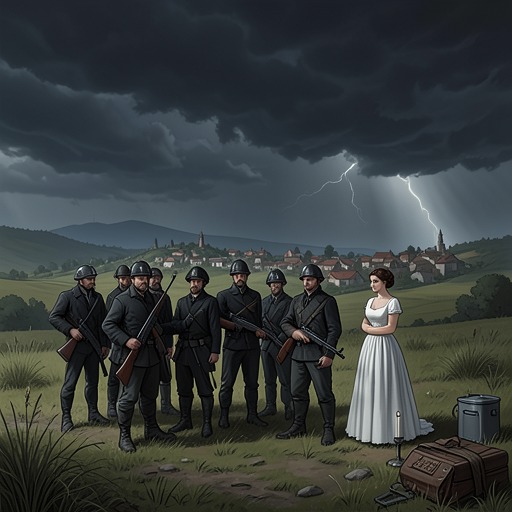
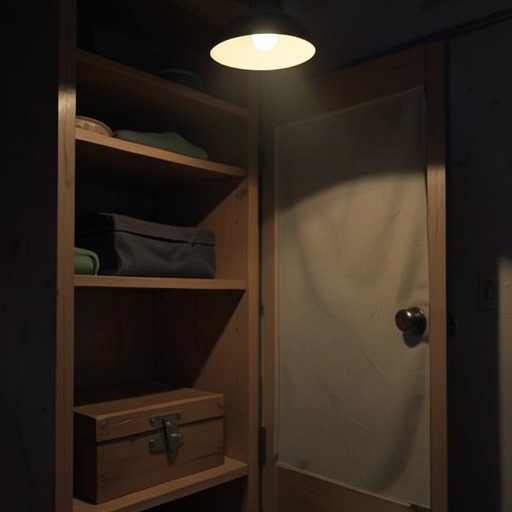
Months later, Juan returns to the ranch as the captain in charge of a troop of revolutionaries. Their arrival initially alarms Mama Elena, who has heard that rebels destroy homes and assault women. She hides Tita, Chencha, and the pig in the cellar, takes up a shotgun, and meets the soldiers at the entrance with two farmhands beside her. The captain recognizes her resolve and orders his men not to enter the house.
The soldiers search elsewhere, climbing a twenty-foot ladder to reach the large dovecote beneath the roof. They trap enough pigeons and doves to feed the battalion for a week. Before leaving, Juan rides through the back patio and pauses over the lingering scent of roses. He asks Mama Elena about her daughters. When she tells him that the oldest and youngest live in the United States and the other has died, he responds with evident sorrow, then bows and takes his leave. The troops depart peacefully, contrary to Mama Elena’s expectations of them.
The encounter carries an irony the characters do not share. Mama Elena does not learn that this captain is the same Juan who carried Gertrudis away. Juan, for his part, is not shown connecting the woman who commands the ranch with the daughter he has taken. His question about the daughters and his response to the news of Gertrudis’s supposed death briefly bring the family’s absence into the military visit, while the reader understands the connection that the ranch owner does not.
Marriage, Family, and Return
When Gertrudis comes back to the ranch, she arrives beside Juan, now a general. She has not seen him for more than a year; when they meet again, their passion returns as it had when they first encountered one another. Gertrudis has become a military leader in her own right, earning her commission through hard work and rising to powerful positions. Juan’s presence beside her marks their relationship as a continuing partnership, not merely the instant departure that began it.
Gertrudis had hoped to show Mama Elena the life she had made: her standing in the army and her happy marriage to Juan. Instead, she learns that her mother has died. The news grieves her, and she wishes Mama Elena could have witnessed her success. At the family gathering that follows, Juan plays guitar, harmonica, and accordion. His music accompanies Gertrudis as she dances, placing him within the household celebration as both her husband and a performer among family and guests.
At a later wedding banquet, Juan again arrives with Gertrudis, this time in an elegant suit, top hat, and spats. Their oldest child accompanies them, making the family created after Gertrudis’s elopement visible within the gathering. The contrast with the first encounter is substantial: Juan once rode away from a battlefield with Gertrudis, outside the reach of his escort; later, the couple enters the ranch openly, established in family life and accompanied by their child.
Narrative Role
Juan’s appearances connect private desire to public upheaval without making the revolution mere background. His first departure interrupts a battle, while his later command brings armed troops to a household that fears them. At the ranch he restrains his soldiers from entering the house, yet they still take the birds that will feed their battalion. The visit is therefore peaceful in its treatment of the family but not untouched by the army’s material demands.
The story also makes Juan central to its challenge to official accounts. The soldiers’ explanation of his departure is not simply incomplete: it misrepresents an event witnessed from another perspective. The reader sees how an intimate, startling encounter can be converted into a public story of madness and desertion. Later, his advancement and marriage show the life that the soldiers’ version leaves out. Across these episodes, Juan’s character is defined by the crossings between battle and home, rank and desire, public report and witnessed experience.